

This article first appeared in The Edge Malaysia Weekly on August 4, 2025 - August 10, 2025
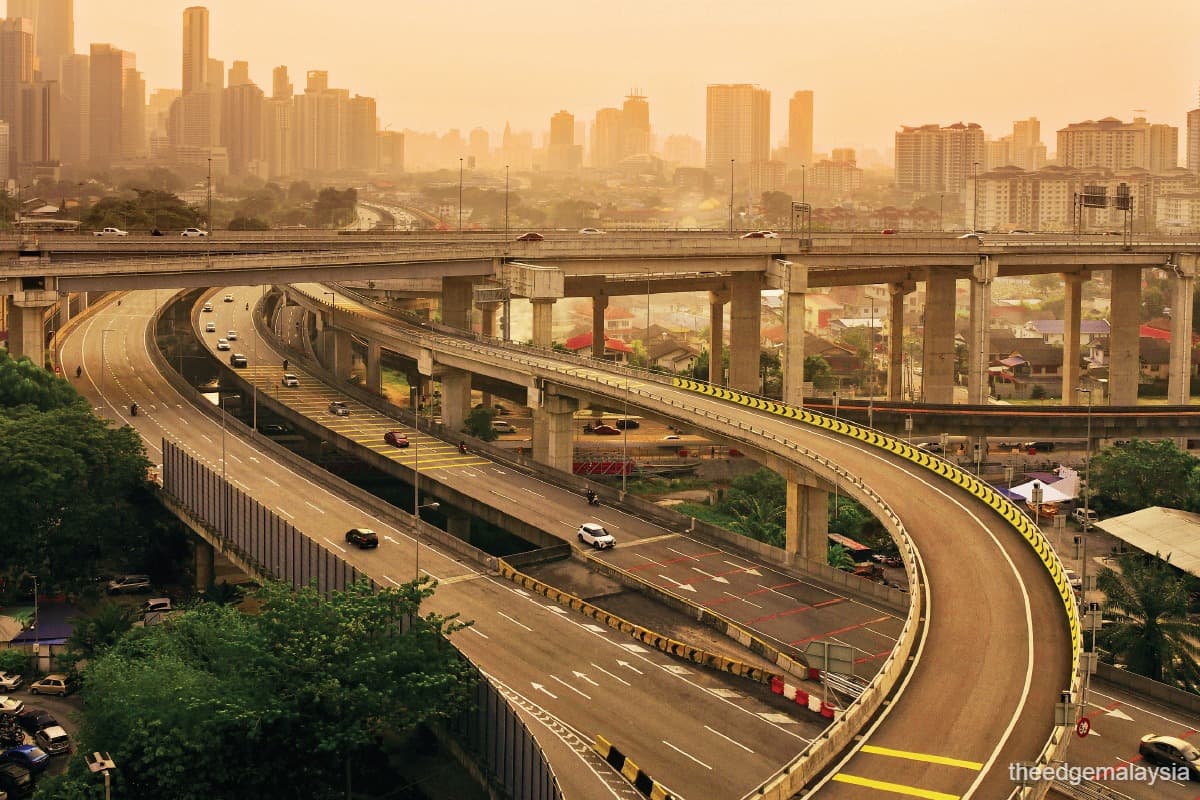
IN the 1990s and early 2000s, highway concessions were coveted assets that many businessmen would want to get a hold of, owing to the stable income that they provided, as well as huge construction profits.
In those years, highway concessionaires were considered among the elite companies of Malaysia, alongside first-generation power plant concessionaires and telecommunication spectrum owners and operators, as well as other monopolies.
Those days seem to be over.
“Quite possibly some of the later urban highways were proposed with over-assumptions on projected traffic growth, which led to underperformance of the highways,” one executive points out.
In the early days, securing a highway concession required strong political connections, and shifts in the political landscape have not helped matters. Several highways are now also understood to be up for sale.
“There are a number of highway concessionaires that would let go of their assets, although some are not hard pressed and can weather the storm or wait for a better offer … but it’s an open secret which ones are not doing well or have weak parent companies,” says an executive from an investment bank.
Among the highways known to be up for sale or being encouraged to take on new shareholders is Prolintas Infra Business Trust (KL:PLINTAS). Others facing shareholder distress include the East Klang Valley Expressway (EKVE), wholly owned by Ahmad Zaki Resources Bhd (KL:AZRB); Kuala Lumpur–Kuala Selangor Expressway (Latar), equally owned by Bina Puri Holdings Bhd (KL:BPURI) and Arena Irama Sdn Bhd; South Klang Valley Expressway, controlled by SKVE Holdings Sdn Bhd; and Senai–Desaru Expressway, operated by Senai-Desaru Expressway Bhd, which manages the 77km stretch connecting Senai to Pasir Gudang and Desaru in Johor.

Some highways that may be up for grabs
The EKVE, a 36.16km highway linking Sungai Long in Kajang to Ukay Perdana in Ampang, has faced prolonged delays. As at May, it was slated for completion by July, with toll collection expected to begin in October.
The project has been a financial burden on AZRB. For the nine months ended March 2025, the company posted a net profit of just RM1.33 million on revenue of RM368.98 million. As at end-March, AZRB held RM372.52 million in cash and deposits, against RM2.53 billion in long-term borrowings and RM282.56 million in short-term debt.
Terengganu-based AZRB, once seen as a politically well-connected company, had accumulated losses of RM39.02 million as at March 2025. For the nine-month period, its finance costs alone amounted to RM36.08 million.
Bina Puri is in a similarly tight spot, recording a net profit of just RM1.89 million on revenue of RM216.16 million for the nine months ended March 2025.
For many years, Bina Puri was led by Tan Sri Tee Hock Seng and his family, but their stake has since fallen below 9%, having ceded control to managing director and CEO Chai Chan Tong, who holds nearly 25% of the company.
As at end-March 2025, Bina Puri reported RM14.62 million in cash and bank balances, and RM5.23 million in fixed deposits with licensed banks. Its long-term borrowings stood at RM207.64 million, and short-term debt commitments totalled RM123.44 million.
Meanwhile, SKVE Holdings is controlled by Tan Sri Rahmat Abu Bakar, known for his role in Yasmin Holdings Sdn Bhd, once a key vendor to national automaker Proton Holdings Bhd. Industry sources say, however, that Rahmat is not under pressure to sell SKVE.
As far back as 2016, there had been reports that Senai-Desaru Expressway Bhd, controlled by Tan Sri Hamdan Mohamad, was up for sale. Hamdan, once a prominent corporate figure and who was synonymous with the Ranhill group, eventually relinquished control of his last listed entity, Ranhill Utilities Bhd (KL:RANHILL) — which holds a water treatment concession in Johor — to YTL Corp Bhd.
In 2022, MARC Ratings withdrew its B+/negative rating on Senai-Desaru Expressway Bhd’s Islamic Medium-Term Notes (IMTN) of up to RM1.89 billion. The agency ceased coverage after the company and its bondholders entered negotiations to restructure the sukuk — marking a second restructuring effort for the already-restructured debt.
Elsewhere, the Maju Expressway extension project (MEX II highway) and Tan Sri Abu Sahid Mohamed, patriarch of the Maju Group, made headlines recently after the Malaysian Anti-Corruption Commission (MACC) raided his residence and seized assets. Among the allegations are delays in completing the highway and claims that proceeds from a bond issuance were diverted for purposes other than the project’s completion.
Abu Sahid, known for his close ties to former prime minister Tun Dr Mahathir Mohamad, has yet to issue a public statement. Sources close to him assert, however, that the situation is more complex than portrayed, pointing out that the government had issued a stop-work order on the project in 2019.
Mismanagement, and possibly even corruption, cannot be discounted either as a reason some of the urban highways are facing tough times these days. MACC is investigating at least two highway concessionaires for alleged wrongdoings.
It is also coincidental that Permodalan Nasional Bhd (PNB) is undertaking a corporate exercise involving its stake in Projek Lintasan Kota Holdings Sdn Bhd (Prolintas) after MACC investigated allegations of corruption in the dealings of the company during the construction phase.
MACC’s investigation into MEX II comes at a time when the highway concessionaire has already been placed under the control of receivers and managers (R&M) after defaulting on its bond payments.
Could these scandals — and the resulting shareholder sell-offs in highway concession companies — spill over to other concessionaires? Are highway assets becoming less attractive to investors in the light of recent developments?
“I guess, from that perspective, it comes down to how [the shareholders] want to view the highway’s prospects in terms of numbers and valuation, which is very qualitative,” says Siew Suet Ming, deputy CEO and chief rating officer at RAM Holdings Bhd.
“As far as we’re concerned, when we look at the bonds that were raised, that would come down to what the implications are for the project that we are rating when there is a sale, whether it means those bonds will be taken out or if there is going to be refinancing. So, for us, whether there’s a sale or otherwise, we will come back to the project fundamentals and the project funding.”
The project fundamentals that a rating agency will look at in assessing a debt instrument include the project sponsor, construction risk, design of the highway, traffic flow projections and actual figures, alignment of the highway and whether there is capacity to repay the debt raised.
Indeed, the outlook for highway assets has become more sentiment-driven. PNB’s search for a strategic partner in Prolintas underscores this point — just 16 months ago, it spun off four highway concessions into Prolintas Infra BT.
The four highways held by Prolintas Infra BT are the Ampang-Kuala Lumpur Elevated Highway (AKLEH), Guthrie Corridor Expressway (GCE), Lebuhraya Kemuning-Shah Alam Highway (LKSA) and Sistem Lingkaran Lebuhraya Kajang (SILK).
Combined, these highways made up 14.9% of total industry revenue in 2021, according to Prolintas Infra BT’s prospectus. Prolintas owns 51% of Prolintas Infra BT and PNB’s unit trust funds hold a further 9.74% of the units of the business trust.
According to executives familiar with bond structures, Prolintas Infra Business Trust (Prolintas Infra BT) was listed as a business trust to allow it to distribute cash to unitholders based on operating cash flow, rather than being constrained by the requirement to pay dividends only from accounting profits.
In the first quarter of FY2025 ended March 31 (1QFY2025), Prolintas Infra BT posted a net profit of RM3.56 million on revenue of RM78.99 million. It distributed RM34.98 million to unitholders during the quarter, similar to the amount distributed in FY2024.
Besides the four highways under Prolintas Infra BT, Prolintas owns and operates the Sungai Besi-Ulu Kelang Elevated Expressway (SUKE) and the Damansara-Shah Alam Elevated Highway (DASH).
“Prolintas is different from other PNB companies in the sense that we [PNB] started the company, when we formed Projek Lintasan Kota Sdn Bhd, to undertake AKLEH in the 1990s,” says an executive with PNB.
Among the four highways owned by Prolintas Infra BT, only SILK was not set up by PNB or its subsidiaries. Sistem Lingkaran-Lebuhraya Kajang Sdn Bhd was set up by the joint venture of Barisan Minda Sdn Bhd and Sungei Way Holdings Sdn Bhd before being listed as SILK Holdings Bhd.
PNB acquired SILK from SILK Holdings in 2017 for RM380 million. News that it is now exploring a sale of its stake in Prolintas has raised eyebrows in the market. After all, owning stable, income-generating assets is typically a core strategy of unit trust funds, many of which are managed by PNB.
Asked about the possible sale of its stake in Prolintas, PNB says it is part of its “regular review of its investment portfolio for opportunities to enhance value for the benefit of its unitholders”.
Besides making up a major share of highway revenue, Prolintas Infra BT’s concessions have been extended as part of the restructuring of the concessionaires under Prolintas. The business trust has the right to collect tolls until 2062, except for AKLEH, whose concession agreement ends in 2037.
Is Prolintas no longer delivering strong returns for PNB? Or is the pressure from the MACC investigations into its officers prompting PNB to reconsider its position?

Huge debts prior to spin-off
Prior to the spinning off of the four highways into Prolintas Infra BT, Prolintas as a group carried RM12.15 billion in long-term borrowings and RM639 million in short-term borrowings in the financial year ended Dec 31, 2023 (FY2023).
During the year, the group incurred RM653.18 million in finance costs on its borrowings, turning its profit into a net loss of RM765.17 million. Most of the debt stems from the development of SUKE and DASH.
On the other side of the balance sheet, Prolintas’ highway development expenditure — a non-current asset item — stood at RM14.96 billion. This shows that the debts are backed by long-term assets.
During the year, Prolintas paid RM284 million in dividends to shareholders, significantly higher than the RM60 million paid in FY2022. Its listing of Prolintas Infra BT in March 2024 also raised RM445.3 million.
PNB’s total holding of 60.74% in the business trust means that the group netted RM21.24 million in FY2024.
It must also be noted that PNB has been supporting the Prolintas group over the last six years through capital injections of RM3.6 billion, on top of the investments it has made in the concessionaires since 1995.
The possible disposal of Prolintas by PNB could call into question the highway assets owned by other government-linked investment companies (GLICs).
Sovereign wealth fund Khazanah Nasional Bhd and the Employees Provident Fund (EPF) own Projek Lebuhraya Usahasama Bhd (PLUS) through a 51:49 joint venture, while EPF owns 40% of Konsortium Lebuhraya Utara-Timur (KL) Sdn Bhd (Kesturi), operator of the Duta-Ulu Kelang Elevated Expressway (DUKE) Phases 1 and 2.
EPF also has a 49% stake in Cerah Sama Sdn Bhd, which owns and operates Grand Saga Sdn Bhd, the concessionaire for the Cheras-Kajang Highway. The provident fund is the largest shareholder of IJM Corp Bhd (KL:IJM), with a 17.12% stake as at July 31.
IJM owns Besraya (M) Sdn Bhd, the concessionaire for the Sungai Besi Expressway, New Pantai Expressway Sdn Bhd and Lebuhraya Kajang-Seremban Sdn Bhd, besides being the largest shareholder of WCE Holdings Bhd (KL:WCEHB) (see table on previous page).
It is noteworthy that IJM is one of two bidders for PNB’s highway assets, with the other being Tan Sri Azmil Khalili Khalid, who controls highway concessionaire AFA Prime, but has put in a bid under his own name.

Ekovest looking at listing Kesturi via a business trust
It is an open secret that Ekovest Bhd’s (KL:EKOVEST) largest shareholder Tan Sri Lim Kang Hoo is looking to pare down the group’s debts by divesting its stake in Kesturi, the concessionaire for DUKE Phases 1 and 2.
As at March 31, 2025, Ekovest carried RM5.18 billion of medium-term notes (MTN) on its books. The loss-making group incurred an interest expense of RM334 million during the nine months ended March 31, 2025 (9MFY2025).
Its concession assets stood at RM8 billion as at March 31.
Besides Kesturi, Ekovest also owns Lebuhraya DUKE Fasa 3 Sdn Bhd — the concessionaire for the Setiawangsa-Pantai Expressway.
Datin Wong Muh Rong, founder and managing director of Astramina Advisory Sdn Bhd, a licensed corporate finance advisory firm, says the divestment of highways has always been part of the plan for Ekovest.
“When Ekovest divested 40% of Kesturi to EPF in 2017, the intention was either to list the company or pursue an outright trade sale after seven years. So now, after nine years, factoring in two years of Covid-19, the timing is right,” she says.
Astramina Advisory is involved in Ekovest’s plan to divest its highway assets. Wong says one option under consideration is listing the highway through a business trust, similar to PNB’s approach with Prolintas’ assets.
She adds that Ekovest is not actively seeking buyers for an outright sale of its stake in Kesturi and prefers the initial public offering (IPO) route as it is a more strategic way to monetise mature assets while retaining ownership.
Kesturi posted a net profit of RM75.4 million for the financial year ended June 30, 2023 (FY2023), driven by a 47.8% increase in revenue to RM280.54 million. Finance costs during the year totalled RM142.33 million, down from FY2022.
As at June 30, 2023, the company had RM1.83 billion in outstanding Islamic MTN and RM290.6 million in redeemable secured junior bonds. Its concession assets were valued at RM2.4 billion for the year.
Asked why Ekovest was looking at divesting its stake in Kesturi, Wong explains that it is part of the group’s capital recycling strategy, noting that DUKE Phases 1 and 2 are now mature assets.
“Capital recycling is not unusual. It’s a viable and achievable goal. We aim to complete this exercise as soon as possible,” she says.
Manoeuvring around MEX
The news surrounding woes at MEX II — the concessionaire for the MEX extension project from the Putrajaya interchange to the Kuala Lumpur International Airport — seems to have taken a breather, but the issue remains unresolved even though it is currently under R&M.
Sources privy to the issue say MEX II’s sole shareholder, Maju Holdings Sdn Bhd, should be consulted before the concessionaire is sold because the government entered into the concession agreement with MEX II and its shareholders.
As the R&M appointed by MEX II’s sukuk holders, BDO Consulting Sdn Bhd is primarily responsible to those creditors, and not the concessionaire’s shareholders. As such, it may not be required to consult Maju Holdings or its ultimate shareholder, Abu Sahid, regarding the sale. Opinions differ, though — some believe Maju Holdings could still be able to block the transaction.
One argument for the R&M to consult with Maju Holdings and Abu Sahid is that it would be preferable to sell MEX II alongside Maju Expressway Sdn Bhd, the concessionaire of the existing MEX highway between Seri Petaling and Putrajaya.
That is because traffic on the MEX II highway will come primarily from those travelling from Kuala Lumpur and nearby Klang Valley areas using the MEX highway, while traffic from Putrajaya and its surroundings is expected to be minimal.
MEX II’s troubles began even before the Covid-19 pandemic, with delays caused by land acquisition issues and design changes, including a bridge. The project, originally scheduled for completion in December 2019, had its deadline extended to March 2020. So far, only about 89% of the highway has been completed, although this figure remains unverified.
On July 31, Minister of Works Datuk Seri Alexander Nanta Linggi said the government was finalising discussions with MEX II’s R&M to determine the best way to complete the project. The talks focus on a comprehensive plan covering completion costs, cash flow management, traffic impact, toll rates and other key factors to ensure viability.
The government’s commitment to completing MEX II is in the public’s interest as it will provide the quickest route from Kuala Lumpur to KLIA.However, efforts to salvage the project must not compromise the ongoing MACC investigations into the company.
Save by subscribing to us for your print and/or digital copy.
P/S: The Edge is also available on Apple's App Store and Android's Google Play.