

This article first appeared in The Edge Malaysia Weekly on August 4, 2025 - August 10, 2025
IN May last year, Spanish stainless steel giant Acerinox SA announced plans to mothball Bahru Stainless Sdn Bhd — suspending operations at its Johor plant, which was also Malaysia’s sole stainless steel mill — after five consecutive years of heavy financial losses.
The shutdown signalled Acerinox’s retreat from Southeast Asia, with Bahru Stainless having accumulated roughly €500 million (RM2.4 billion) in operating losses since 2018.
That decision, however, opened the door for a bold Malaysian-led takeover.
In the fourth quarter of 2024, Worldwide Stainless Sdn Bhd — a special-purpose vehicle jointly owned by five Malaysians and spearheaded by industry veteran Danny Tan Wei Beoh — acquired a 100% stake in Bahru Stainless from Spanish Stock Exchange-listed Acerinox for US$95 million (over RM400 million).
Within five months of the acquisition, Bahru Stainless swung back to profitability, thanks to a swift operational overhaul and a direct-market approach free from Acerinox’s previous constraints and legacy issues.
Now, seven months after the takeover, Bahru Stainless is setting its sights on a full-scale revival, with plans to ramp up production, strengthen its position in the regional stainless steel market and pursue an initial public offering (IPO) on Bursa Malaysia as early as 2027.
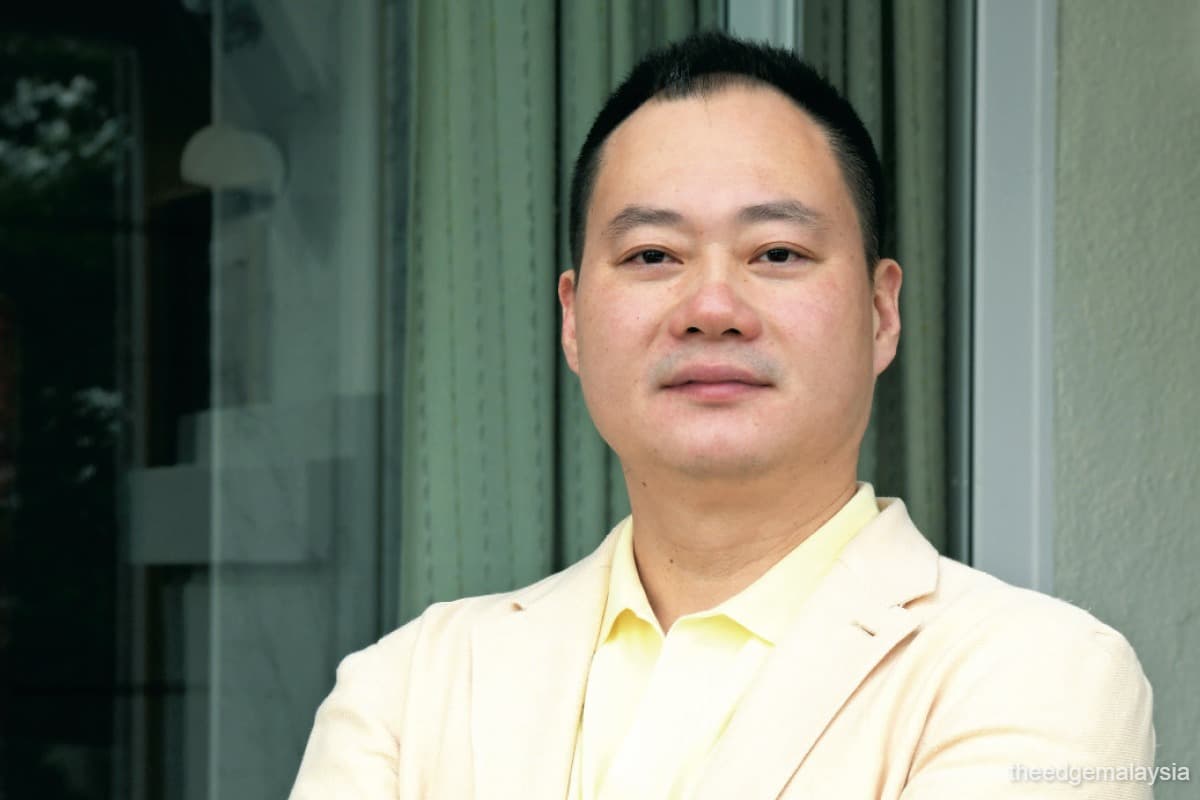
Tan, now the CEO of Bahru Stainless, stresses that while his target is to go for a flotation exercise within two years, he remains more focused on completely reviving the company. “We aim to exceed RM150 million net profit and sustain over 80% capacity utilisation before lodging an IPO prospectus.
“In fact, we have engaged advisers to explore a conventional IPO on Bursa Malaysia in 2027 once we deliver a full audited year of post-turnaround profits,” he tells The Edge in an exclusive interview at the company’s office in Tanjung Langsat Industrial Complex, Pasir Gudang.
According to him, an IPO for Bahru Stainless — rather than a reverse takeover — would better ensure governance procedures have been met, while providing expansion capital for the melt shop and offering Malaysian investors exposure to the only local stainless steel production firm.
“We strongly believe that with more support and extensive capital backing, Bahru Stainless could be elevated to another new level, thereby enhancing and strengthening our competitiveness globally. Our idea is that we should not stop and be comfortable, but instead, keep exploring ways to improve,” Tan remarks.
Founded in 2009, Bahru Stainless was set up as a joint venture (JV) between Madrid-based Acerinox and Japan’s Nisshin Steel Co Ltd and Metal One Corp.
The establishment of Bahru Stainless was split into two phases, with the first phase focusing on setting up a Sendzimir-type 1,500mm cold rolling mill, a combined annealing and pickling line, a skin-pass mill and a finishing mill. The second phase was aimed at increasing the production capacity. The second phase was aimed at increasing production capacity. These include installation of a second Sendzimir mill, as well as a second cold annealing and pickling line.
The Sendzimir is a milling machine that applies extremely high pressing force on stainless for precise thickness reduction, transforming the raw material into various final target thicknesses.
Meanwhile, the annealing and pickling line was installed to restore the stainless steel mechanical characteristics and final surfaces quality cosmetically. Acerinox had considered a third phase to set up hot rolling mills and a fourth phase for a stainless steel melting plant, but both plans did not materialise due to Chinese and Indonesian producers entering the Southeast Asian market.
In May 2024, Acerinox announced that it would discontinue operations at Bahru Stainless due to sustained regional oversupply and five consecutive loss-making years.
“It was at that precise time that I saw an opportunity — both the latent value of an idle but modern facility and the strategic importance of keeping Malaysia’s only stainless steel mill alive,” says Tan.
The Bahru Stainless plant itself is hardly a distressed relic — it is a state-of-the-art facility whose replacement cost today would exceed US$700 million, he points out. “A shutdown would have eliminated Malaysia’s only source of cold-rolled stainless steel, leaving local fabricators wholly dependent on imports and exposing the country to supply chain shocks.”
Tan was of the view that Bahru Stainless had been loss-making largely because of group-level constraints.
First, the Bahru Stainless plant in Johor was built as a re-roller. It imported black coils, reheated them into hot-rolled coils and then cold-rolled them. That extra step added an estimated US$100 to US$120 per tonne in energy and labour cost, leaving Bahru Stainless structurally less competitive than its fully-integrated rivals.
Moreover, Bahru Stainless was also required to feed its European and American orders through its sister companies Acerinox Europa in Cádiz, Spain, and North American Stainless in Kentucky, the US, respectively.
“That channel-checking denied the Malaysian mill direct access to the premium margins available in those markets and forced it to compete almost exclusively in lower-priced Southeast Asian segments,” he observes.
Prior to acquiring Bahru Stainless, Tan was the founder and CEO of Yankong Stainless Sdn Bhd, one of the largest stainless steel trading companies in Malaysia, as well as YK Pipe Sdn Bhd, an ornamental pipe maker.
“Coming from Yankong Stainless, where I had spent two decades developing trading channels across the globe, I knew we could unlock value from day one, simply by sourcing ready hot-rolled coil instead of black coil, and marketing directly to our established customers in the rest of the world at full margins.
“Besides, acquiring an existing mill has allowed us to bypass the six-to-eight-year lead time, steep learning curve and environmental hurdles of a greenfield build,” he says.
With that thesis in hand, Tan’s team requested a meeting with Acerinox.
On July 9, 2024, they flew over to Acerinox’s headquarters in Madrid and signed a memorandum of understanding that mapped out price parameters, due diligence access and a rapid closing timetable.
Three months later, on Oct 10, Worldwide Stainless executed the US$95 million share-sale agreement. The acquisition was formally completed on Dec 3 last year.
This change of ownership would eventually preserve 200 skilled Malaysian jobs.
Post-Acerinox
Between 2018 and its shutdown in May 2024, Bahru Stainless accumulated operating losses of roughly half a billion euros.
A search of its filings with the Companies Commission of Malaysia (SSM) shows that the company reported annual net losses of RM1.06 billion in 2022 and RM974.11 million in 2023.
“I am of the view that Bahru Stainless’ losses stemmed from a lethal mix of external price pressure, an inefficient raw material route, chronic underutilisation, constrained market access and rising input costs — factors that made exit the rational choice for Acerinox, yet also created the very turnaround opportunity we have seized,” Tan reiterates.
Notably, Tan is the controlling shareholder of Worldwide Stainless with a 60% stake.
Datuk Jackson Tan Kak Seng, managing director of Main Market-listed construction firm Binastra Corp Bhd (KL:BNASTRA), and Chung Shan Tat, co-founder and chairman of boutique developer CPI Land Sdn Bhd, each hold a 12.5% stake in Worldwide Stainless.
Binastra executive director Lee Seng Yong holds 7.5% equity interest, while the remaining 7.5% is owned by Majestic Gen Sdn Bhd executive director Ta Wee Dher, son of the late Tan Sri Ta Kin Yan.
It is worth noting that AmBank Group had in March this year granted financing facilities amounting to RM1.06 billion to Worldwide Stainless for the acquisition of Bahru Stainless from Acerinox.
In fact, the US$95 million deal itself was actually 80% funded by AmBank, secured by personal guarantee from Worldwide Stainless’ shareholders and corporate guarantee from Yankong, with the remainder coming from shareholders’ equity.
Tan says the debt is currently being serviced by fund injection from shareholders, and will be covered later by dividends from Bahru Stainless.
“We got the machinery valued at RM1.1 billion and the factory valued at RM400 million. The most important factor was convincing AmBank that we could make this a very profitable company,” he continues.
Since December last year, the new management team has executed a rapid, four-pillar turnaround programme that returned Bahru Stainless to profitability in April this year, barely five months after the takeover, says Tan.
First, they attacked the structural cost gap. “Instead of reheating imported black coils, we shifted procurement to ready hot-rolled stainless, stripping out an entire conversion step,” he explains.
At the same time, Bahru Stainless renegotiated power tariffs with Tenaga Nasional Bhd (KL:TENAGA) and Gas Malaysia Bhd (KL:GASMSIA) to keep its production costs as low as possible.
And then, the company reignited its revenue engine while right-sizing the organisation. “Freed from Acerinox’s internal marketing rules, we reopened direct sales channels to our long-standing trading book,” says Tan.
Finally, Bahru Stainless’ balance sheet was stabilised.
“The AmBank-led RM366.2 million acquisition facility was converted to a 15-year amortising term loan with a 36-month holiday and a debt service coverage ratio (DSCR) covenant aligned to the ramp-up curve.
“Meanwhile, a RM612 million trade finance line provides nickel and ferro-chrome hedging cover. Taken together, these measures, in my opinion, are what have turned around Bahru Stainless so far,” he comments.
Tan goes on to say that the “secret” is really a combination of focus, agility and deep domain know-how that only a founder-led Malaysian team could bring to the asset.
“We came in with a single-minded mandate: Turn Bahru Stainless around. Because Worldwide Stainless has no sprawling global footprint to protect, we could make decisions in hours that would take a multinational corporation months to decide,” he adds.
Stainless steel and steel industries may seem closely related because both involve steel materials, but they are fundamentally different in terms of products, processes, usage and market customers.
Generally, stainless steel is more expensive, with better resistance quality as compared to steel. Stainless steel is mostly used in specialised, high-end standard applications, whereas steel is for the mass market or structural frame usage due to its cheaper cost.
Being an upstream stainless steel player, Bahru Stainless buys hot-rolled materials from Chinese metallurgical giant Tsingshan Holdings Group’s site in Indonesia.
“As of today, our installed capacity is nearly 400,000 tonnes annually. We are currently running at less than half of our capacity and will increase the volume progressively,” says Tan, adding that Bahru Stainless remains Malaysia’s only producer of cold-rolled stainless steel.
The company sells its stainless steel to Europe, South Korea and India. Export markets account for 80% of its revenue, with Europe being the biggest market.
Key end-user sectors include construction, oil and gas, kitchenware, food industries, medical equipment, aerospace, defence and marine.
“Moving forward, we plan to run at our full capacity of 400,000 tonnes a year. This will help to generate RM3.5 billion of turnover and an expected profit of RM200 million a year,” says Tan.
Save by subscribing to us for your print and/or digital copy.
P/S: The Edge is also available on Apple's App Store and Android's Google Play.