

This article first appeared in The Edge Malaysia Weekly on August 4, 2025 - August 10, 2025
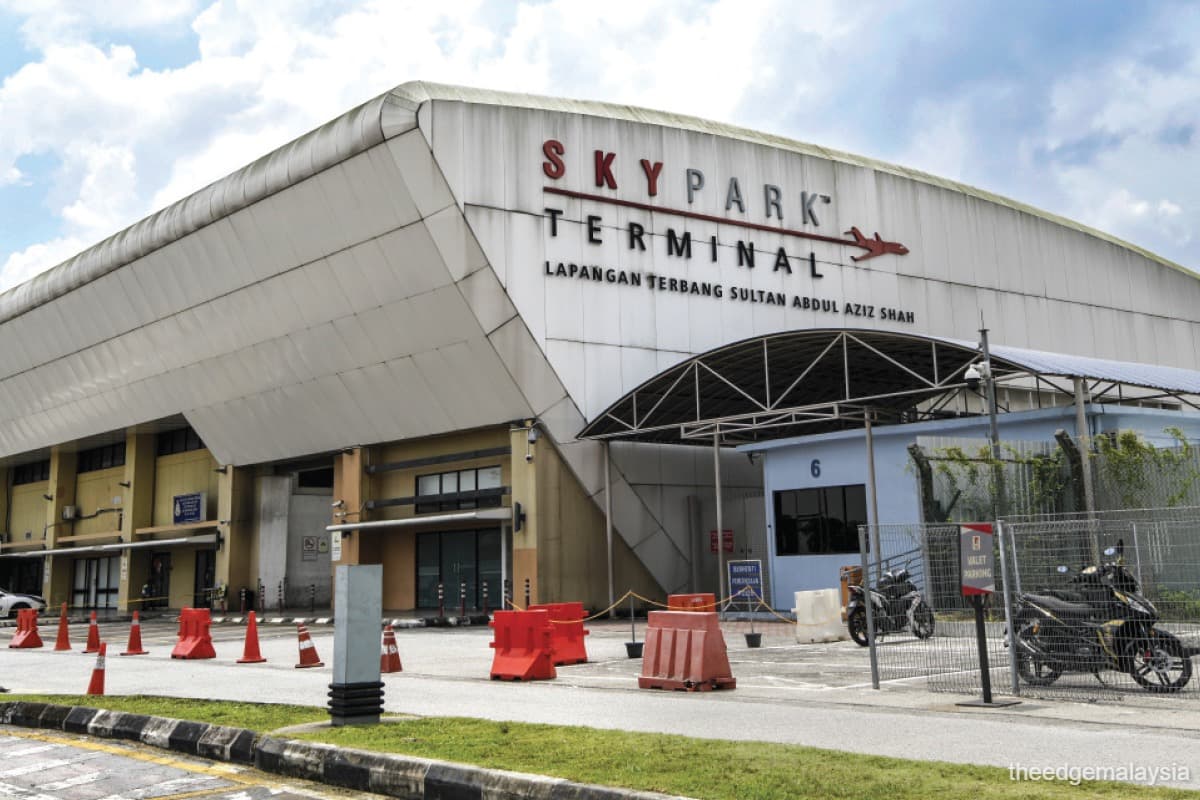
PLANS to turn Sultan Abdul Aziz Shah Airport (Subang Airport) in Subang, Selangor, into a premium city airport and regional aviation hub have suffered a setback after another airline announced that it is pulling out its jet services.
Last week, FlyFirefly Sdn Bhd (Firefly), the low-cost subsidiary of Malaysia Aviation Group Bhd (MAG), announced that it would cease its jet flights out of Subang Airport starting Aug 19 but would continue operating its turboprop services there. Firefly is the second airline to discontinue jet operations at the airport; low-cost carrier AirAsia relocated all of its jet services to Kuala Lumpur International Airport (KLIA) in April.
Their departure leaves three airlines operating jets out of Subang Airport: Batik Air Malaysia, Singapore’s Scoot Pte Ltd and Indonesia’s PT TransNusa Aviation Mandiri. Cathay Pacific Airways’ budget airline Hong Kong Express Airways Ltd is set to join them with daily flights from Hong Kong to Subang beginning Aug 1.
In February 2023, the government allowed the return of single-aisle, narrow-body aircraft to the airport’s runway as part of the Subang Airport Regeneration Plan (SARP), led by airport operator Malaysia Airports Holdings Bhd (MAHB). The initiative aimed to redevelop Subang into a premium gateway.
Shukor Yusof, founder of aviation consultancy Endau Analytics, believes Subang Airport’s current infrastructure makes jet operations financially unviable.
“It’s a combination of factors. Without proper upgrades to support jet operations, success is unlikely. Despite Subang’s proximity to the Kuala Lumpur city centre, it lacks efficient last-mile connectivity — no direct rail or proper bus services, just ride-hailing or private vehicles. That’s a deal-breaker for passengers expecting a seamless journey,” he tells The Edge.
“Given the choice, both leisure and business travellers would still prefer flying into or out of KLIA. Subang connects to only a few cities like Singapore and Jakarta.”
According to Shukor, AirAsia recognised the limitations early on. “This is a classic ‘emperor has no clothes’ situation. Everyone saw the plan was flawed but stayed silent — even those most affected, like the airlines. They went along despite knowing it wasn’t commercially viable. Eventually, that undermined MAHB’s efforts.”
He questions the accountability behind the losses. “AirAsia has suffered. Firefly is next. Who will compensate them? From the start, there was no sound economic rationale for jet services out of Subang. If the authorities continue allowing foreign carriers to operate while local ones pull out, what’s the objective? Are we supporting foreign airlines or protecting home-grown ones?”
An aviation expert echoed similar concerns, highlighting Subang Airport’s structural limitations, which undermine its goal of becoming a premium city airport. “While the runway can technically accommodate aircraft as large as a Boeing 747, the terminal is cramped, diminishing passenger experience and limiting airline service differentiation. The plan is increasingly beginning to resemble a low-cost terminal.”
In addition, the airport lacks key infrastructure such as an efficient baggage handling system, premium lounges, catering facilities and sufficient overnight aircraft parking.
“How do you justify charging premium airfares when the airport experience isn’t premium? There’s traffic congestion getting in and out of the airport, no train connection and no proper lounge,” says the expert.
Operational constraints also limit the airport’s potential. These include a curfew restricting jet operations to 6am to 10pm and only one jet movement per hour, capped at 15 slot pairs per day, preventing airlines from repositioning their assets and scaling their operations.
“On top of that, Subang and KLIA, which are just 45km apart, share overlapping airspace. The current air traffic management system does not support seamless departure and arrival flows at both airports.”
The aviation expert also notes that slot allocations for airlines at Subang Airport are random, making it difficult to align with business travel patterns. “Slot availability is limited due to restricted aircraft parking and overlapping airspace with KLIA.”
He believes that without significant upgrades to Subang — including expanded slot capacity and restructured airspace management — major carriers like AirAsia and Firefly are unlikely to resume jet operations.
It is understood that Firefly has been operating at a loss since launching jet services from Subang last August, flying to Penang, Kota Kinabalu, Kuching and Singapore using Boeing 737-800s.
“They’ve been burning cash. Staying longer would’ve only worsened the situation. Moving back its jet operations to KLIA gives them a better chance to recover,” says the expert.
Brendan Sobie, founder of Singapore-based aviation consulting and analysis firm Sobie Aviation, has questioned the viability of the jet strategy at Subang since its inception. He says airlines’ yields on Subang routes have consistently trailed those from KLIA, making them unsustainable. Thus, Firefly’s withdrawal was inevitable, given the financial losses.
Sobie adds that AirAsia was quick to “pull the plug on their Subang routes” after just seven months, and Firefly had been weighing the same move for months. “These are sensible moves that are hardly surprising.”
He says that the withdrawal of AirAsia and Firefly from Subang Airport suggests the plan to reintroduce commercial passenger jets there is flawed and unviable. “I would be surprised if Malaysia continues to go ahead with plans to build a new terminal at Subang, given two of the three (Malaysia-based) airlines have now pulled out. Malaysian carriers have clearly struggled with the initial 12 jet slot pairs, questioning the need for more jet slots or investing in the terminal,” he adds.
Sobie also criticises the vision of Subang as a premium city airport. “That thinking is flawed. Subang should never have been compared with London City or other premium city airports. KL is a different market. There is a local market for Subang but it’s relatively small and it’s more about serving the nearby population that live and or work in that part of the city than its serving as some kind of downtown airport, particularly with the current road congestion to downtown and the lack of mass transport links.”
Save by subscribing to us for your print and/or digital copy.
P/S: The Edge is also available on Apple's App Store and Android's Google Play.