

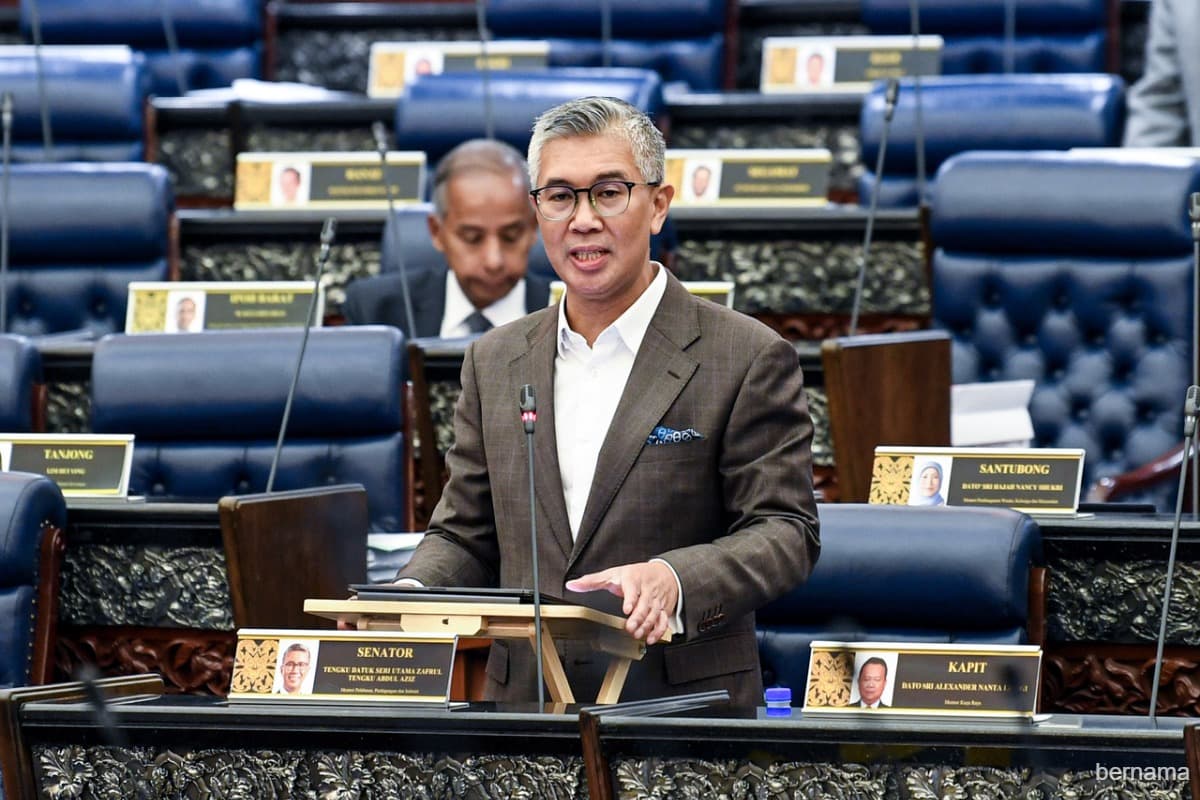
KUALA LUMPUR (Aug 4): The Malaysian government is bracing for potential disruptions in the electrical and electronics (E&E) sector as the US reviews its trade policy on semiconductor imports, raising concerns that higher tariffs could jeopardise up to 100,000 jobs, particularly in Penang and Kedah.
In 2024, E&E products made up 39.9% of Malaysia's total exports and grew by 4.5% to RM601.18 billion — the highest ever for the sector.
Semiconductor products are currently exempted from the 19% reciprocal tariff imposed on goods from Malaysia come Aug 8, 2025 but remain under investigation by the US Department of Commerce under Section 232 of the Trade Expansion Act 1962.
“We cannot take lightly any changes in US trade policies, as they will negatively impact Malaysia,” Investment, Trade and Industry Minister Tengku Datuk Seri Zafrul Abdul Aziz told the Dewan Rakyat on Monday in a special ministerial statement. "We must remain vigilant to the possibility of additional tariffs being applied to the semiconductor industry".
Zafrul said a joint statement by Malaysia and the US outlining negotiation outcomes and mutual commitments, which was expected over the weekend, is still being finalised and expected to be released soon. Both countries are also working towards a reciprocal trade agreement to safeguard long-term cooperation and minimise the risk of punitive measures, he added.
On Aug 1, the US announced a reduced tariff rate of 19% for Malaysia, down from 25% previously announced on July 8. The same tariff applies to Thailand, Indonesia, and the Philippines, while Vietnam faces a slightly higher rate of 20%.
“Among Asean nations, Malaysian goods remain competitive in the US market...while we had hoped for an even lower tariff rate, we believe this is a reasonable outcome that balances the offer made by Malaysia without compromising national policies and sovereignty,” Zafrul said.
Zafrul assured that his ministry known as Miti and its agencies will conduct outreach sessions to help local industries, particularly small and medium enterprises, adapt their business and export processes to meet any new requirements stemming from US countervailing tariffs.
Miti will also monitor the implementation of commitments agreed upon with the US to ensure that they are properly enforced and deliver long-term benefits to Malaysia.
For more Parliament stories, click here.
Read also:
Malaysia commits over US$240b in purchases and investments to narrow trade surplus with US — trade minister
Exporting rare earths to US without any restrictions is not exclusive right to US — Zafrul
Zafrul: Boeing aircraft acquisition part of MAG’s long-term fleet renewal, capacity expansion plan
Govt only allows meat, poultry imports with halal certificates that comply with Jakim standards, says Zafrul