

This article first appeared in City & Country, The Edge Malaysia Weekly on July 28, 2025 - August 3, 2025

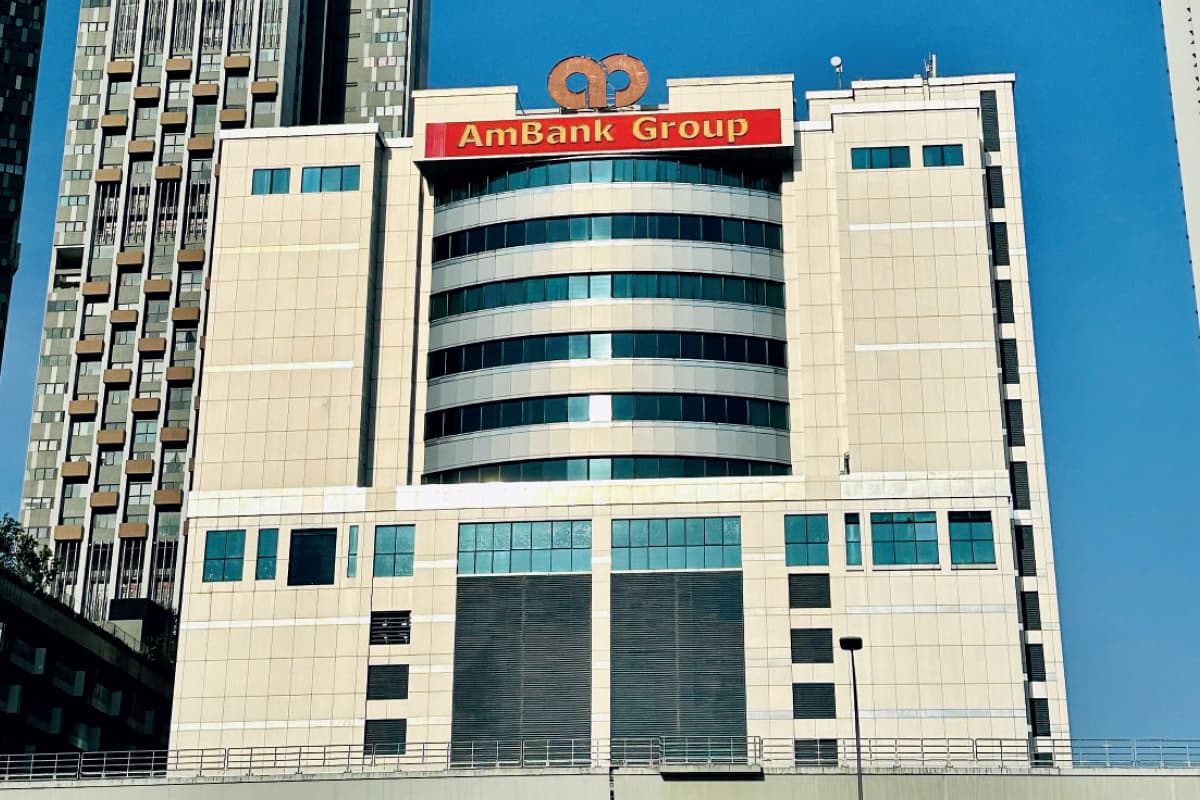
Nestled within Persiaran Tropicana, Petaling Jaya, is an unassuming 28-year-old commercial building — modest in form, but in truth, it pulses as the heart of AmBank Group. Built in 1997, AmBank Group Damansara Fairway 3 (DF3) houses 204 AmBank staff — occupying a third of the building — and also hosts AmBank Group’s operational office, data centre and business continuity plan (BCP) facilities.
AmInvestment Bank Bhd acquired the building (formerly Menara Luxor) in the year 2000 and up till 2020, it was managed by AmBank’s in-house team. AmBank Group group CEO Jamie Ling says the team started recognising the need for a more professional management.
“DF3 is our biggest core asset. It houses a very important function; all our servers are there. If the data centre goes down, it’s operational discontinuity. So it’s very important to get the resiliency in.”
In 2020, CBRE Global Workplace Solutions (GWS) Sdn Bhd was brought in to manage DF3.
From an operational perspective, AmBank Group senior vice-president group administration Vincent Chew says, “When CBRE took over the facilities management at DF3, its immediate focus was conducting a comprehensive assessment of the building’s infrastructure, systems and operational efficiencies.

“We worked closely with CBRE to establish clear KPIs (key performance indicators) centred on energy reduction, operational cost savings and enhancing the internal environment for our employees.”
Retrofitting an old building with sustainability features is not an easy feat. But Chew says a fair bit was accomplished as soon as CBRE took over.
One of its earliest initiatives was a solar power project. With the help of GSPARX Sdn Bhd, it became one of the first banks to install solar panels on the rooftop. Beyond that, CBRE collaborated with various organisations such as the Sustainable Energy Development Authority (SEDA) and Malaysian Green Technology and Climate Change to assess the building and identify areas of weakness before issues became reactive.
“CBRE conducted an audit and secured an RM60,000 grant from SEDA, which allowed us to carry out a comprehensive building study. We also partnered with the Petaling Jaya City Council to evaluate further areas for improvement. Based on those studies, we implemented as many fixes as possible,” Chew says.
Additionally, CBRE engaged with a small group of occupants to identify ways to improve their workplace experience. Some key upgrades included converting the old split-unit air conditioners, which used non-environmentally friendly gases and consumed high energy, to variable refrigerant volume (VRV) systems which cut energy use by 40%.
CBRE also switched to LED lighting for the building. “However, we chose not to carry out a full makeover, as it would have resulted in significant waste and high costs. Instead, we focused on converting the low-hanging fruits first.”
For its efforts in ensuring a more sustainable building, DF3 has been awarded a Special Mention in the 10 Years and Above — Specialised category at The Edge Malaysia Best Managed & Sustainable Property Awards 2025.

Overcoming challenges
Newer and modern buildings are easier to maintain, but AmBank decided to take the road less travelled.
“In modern buildings, the control system is the one that runs the building, and old buildings won’t have those control systems. We don’t have that. The provision for that means that you have to rip out the entire core and fit things in.
“And that reinvestment in a new modern building system [for] an old building probably is not that practical. So how you replicate part of those modern building systems into existing ones is what we have to try to emulate,” says Ling.
He adds that while they could change things like the building materials or layout, they chose instead to focus on improving what was possible.
His team faced limitations with upgrades like electric vehicle charging stations at DF3 because fire engines cannot enter the basement parking area. Despite these challenges, Ling says they are doing what they can to cut costs and the carbon footprint by focusing on Scope 2 emissions.
There were also technical and execution obstacles during retrofitting works. “First, because the building operates 24/7, this required close coordination between AmBank and CBRE to ensure there was no disruption to business continuity,” Chew explains.
“Secondly, much of the original M&E (mechanical and engineering) infrastructure was outdated and lacked proper documentation. To address this, we carried out thorough site surveys and reverse-engineered existing systems to understand how they worked before starting any retrofit work. Another challenge was sourcing compatible materials and skilled technicians for a 28-year-old building. We overcame this by developing a network of specialised vendors familiar with older systems.”

Optimising energy usage
Chew says having a data centre and an operation centre in the same building often involves very high energy usage. But both CBRE and AmBank managed to crack the code by creating an energy-efficient strategy.
“At the core is the use of an energy-efficient computer room air-conditioning system, supported by measures such as sealing airflow gaps and optimising raised floor layouts to eliminate cooling inefficiencies. This is complemented by the implementation of dedicated data centre infrastructure management tools, which provide real-time insights into power usage effectiveness, temperature and humidity.

“In addition, the strategy involves close collaboration with the IT department to maximise server virtualisation and intelligent load management, reducing reliance on physical servers and lowering both power and cooling demands.
“Our procurement practices are aligned with this approach, to further reduce the centre’s environmental footprint. We also have a rigorous preventive maintenance and performance tuning schedule that ensures all infrastructure operates at peak efficiency, minimising energy waste and maintaining long-term system reliability,” he elaborates.
Long-term vision
Chew reveals there are plans to further improve the cost efficiency of DF3’s operations. This includes efforts to achieve ISO 50001 and ISO 14001 certifications by 2026, enhance energy and environmental management, retrofit the rooftop AmBank neon signage with energy-efficient LEDs, and pursue further green building certifications.
To improve indoor comfort and sustainability, he says the team will conduct indoor air quality assessments, upgrade ventilation, refurbish toilets with modern, water-saving designs and replace facade tint films for better thermal performance. There are also plans to retrofit Levels 11 to 13 with VRV inverter systems to reduce energy use.
Ling says all these initiatives are not attempts at “greenwashing”. “We do [these] things because it works for us. It helps us reduce costs. But at the same time, it [also] benefits the planet. And to that extent, it is really a win-win.”
Save by subscribing to us for your print and/or digital copy.
P/S: The Edge is also available on Apple's App Store and Android's Google Play.