

KUALA LUMPUR (July 23): Malaysia could afford the latest planned cash handouts, rating agencies said, amid caution that any further delay to the rationalisation of the RON95 subsidy will jeopardise its fiscal consolidation efforts.
The total cost of the measures announced on Wednesday would be RM2.3 billion, or about 0.1% of gross domestic product (GDP), “which we believe can be accommodated” within Budget 2025, according to Kathleen Chen, an associate director in Fitch Ratings’ Sovereigns team.
“Further delays or insufficient progress on subsidy rationalisation could undermine consolidation efforts and jeopardise the government’s goal” to reduce the deficit to 3% of GDP by 2028, she said.
Missing fiscal targets could hurt Malaysia’s investment-grade sovereign credit ratings, potentially driving up borrowing costs not only for the government, but also businesses and consumers alike.
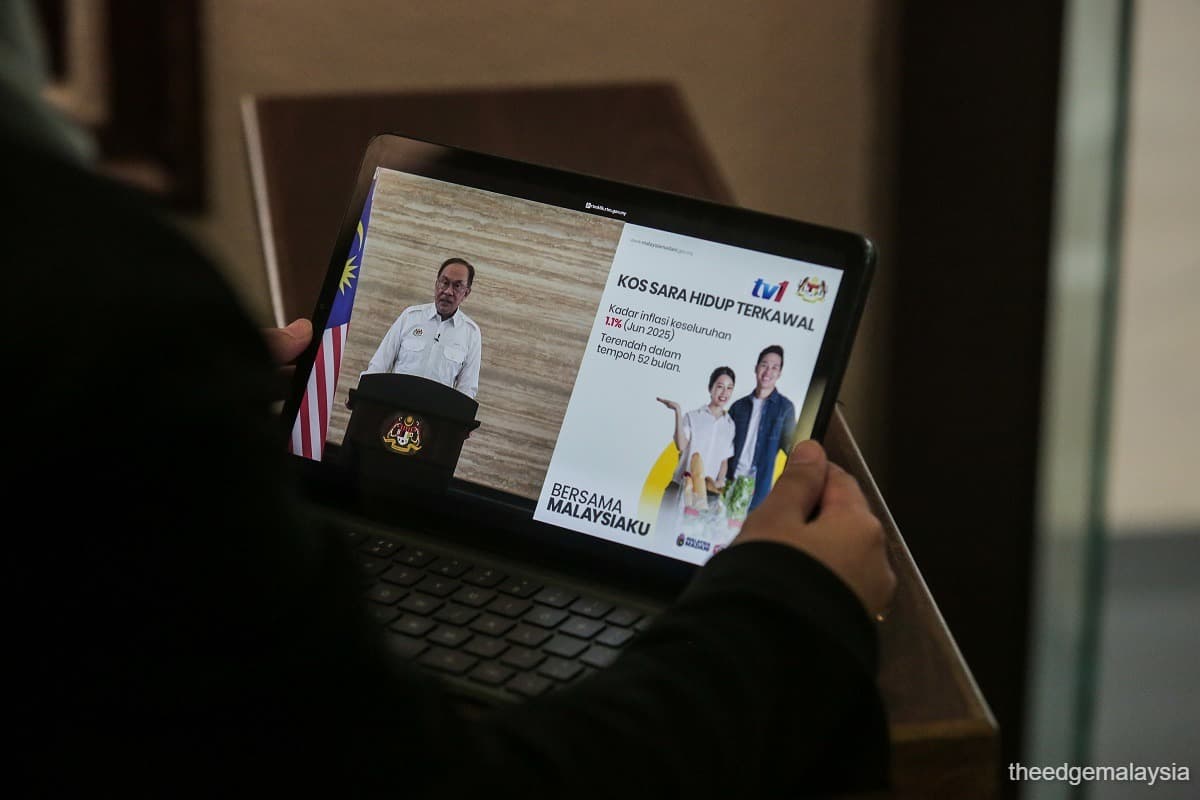
Earlier on Wednesday, Prime Minister Datuk Seri Anwar Ibrahim announced a one-off cash handout, lower RON95 petrol prices and a freeze to scheduled highway toll increases, among other measures that the government hopes will help ease cost-of-living challenges.
For S&P Global Ratings, the additional outlay is unlikely to materially affect Malaysia’s fiscal position, said its director Andrew Wood, who estimated that the expenditure would also equal about 0.1% of the country’s economic output.
However, “the impact of the petrol subsidy rationalisation will be dependent upon the final format of the plan,” he added.
Fitch Ratings rates Malaysia BBB+ while S&P’s credit rating stands at A-. Moody’s Investors Service last affirmed its rating of A3 in January this year. All the three agencies’ ratings come with a ‘stable’ outlook.
Malaysia has been trying to narrow a long-running fiscal deficit that stretches back to the Asian Financial Crisis. This year, the government is targeting to shrink the budget gap to 3.8% of GDP.
Any cuts to the petrol subsidy would help to lower the government’s operating expenditure currently financed by revenue. Under Malaysia’s fiscal rules, any government borrowings to cover the budget shortfall are only to finance development expenditure.