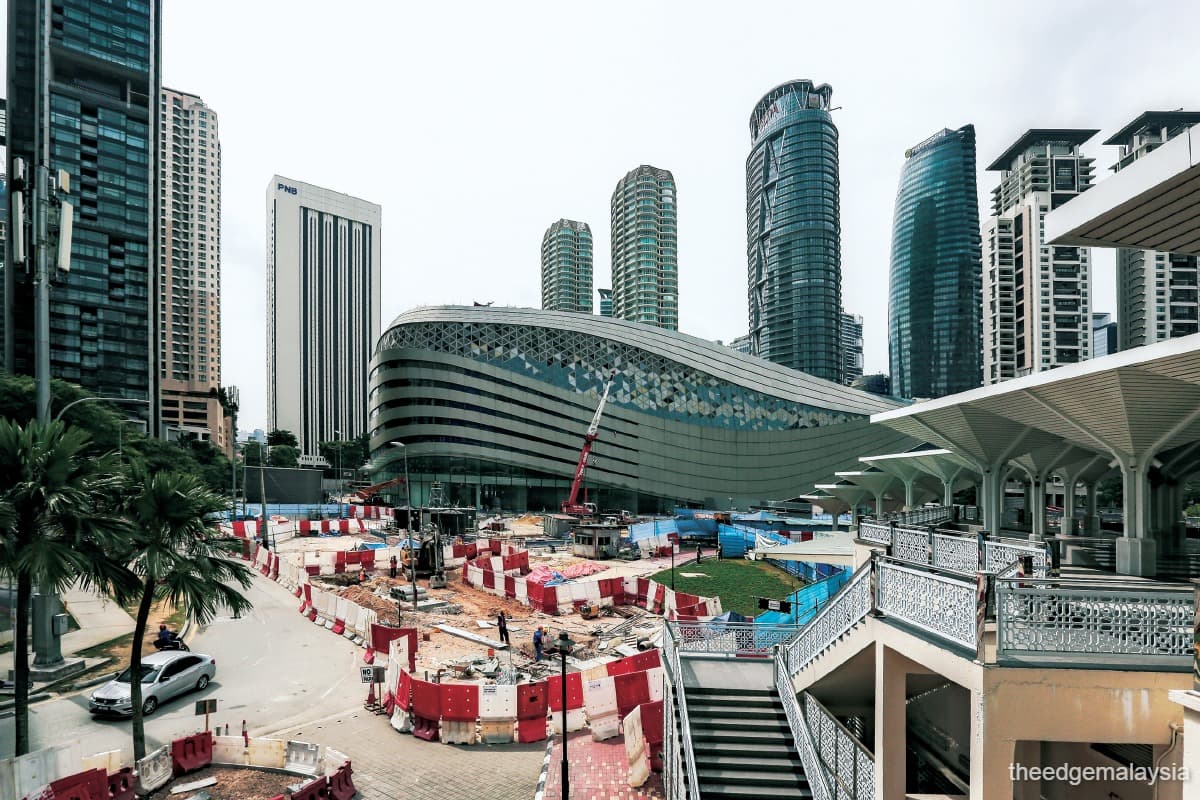
This article first appeared in The Edge Malaysia Weekly on July 21, 2025 - July 27, 2025
SEVERAL malls — some new, some refurbished or going through expansion (see table) — are slated to open this year.
One of the most anticipated is 118 Mall, part of the iconic Merdeka 118 tower in Kuala Lumpur. Allan Soo, principal of Allan Soo RE Consultants, believes the mall will do well, as it stands to capture the office and weekend crowds as well as tourists from nearby Chinatown.
“TRX did very well when it opened in November 2023 but settled at a lower level in 2024. [It’s a] tough year for malls because of the end of revenge spending. April 2024 saw a drop after the festive season and we expect 2025 to see a further drop,” he says.
Ombak KLCC, a six-storey mall with 120 retail lots and 420,000 sq ft of net lettable area (NLA) owned by KLCC (Holdings) Sdn Bhd — the development arm of Petronas — is scheduled to open next year. Galeri Petronas will be the anchor tenant at Ombak KLCC, which is located near Persiaran KLCC and Jalan Binjai.
Da Men Mall, a suburban mall in Subang Jaya, was recently renamed Easyhome Smart Home Life Experience Centre. Refurbishments started in April and the mall is expected to reopen next month. Its owner Pavilion Real Estate Investment Trust (REIT) (KL:PAVREIT) signed a master lease agreement with Easyhome International to operate a lifestyle home furnishing centre at the mall for three years.
In February this year, Alamanda Shopping Centre in Putrajaya, which opened in 2004, unveiled its RM100 million transformation. The mall has a gross floor area of 1.05 million sq ft and an NLA of 921,443 sq ft. It is owned by Putrajaya Holdings Sdn Bhd and managed by Suria KLCC Sdn Bhd.
Meanwhile, Mitsui Outlet Park@LaLaport Bukit Bintang City Centre is reportedly expected to open its doors soon. The next Mitsui Outlet, which will be located close to the Penang International Airport, is expected to be ready in a few years.
As for mall acquisitions, Asian Pac Holdings Bhd (KL:ASIAPAC) bought Jaya Shopping Centre in Section 14, Petaling Jaya, for RM100 million in March, marking the developer’s entry into the Klang Valley. It also owns Imago Mall in Kota Kinabalu, Sabah.
More recently, IGB REIT (KL:IGBREIT) announced plans to buy Mid Valley Southkey Mall in Johor Bahru for RM2.65 billion. The mall, which has an NLA of 1.5 million sq ft, is almost fully occupied. It is located in the Mid Valley South Key integrated mixed commercial development, which includes two office towers and a four-star hotel.
Soo expects more transactions in 2025 and 2026 as a result of the expansion of the investment market — retail and industrial assets are favoured for income growth and as a hedge against inflation.
Meanwhile, South Korean-French bakery café chain Tous les Jours re-entered Malaysia with its first store at Sunway Pyramid Mall and a second at Sunway Velocity Mall, both in June. It plans to open three more outlets this year. The chain first entered Malaysia in 2013 but closed its four outlets in 2017. Tous les Jours operates more than 1,300 stores in South Korea and 550 outlets in the US, Canada, China, Mongolia and several Asean countries.
Shifting consumer trends in luxury, wellness and retail
The luxury market is undergoing significant changes, particularly among younger consumers.
According to a 2024 report by Bain & Co and Italian luxury goods industry association Altagamma, Gen Z’s and millennials’ share of luxury spending declined slightly, with notable regional differences.
In China and Southeast Asia, demand remains strong, with these consumers prioritising product quality, hyper-personalisation and cost-effective options — factors that have boosted the second-hand luxury market. Global luxury spending faces challenges, however, owing to economic uncertainty, geopolitical tensions and financial market volatility, all of which are dampening consumer confidence.
Alongside these shifts in luxury consumption, health and wellness are becoming central to consumer lifestyles. Allan Soo, principal of Allan Soo RE Consultants, notes: “Before, the hobby was drinking or scrolling. Now, it’s pickleball and padel. This trend reflects a broader move towards active living, with healthier food choices, athleisure wear and wellness-focused retail gaining traction.”
Savills Malaysia head of retail services Murli Menon concurs, highlighting the rapid growth of sports such as pickleball and padel, particularly in Malaysia, which now ranks as the third-largest pickleball hub globally. Innovative operators are sustaining this trend by combining sports with dining, entertainment and social engagement, creating a more immersive and long-lasting appeal.
Consumer loyalty is also evolving, with younger shoppers displaying less attachment to traditional luxury brands. Instead, they value peer recommendations, compelling brand narratives and authenticity. This generation is more likely to switch between premium or luxury brands and indie labels, choosing based on mood and occasion, Murli says.
Saleha Yusoff, executive director at Nawawi Tie Leung Property Consultants, says sustainability has emerged as a significant driver of purchasing decisions. Brands, such as LUSH and The Body Shop, have gained strong following by championing ethical sourcing, zero-waste packaging and social advocacy. Meanwhile, larger malls like Sunway Pyramid and IOI City Mall have introduced green building initiatives and an eco-conscious tenant mix to align with environmentally aware shoppers. Equally notable is the shift towards localised offerings. Retailers are increasingly curating product selections and in-store campaigns that reflect the preferences of their surrounding communities. For example, suburban malls, such as Setia City Mall and Aeon Mall Bukit Mertajam, feature local F&B brands and neighbourhood-centric promotions to better engage their catchment populations. In response to these shifting preferences, retailers are experimenting with hybrid formats that blend online and offline experiences, smaller yet more curated store footprints, and placemaking strategies that focus on lifestyle rather than just consumption, she says.
Finally, the demand for fourth spaces — physical venues that bring digital communities into the real world — is rising. Whether through gaming meetups, supper clubs or fitness groups, these spaces cater for consumers seeking meaningful offline connections that align with their online interests. As consumer habits continue to shift, brands and retailers must adapt to these emerging preferences to stay relevant.
Save by subscribing to us for
your print and/or
digital copy.
P/S: The Edge is also available on
Apple's App Store and
Android's Google Play.