

This article first appeared in The Edge Malaysia Weekly on July 21, 2025 - July 27, 2025
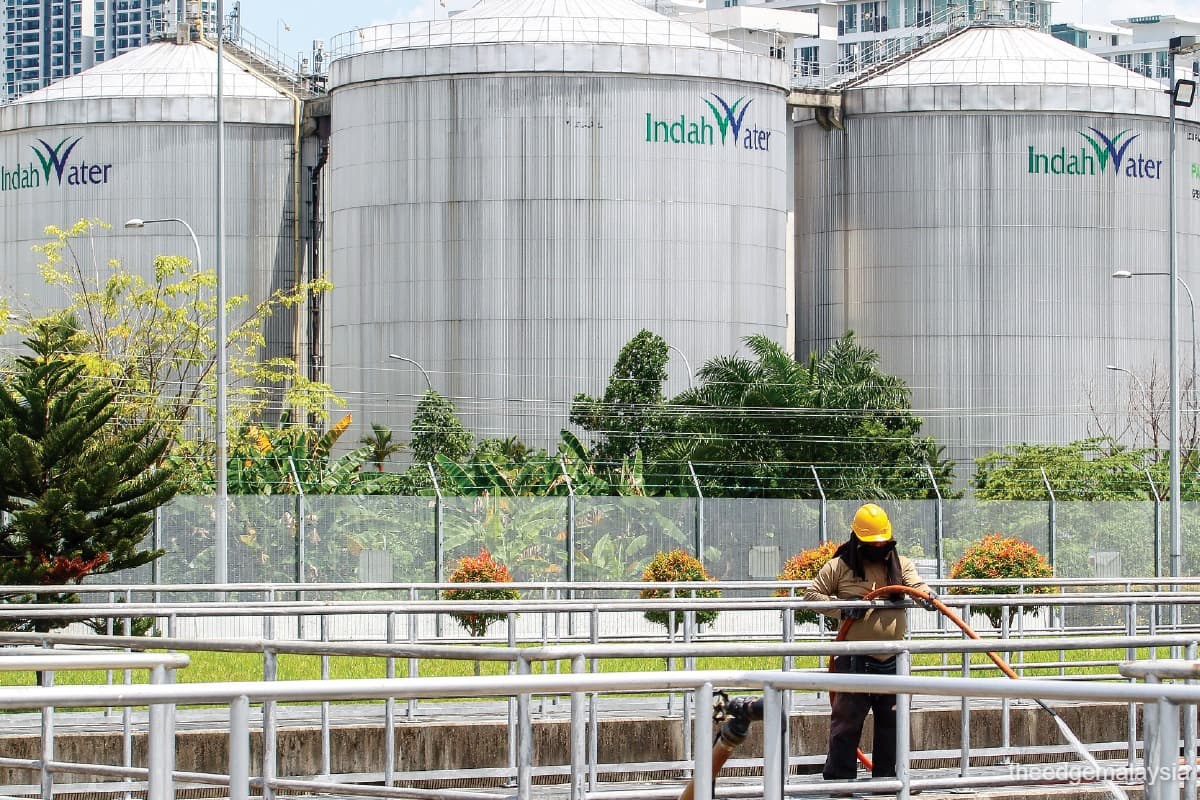
Reclaimed water, or treated wastewater that can be used for non-potable applications, has the potential to reduce demand for water from natural sources. It is also a viable and sustainable resource to cool data centres and support industrial processes in Malaysia.
But reclaimed water remains underutilised in the country due to various challenges. So, the government and Indah Water Konsortium (IWK) are working on solutions and engaging with corporates to tap the potential of this resource.
During the planning approval process, the National Water Services Commission (SPAN) proposed that data centre operators consider this alternative source of water for their cooling systems. As a result, IWK has been working with data centres to ensure a cost-effective and sustainable way to use reclaimed water in their operations.
Earlier this year, the government established a high-level Data Centre Task Force, jointly chaired by the Ministry of Investment, Trade and Industry (Miti) and the Ministry of Digital. The task force is expected to address industry concerns, plan investment strategies to achieve sustainable growth, and ensure that using reclaimed water for cooling is on the agenda.
IWK CEO Narendran Maniam says the next five years will be crucial in ensuring that infrastructure is in place to support the data centre industry as new regional water treatment plants are being planned and constructed.
The Ministry of Energy Transition and Water Transformation (Petra) urges data centre operators, particularly those interested in establishing facilities in the Klang Valley, Negeri Sembilan and Melaka, to consider locations close to regional sewage treatment plants.

“I understand the situation differs in Johor as regional plants are still in the planning and implementation stages. Given this, water reclamation may not be a viable option in the next five years and alternative sources, such as surface water, will be necessary,” Deputy Prime Minister Datuk Seri Fadillah Yusof, who is also energy transition and water transformation minister, tells ESG in an email interview.
“Under Water Sector Transformation (WST) 2040, initial water reclamation projects are set to begin in the Klang Valley, with plans to gradually expand to other states. The target is to produce 50 megalitres per day (MLD) in 2025, scaling up in stages from 2024 and beyond.”
According to Narendran, IWK is able to produce more than 7,000 MLD of treated wastewater, which can effectively meet the demand for industrial water while reducing reliance on sources of potable water. To put in perspective, 7,000 MLD of treated wastewater is the equivalent of 2,000 Olympic-size swimming pools, he illustrates.
Under WST 2040, there are plans to further develop water infrastructure, including the adoption of nature-based solutions, such as constructed wetlands, for sustainable wastewater treatment.
“Wetlands are valuable for flood protection and water quality improvement. The water quality improvements through sedimentation and identified aquatic plants can help reduce organic content,” says Fadillah.

Currents to navigate
There are a few challenges that data centre operators and industrial players face in using reclaimed water. The first is the distance between existing large sewage treatment plants and their facilities, which limits access. The second is the lack of adequate infrastructure in high-growth areas.
In high-growth areas such as the Klang Valley, Penang and Johor, the demand for water in industrial operations is the most pressing problem. While IWK’s regional sewage treatment plants in the Klang Valley and Penang make water reclamation viable, challenges remain for regions like Johor, where infrastructure is still underdeveloped despite being a hotspot for data centre investment.
IWK intends to call for private sector participation in a build-operate-transfer (BOT) scheme to finance and operate these plants. The BOT model is something the national sewerage company, along with other state water operators, is hoping to use to jointly develop water reclamation projects and supply reclaimed water to data centres.
“There will be full cost recovery for the construction of the plant, as well as the distribution pipeline because it has to be a dedicated distribution pipeline. You cannot mix [reclaimed water] with a potable water pipeline. So if it’s much closer, it becomes more feasible,” says Narendran.
Many data centres operators, aware of the environmental benefits and the premium they would pay for non-potable water, are already in talks with IWK to utilise reclaimed water for their operations, according to the CEO. He says there have been positive discussions with Syarikat Air Melaka Bhd to purchase reclaimed water for two factories.
“For those two factories, we make it transparent to them. If you can commit to the water quality and offtake volume, we will call for a BOT tender and show you the preferred design, [the costs involved] for the water supply system and the premium that is charged to them over a 20- to 25-year period,” says Narendran.
This is especially beneficial for companies in the electronics industry, which have to build a tertiary treatment plant to further treat water before it can be used. By using reclaimed water from the utility, which has already undergone the reverse osmosis process, a factory can use the water directly.
Reverse osmosis is a water purification process that uses a semi-permeable membrane to separate water molecules from other substances.
Apart from proximity concerns, Narendran says the idea of using reclaimed water for non-potable purposes has not yet gained full acceptance by many. The stigma surrounding this alternative remains a significant hurdle, even though reclaimed water is a more sustainable option.
Compounding the challenge is the illegal dumping of toxic waste, which continues to plague water treatment facilities, he says.
Because of this, IWK has implemented a proactive approach by conducting 24/7 surveillance in critical areas, in collaboration with the Department of Environment and SPAN, to detect and mitigate the impact of harmful pollutants on the water supply.
“The moment we see illegal substances going to the plant, we shut it down and we isolate it for treatment until it is safe to release into the environment. But factories and people need to be more responsible because the sewage treatment plant is designed to only treat human waste,” says Narendran.

Work in progress
Despite the challenges, data centres are recognising the need for alternative and sustainable sources of water.
AirTrunk, a hyperscale data centre specialist in Asia-Pacific, recently announced a collaboration with Johor Special Water to develop a recycled water supply scheme for its data centre campuses JHB 1 and JHB 2.
The scheme will see the production of recycled water from unused wastewater. The recycled water will be used for the operational needs of its data centres in Johor, as well as complement AirTrunk’s liquid cooling system implemented at JHB 1 in 2024.
“By integrating recycled water into our data centre operations, we are conserving potable water resources, reinforcing our commitment to the environment and the local Johor community,” says Pei Jet Lim, country head at AirTrunk Malaysia.
Miti has encouraged the use of more targeted and efficient cooling solutions, such as direct-to-chip and immersion cooling for improved heat dissipation. Direct-to-chip cooling is where the coolant is delivered directly to the surface of computer chips to efficiently absorb and remove heat. It improves thermal management by reducing the temperature at the source.
Immersion cooling involves submerging entire electronic components or servers in thermally conductive but electrically insulating liquid. The liquid absorbs heat from all surfaces, providing superior cooling compared with traditional air cooling, which helps maintain optimal operating temperatures and energy efficiency.
With ambitions of creating a closed loop water system, IWK is looking at the feasibility of sending the reclaimed water used by data centres to its sewage treatment plant to be recycled again.
The national sewerage company is also turning treated sludge, a by-product of wastewater treatment, into fertiliser. By turning dewatered sludge into usable fertiliser, it aims to minimise landfill waste while contributing to the local agricultural sector.
This effort, which is still undergoing the approval process, is a step towards reducing environmental impact and supporting the circular economy, says Narendran.
Save by subscribing to us for your print and/or digital copy.
P/S: The Edge is also available on Apple's App Store and Android's Google Play.