

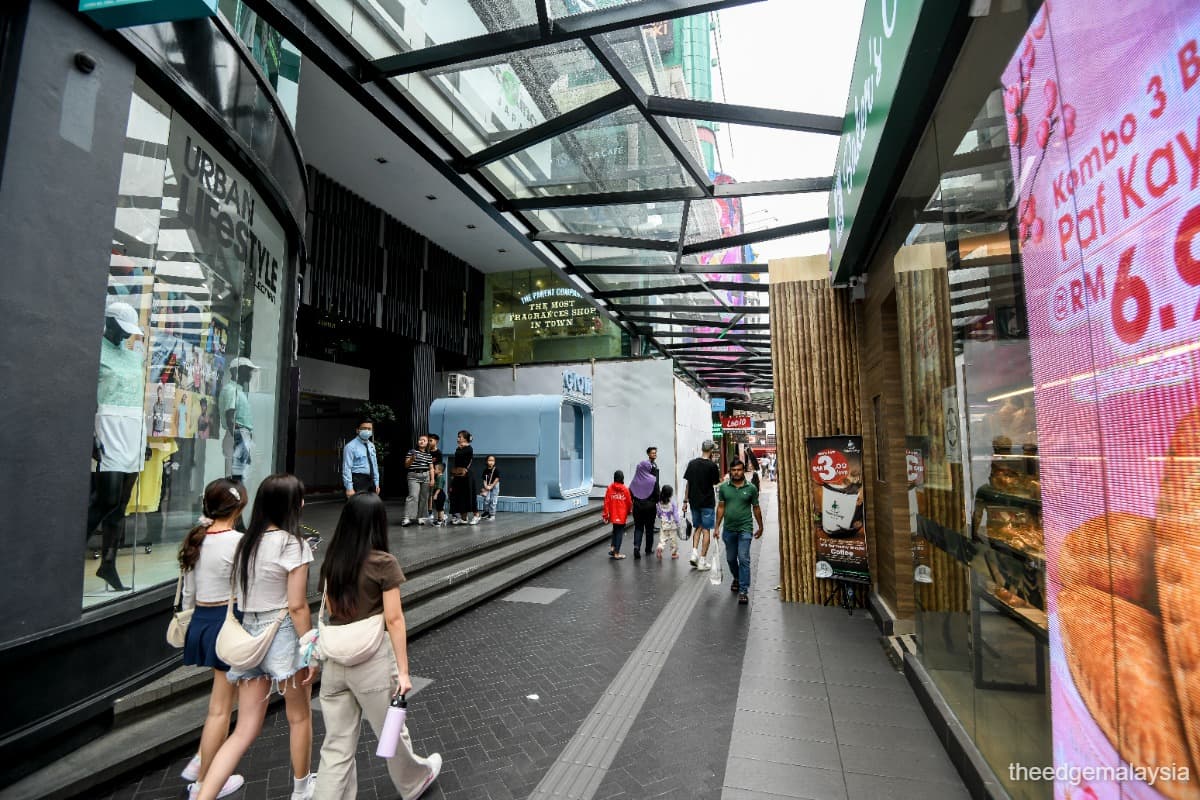
KUALA LUMPUR (July 14): Malaysia’s consumer spending is expected to remain resilient in the second half of the year, driven by improving household income, wage hikes, and the recent overnight policy rate (OPR) cut, said analysts, even as the latest data showed a slight moderation in retail and wholesale growth for May.
Kenanga Research believes Malaysia’s consumer spending will likely remain steady in the second half of 2025, bolstered by a combination of policy easing, higher wages, and increased tourism activity.
“Growth is expected to remain stable in 2H2025, supported by a potential uplift in consumption amid BNM's (Bank Negara Malaysia) recent OPR cut to 2.75%, rising tourist arrivals, improved household income from minimum wage hikes, investment roll-outs, and ongoing government cash transfers.”
MIDF Research similarly anticipates continued expansion in household spending, underpinned by a resilient labour market and stable price conditions.
“Looking ahead, we expect consumption to continue to expand, supported by labour market resilience with higher employment and wage growth in domestic-oriented sectors," said MIDF. "The low and stable inflation and targeted fiscal measures will provide support to consumer purchasing power.”
The analysts maintained their respective gross domestic product forecasts, with Kenanga expecting Malaysia’s economy to grow 4.3% this year, compared with 5.1% in 2024, and MIDF projecting domestic consumption to be a key driver of economic growth, cushioning against global uncertainties.
The Department of Statistics Malaysia on Monday reported that distributive trade — encompassing retail, wholesale and motor vehicle sales — rose 4.4% year-on-year to RM154.3 billion in May.
While this marked a slight slowdown from April’s 4.7% increase, it was still above the 2024 average of RM147.2 billion and the highest monthly sales value recorded to date, according to Kenanga.
MIDF noted that the overall moderation marked “the softest pace since September 2024”.
Sill, both Kenanga and MIDF pointed to underlying strength in consumer demand, supported by seasonal spending during the Hari Raya Haji holidays.
Retail sales led the gains, climbing 4.9% year-on-year to RM67.1 billion, driven by stronger performance in categories such as household equipment (+5.6%), specialised stores (+5.2%) and automotive fuel (+5.7%).
On the other hand, wholesale trade eased to 4.7% year-on-year, from 5.5% in April, dragged by slower growth in sales of agricultural raw materials and machinery. Nonetheless, categories such as household goods (+7.4%) and food, beverages and tobacco (+7.7%) remained supportive.
Risks from subsidy reforms and global tensions
Despite a broadly positive outlook, both Kenanga and MIDF flagged downside risks from domestic policy changes and external uncertainties. For instance, Kenanga warned that the widening scope of the sales and service tax (SST) could dent consumer confidence.
"The expansion of the SST may dampen consumer sentiment and curb spending, particularly if businesses pass on the additional costs to consumers," it said.
The research house also pointed to the upcoming rationalisation of RON95 fuel subsidies as a possible strain on household budgets, although the impact is expected to be manageable in the absence of excess demand.
MIDF, meanwhile, warned that inflationary pressures triggered by external tariff shocks could undermine consumer sentiment and prompt the government to revise its subsidy reform plans.
“Should tariff shocks pose a significant risk to Malaysia’s economic outlook, we believe the government may reconsider or postpone further subsidy rationalisation, as well as planned hikes in taxes and utility rates, to support domestic consumption and sustain overall growth,” it said.