

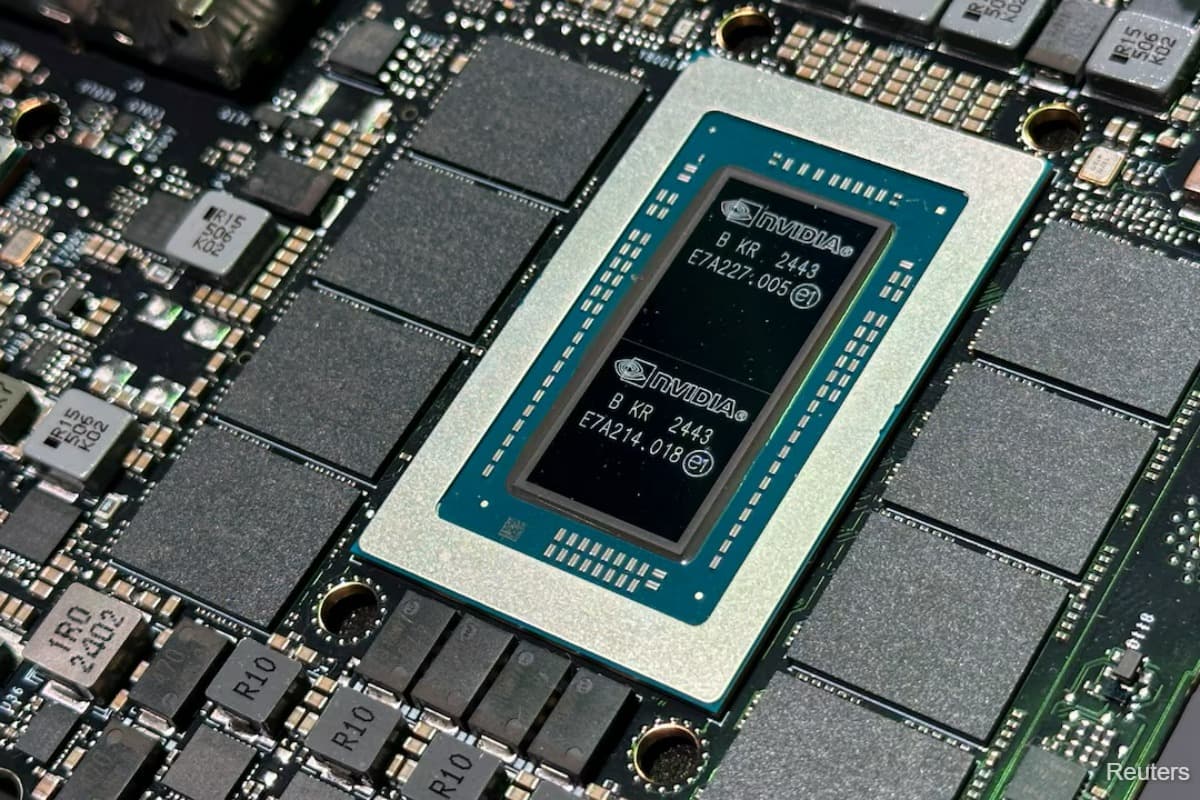
KUALA LUMPUR (July 14): Malaysia will immediately subject all exports, transhipments and transits of high-performance artificial intelligence chips of US origin to a strategic trade permit.
The policy requires individuals or companies to notify authorities at least 30 days before moving the goods if they know or have reasonable grounds to suspect the item will be misused or used for a restricted activity, according to the Ministry of Investment, Trade and Industry (Miti).
The move serves to close regulatory gaps while Malaysia reviews the inclusion of high-performance AI chips of US origin in its list of strategic items under the Strategic Trade Act (STA) 2010, Miti said in a statement.
“Malaysia stands firm against any attempt to circumvent export controls or engage in illicit trade activities by any individual or company, who will face strict legal action if found violating the STA 2010 or related laws,” said the ministry.
The move, described as "a necessary action to be taken by the government to curb transshipment issues" by Malaysia Semiconductor Industry Association (MSIA) president Datuk Seri Wong Siew Hai, has drawn support from the industry.
"It's a positive direction, no doubt. But the devil's in the details. It's not yet clear how the enforcement will be carried out in practice," Wong told The Edge when contacted, adding there is a need for well-structured procedures, clear enforcement protocols and active oversight in the execution of the policy.
Malaysia has been working on tightening its regulations on shipments of semiconductors under American pressure to prevent the flow of advanced chips to China in violation of US export rules, the Financial Times reported in March.
Earlier this month, a 25% import tariff was levied on all Malaysian goods entering the US, effective Aug 1. The government is now negotiating with the US to lower the rate, though there are worries about sector-specific tariffs on semiconductors which may be separate from the country-level tariffs.
On Monday, Miti also reminded all entities operating in Malaysia to comply with relevant international obligations to avoid any secondary sanctions on their businesses, even as the country supports international investments and trade.
“Miti remains committed to preserving a safe, secure, transparent and rules-based trading environment with all its trade partners and will not tolerate the misuse of Malaysia’s jurisdiction for illicit trading activities,” the ministry added.
Potential new transaction costs and delays
The immediate effect of the new rule is likely to be an increased compliance burden on companies handling US-origin AI chips as well as the risk of delays and uncertainty in project timelines or customer delivery.
"Malaysia’s immediate imposition of a strategic trade permit for US-origin high-performance AI chips reflects a strategic alignment with global trade governance," UOB Kay Hian Wealth Advisor's head of investment research, Mohd Sedek Jantan told The Edge.
"[However], the policy introduces short-term disruption including administrative burdens and potential delays, particularly for SMEs aligning with new compliance processes," Mohd Sedek said.
He also warned that the permit requirement, though temporary in its disruptive effects, could create inefficiencies and bottlenecks unless accompanied by streamlined processes or support mechanisms. "It is premature to assess the sufficiency of Malaysia’s 30-day notification requirement for US-origin AI chip exports in preventing diversion or misuse," he added.
Malaysia’s exposure to high-performance AI chips is “high but indirect”, given the country’s concentration in midstream semiconductor activities such as IC packaging, backend testing, and electronics manufacturing services, according to Samirul Ariff Othman, an economist and international relations analyst at Global Asia Consulting.
“These chips often enter Malaysia for testing, integration or redistribution, and may be re-exported as part of subsystems like servers or AI hardware,” he said. “So, while Malaysia doesn’t fabricate these chips, they still pass through its ecosystem in material ways.”
"[There is also] possible loss of business opportunities if clients re-route operations to jurisdictions with less perceived regulatory risk," he warned.