

This article first appeared in The Edge Malaysia Weekly on July 7, 2025 - July 13, 2025
ATR, the turboprop manufacturer co-owned by Airbus and Leonardo, is in talks with Sarawak-owned airline Air Borneo to explore the sale of its turboprops, says its managing director and head for Asia-Pacific Jean-Pierre Clercin.
This follows Air Borneo’s plan to replace MASwings Sdn Bhd’s existing fleet of ATR 72-500s with newer ATR 72-600s and jets when the current leases expire in two years. The announcement was made by Sarawak Minister of Transport Datuk Seri Lee Kim Shin in March.
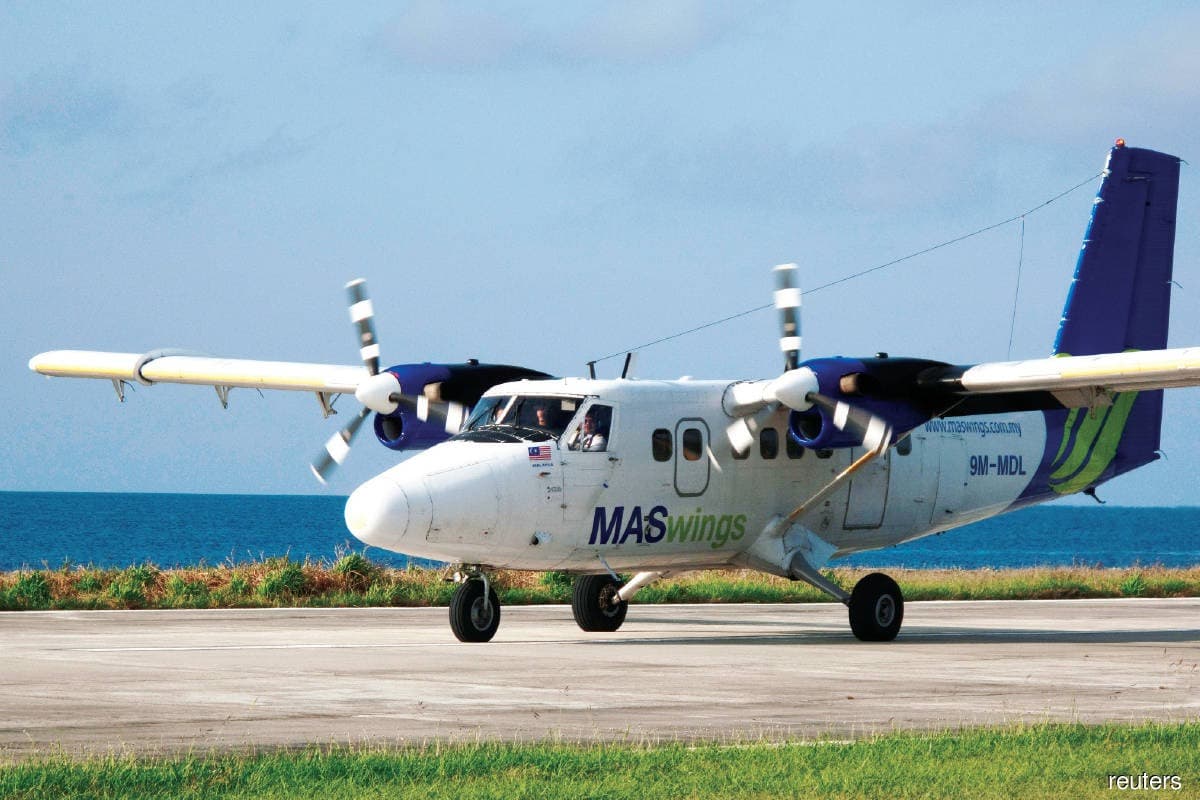
Air Borneo is in the process of acquiring MASwings from parent company Malaysia Aviation Group Bhd (MAG), which is controlled by sovereign wealth fund Khazanah Nasional Bhd. MASwings currently operates eight ATR 72-500s and six DHC-6-400 Twin Otter aircraft.
Despite the transfer of MASwings to the Sarawak government, MAG continues to operate nine ATR 72-500s under its low-cost subsidiary FlyFirefly Sdn Bhd (Firefly), which also operates five Boeing 737-800 aircraft.
ATR remains “bullish” on the Malaysian market and is actively engaged in discussions with local operators, including Air Borneo and Firefly, says Clercin.

“With Batik Air Malaysia’s withdrawal of turboprop operations from the Sultan Abdul Aziz Shah Airport in Subang, Selangor (Subang Airport), additional room for growth has opened up, presenting an opportunity for operators in Peninsular Malaysia. Even now, the capacity gap left by Batik Air Malaysia has yet to be fully filled,” he tells The Edge in an interview.
“And then there’s Sabah and Sarawak, where ATR aircraft can play a vital role in serving rural air services (RAS) routes. There are significant opportunities to expand connectivity, both regionally and on longer-haul routes.”
Batik Air Malaysia, formerly known as Malindo Air, ceased its ATR operations out of Subang Airport in February 2024 as part of a strategic shift to focus on jet services. The airline, a subsidiary of Indonesia’s Lion Air Group, previously operated up to 16 ATR 72-600s from Subang, which have since been redeployed to Wings Air, another Lion Air Group carrier.
Clercin explains that ATR works closely with three turboprop aircraft leasing companies: Abelo, Dubai Aerospace Enterprise (DAE) and Avation plc.
“These three lessors have delivery slots with ATR, which allows us to collaborate with them when customers require earlier aircraft deliveries,” he says. “It’s an open market, and our goal is to provide solutions that meet customer needs. If an airline requires lift on short notice, we can step in and help facilitate that through our leasing partners.”
He adds that ATR also offers customers a range of financing options to support aircraft acquisitions.

Currently, Firefly and Berjaya Air Sdn Bhd, a wholly-owned subsidiary of Berjaya Land Bhd (KL:BJLAND), are the only ATR operators based at Subang Airport. Berjaya Air operates an ATR 42-500 and a larger ATR 72-500.
In 2023, Berjaya Air placed an order for two ATR 72-600s. The first aircraft is scheduled for delivery at end-2025 while the second is expected to follow in 2026.
“We’re very excited about this. Berjaya Air is pioneering a new approach to the market with a more premium product featuring an all-business-class configuration,” says Clercin.
When asked whether MAG plans to replace Firefly’s ageing ATR fleet as part of its broader fleet modernisation strategy, group managing director Datuk Captain Izham Ismail says the evaluation process is currently underway.
“We’re still in discussions — whether to replace the ATRs with a different aircraft type or simply with newer ATR models. That conversation is ongoing, and we expect to make a decision by the end of this year or early next year,” he tells The Edge.
“The ATRs serve their purpose, particularly in reaching remote areas for MAG. To a certain extent, yes, they still meet our operational needs. But we also need to consider the broader context — the future of aviation in Malaysia, the Asean region and the wider Asia-Pacific.”
On track to surpass 2024 aircraft orders
The French-Italian turboprop maker is off to a strong start in 2025. It is confident of surpassing last year’s performance of 56 orders, having secured 31 firm orders so far this year, according to Clercin.
ATR recorded its highest annual turboprop orders since the Covid-19 pandemic in 2024. However, the company’s order volume has yet to return to pre-pandemic levels, which peaked at 79 aircraft in 2019.
“So far this year, we’ve secured 31 orders. This includes a major deal with Taiwanese regional carrier Uni Air for 19 ATR 72-600s, our largest airline order since 2017. In addition, US-based public charter operator JSX has signed a letter of intent for up to 25 ATR 42-600s and 72-600s, which will be configured for a premium cabin experience,” says Clercin.
He adds that more deals have been signed but have yet to be publicly disclosed. “We’ve concluded a couple of other agreements recently, which haven’t been announced. Expect to see some disclosures in the coming days or weeks.”
When asked about potential orders from Malaysia, he replies: “There is one order from the Europe, Middle East and Africa (EMEA) region and another from Asia-Pacific.”
Clercin sees a growing need for airlines to reinvest in regional connectivity for communities and underserved areas.
“We’re now seeing capital being directed to this segment [smaller aircraft] of the aviation market. Over the past two to three years, much of the attention has been on larger aircraft such as the Airbus A320s and A350s. But now, the focus is beginning to shift towards regional aircraft,” he says.
ATR is forecasting that 2,100 passenger turboprops will join the global airline fleets in the next 20 years.

“In regional aviation, ageing fleets and limited aircraft production have impacted in-service fleets, with more aircraft retiring than entering the market. Consequently, turboprop demand in the next 10 years will be primarily focused on aircraft replacement, while the second decade is more oriented towards growth,” it said in its Turboprop Market Forecast 2025-2044 report.
Asia-Pacific accounts for 37% of the global ATR fleet and is projected to require nearly 1,000 additional 50- to 70-seat commercial turboprop aircraft over the next two decades.
“We continue to see the fastest growth coming from Asia-Pacific. Beyond population growth, the region’s robust economic development is a key driver supporting this trend. So yes, we remain quite optimistic,” says Clercin.
He points out that South Asia, in particular, is showing impressive momentum. “India has been a standout market — resilient and promising. We’ve delivered around 30 aircraft to India over the past five years, which is remarkable, especially considering the challenges posed by Covid-19.
“However, not all markets are performing at the same level. Take Indonesia, which has lagged somewhat in terms of deliveries and new orders, largely due to a slower post-pandemic economic recovery. Having said that, the country still operates a fleet of about 100 ATRs, making it our largest market globally.
“Importantly, our biggest customer and operator, Lion Air, is based in Indonesia, and they continue to play a significant role in our presence there,” adds Clercin.
While ATR currently has a relatively limited presence in China compared to its overall operations, the company is actively working to expand its footprint in the region. It sees significant potential to enhance connectivity between secondary cities across the country. In 2022, ATR made a key step forward when Chinese regulatory authorities validated the type certificate for the ATR 42-600, granting it access to the Chinese market.
China also manufactures its own turboprop aircraft, notably the Xian MA60 and MA600 models. Despite local competition, ATR’s 20-year market forecast anticipates demand for approximately 280 new turboprops in China, reflecting strong long-term growth opportunities.
Firm not spared from supply chain woes
ATR has not been immune to global supply chain disruptions, which have affected aircraft deliveries across the aviation industry, including those by major manufacturers like Boeing and Airbus.
“The structure of the aviation supply chain is highly intertwined, and we all rely on the same key suppliers — from Collins Aerospace, Pratt & Whitney, GE Aviation and Safran to Thales and Honeywell. So, this is an issue impacting everyone,” says Clercin.
“Five years on, the situation is gradually improving. But for salespeople, it’s never fast enough,” he adds, noting that any aircraft orders placed with ATR today would only be delivered in 2028.
Malaysia scores big with US MRO firm’s first Asian hub
Malaysia recently received a major boost with a multimillion-dollar investment from Aircraft Propeller Service LLC (APS), a US-based aircraft propeller maintenance, repair and overhaul (MRO) company. On June 24, APS opened its first MRO facility for the Asia-Pacific region in Shah Alam, Selangor, creating about 30 local jobs. This marks the company’s third global location, joining its existing facilities in the US and Brazil.
The investment by APS also marks a major coup for Selangor, aligning with the state’s ambition to become Southeast Asia’s leading aerospace hub.
According to APS CEO Daniel Colbert, the company had been actively searching for a new facility in Asia “for several years” to support its existing operations and future growth in the region.
Before establishing the Shah Alam facility, APS served its customers in the Americas and Asia from its existing locations in Lake Zurich, Illinois, the US and São Paulo, Brazil.
Colbert says the company considered several countries across Asia-Pacific — including Australia, Indonesia and Singapore — before ultimately deciding to establish operations in Malaysia.
“We chose Malaysia for several reasons,” he tells The Edge in a separate interview. “One was its central location in the region. We also evaluated the available infrastructure — roads, airports and overall accessibility. Another key factor was access to skilled workers, as well as the ease of doing business and strong government support.”
APS is an authorised repair facility for major propeller original equipment manufacturers (OEMs) such as Hamilton Sundstrand, Hartzell, McCauley, MT-Propeller, Ontic, Sensenich, Woodward, and Aero Technologies. For starters, its new 30,096 sq ft facility in Shah Alam will provide MRO services for Collins Aerospace propeller systems, used on ATR 42, ATR 72 and Airbus C295 aircraft, with plans to expand its capabilities over time.
The facility has already been certified by the US Federal Aviation Administration and the Civil Aviation Authority of Malaysia, with approvals from the European Union Aviation Safety Agency and other regulatory bodies expected soon.
APS launched the Shah Alam facility with its core propeller capabilities, but Colbert emphasises the company’s long-term vision to handle other component work. “We’ve started with our propeller capability, and our expectations are to grow and continue investing over the coming years,” he says.

“Typically, the turnaround time to carry out propeller overhaul and repair work is about 25 days. This facility can handle around 1,000 blades per year, but it’s designed to scale. We can flex it to manage a couple of thousand blades if needed. We opened the facility with expansion in mind.”
With ATR expected to introduce around 1,000 new aircraft in Asia-Pacific over the next 20 years, Colbert sees significant growth potential.
“Beyond our current focus on the ATR 72 and the Airbus C295, we’re in discussions with several global OEMs that are exploring partnerships or looking for regional representation to handle component work. Those discussions are ongoing, and we have both the space and the vision to accommodate them,” he says.
“This region is vast, and the ATR fleet is only going to continue growing,” he points out. “The geography of countries like the Philippines, Indonesia or Malaysia doesn’t change — you’ll always have remote towns with small airstrips that can only be effectively served by turboprop aircraft. Those dynamics are here to stay,” he adds.
“So whether you’re talking about India, New Zealand or the Philippines, there’s built-in demand — a structural need that isn’t going away.”
ATR’s Clercin concurs, emphasising that a strong and well-developed ecosystem is essential for successful aircraft operations.
“We’ve been fortunate to have a presence in Asia for over 20 years—and 12 years in Malaysia specifically,” he says. “Today, there are about 500 ATR aircraft operating in Asia-Pacific, across nearly 70 airlines. A robust support network has grown around that — MRO facilities, training centres, skilled pilots and engineers, and repair shops from various OEMs,” he says.
He notes that the growing number of regional support centres benefits operators directly. “The more shops there are, the more convenient it becomes for airlines. They gain better pricing, more options and face less logistical hassle.”
“Operators no longer need to send components or crew all the way to the US or Europe. Everything can be done here in Asia, which is a major advantage.”
ATR is also encouraging its suppliers and partners to invest and expand capacity in the region. “It reduces repair turnaround times and costs, enhances the competitiveness of our products and ultimately leads to greater customer satisfaction — which is what truly matters,” says Clercin.

Save by subscribing to us for your print and/or digital copy.
P/S: The Edge is also available on Apple's App Store and Android's Google Play.