

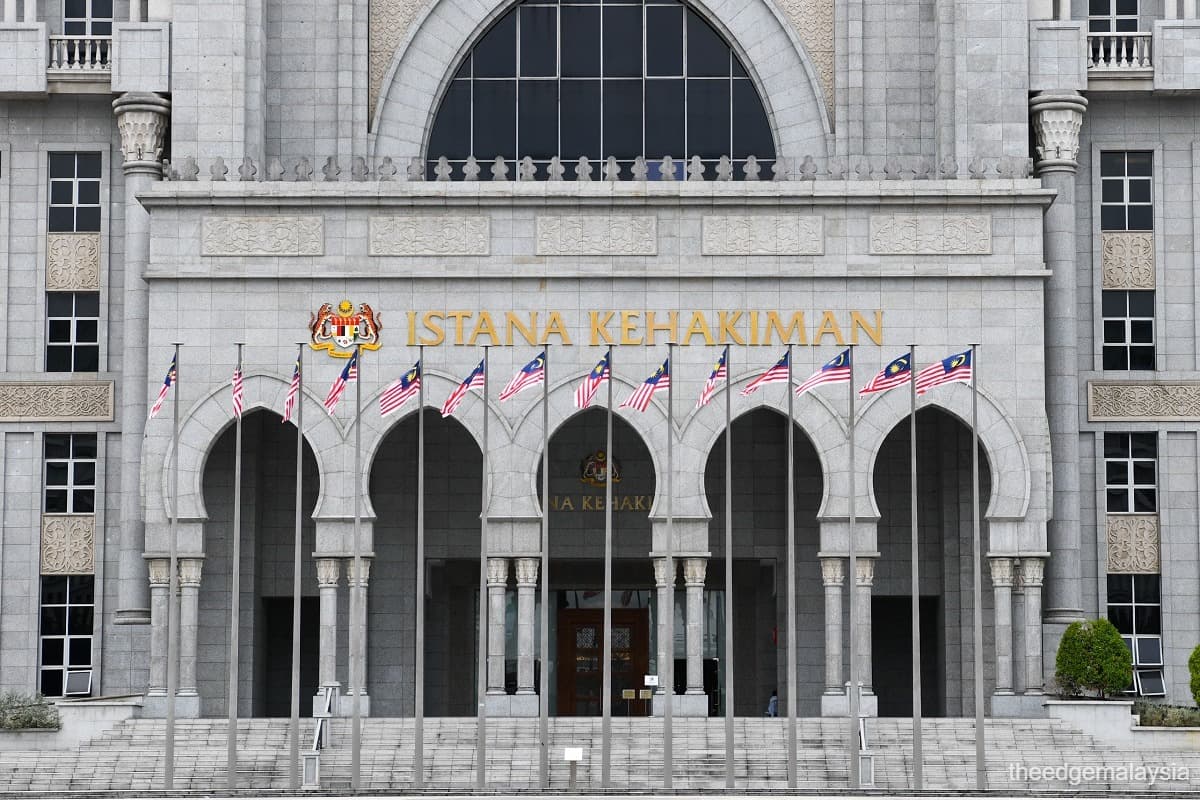
PUTRAJAYA (July 7): Company directors can be held accountable for paying Employees Provident Fund (EPF) debts incurred if a company is not named by the EPF, said the Federal Court.
Newly-retired Court of Appeal president Tan Sri Abang Iskandar Abang Hashim said this in a written judgment released on his last day before retirement (July 2), on a decision by the Federal Court on July 17, 2024, which had dismissed the application by four Serba Dinamik Group Bhd directors — Datuk Mohd Abdul Karim Abdullah, Datuk Abdul Kadier Sahib, Datuk Awang Daud Awang Putera and Tan Sri Mohd Shariff Omar — for leave (permission) to challenge a summary judgment entered against them.
The matter pertains to the non-payment of RM2.951 million against the first three men, and another RM330,776 against Shariff, for unpaid EPF employer and employee contributions between September 2021 until July 2022, along with dividend and late payment charges for employees of Serba Dinamik Group.
Abang Iskandar retired on July 2, following the non-extension of his tenure by the government, a fate also experienced by former Chief Justice Tun Tengku Maimun Tuan Mat, who retired a day earlier (July 1).
A summary judgment was entered on the quartet by the Shah Alam High Court in August 2023, with the decision upheld by the Court of Appeal in 2024.
It is to be noted that Serba Dinamik Group is under liquidation, as is Serba Dinamik Holdings Bhd.
Central to the issue is Section 46 of the EPF Act, on joint and several liability of directors, that stipulates that “where any contributions remain unpaid by a company, a firm, or an association of persons, then, notwithstanding anything to the contrary in the Act or any other written law, the directors of such company, including any persons who were directors of such company during such period in which contributions were liable to be paid, or the partners of such firm, including any persons who were partners of such firm during such period in which contributions were liable to be paid, or the office-bearers of such association of persons, including any persons who were office bearers of such association during such period in which contributions were liable to be paid, as the case may be, shall, together with the company, firm, or association of persons liable to pay the said contributions, be jointly and severally liable for the contributions due and payable to the Fund”.
Abang Iskandar said the issue with the directors was that action should be made along with the company, rather than themselves, as they referred to the phrase — “shall together with the company”.
Lawyers for the four directors contended that by suing the directors alone — without the company — constituted selective prosecution that would result in the company (although in liquidation later) to escape liability.
EPF lawyers told the court that a summary judgment was filed as there were no issues to be tried, as the four of them were directors of the company at the material time, and their appointment was before the interim liquidator was appointed on Aug 23, 2022.
Furthermore, they said it was up to the EPF to name the parties whom it is suing, as directors can be sued independently of the company.
Defendants did not show how COA decision was wrong
Abang Iskandar said the bench, which also comprised Chief Judge of Sabah and Sarawak Tan Sri Abdul Rahman Sebli and Federal Court judge Datuk Zabariah Mohd Yusof, were not convinced that there was any ambiguity in the interpretation of Section 46 of the EPF Act that required further clarification.
“The directors have not in fact provided the bench with any authority to support its proposition as to how and where the Court of Appeal had gone wrong. There is also no authority to show that there have been different or conflicting interpretations on Section 46 of the EPF Act in respect of the proper party and the question of liability.
“Importantly, we are of the view that in the Edwin Cassian case, the Federal Court had clearly given effect to the provision in Section 46 of the EPF Act, even in case of where the court judgment did not state such phrase of ‘joint and several liability’ in a bankruptcy suit filed against a director only.
“That (Edwin Cassian) case indicated that even if a company is not sued or taken action against together with the directors, the joint and several liability under Section 46 of the EPF Act is effective and capable to be enforced,” he said.
Abang Iskandar said that guided by this being a summary judgment application, there is unlikely to be a prospect of success should the Federal Court grant leave, and there is a low degree of public importance or necessity for this issue to be clarified further, with the apex court thus deciding to dismiss the appeal.
“There is no conflict or ambiguity or confusion on the meaning and application of Section 46 of the EPF Act in respect of the proper party and the question of joint and several liability of directors during that period that defaulted the outstanding EPF contributions.” he said, in ordering the directors to pay costs of RM30,000 to the EPF.
The four directors were represented by Rajashree Suppiah and Amira Nur Nadia Azhar, while Afifi Ahmad, Adilah Abdul Wahid and Anis Dayana Mat Daud appeared for the EPF.