

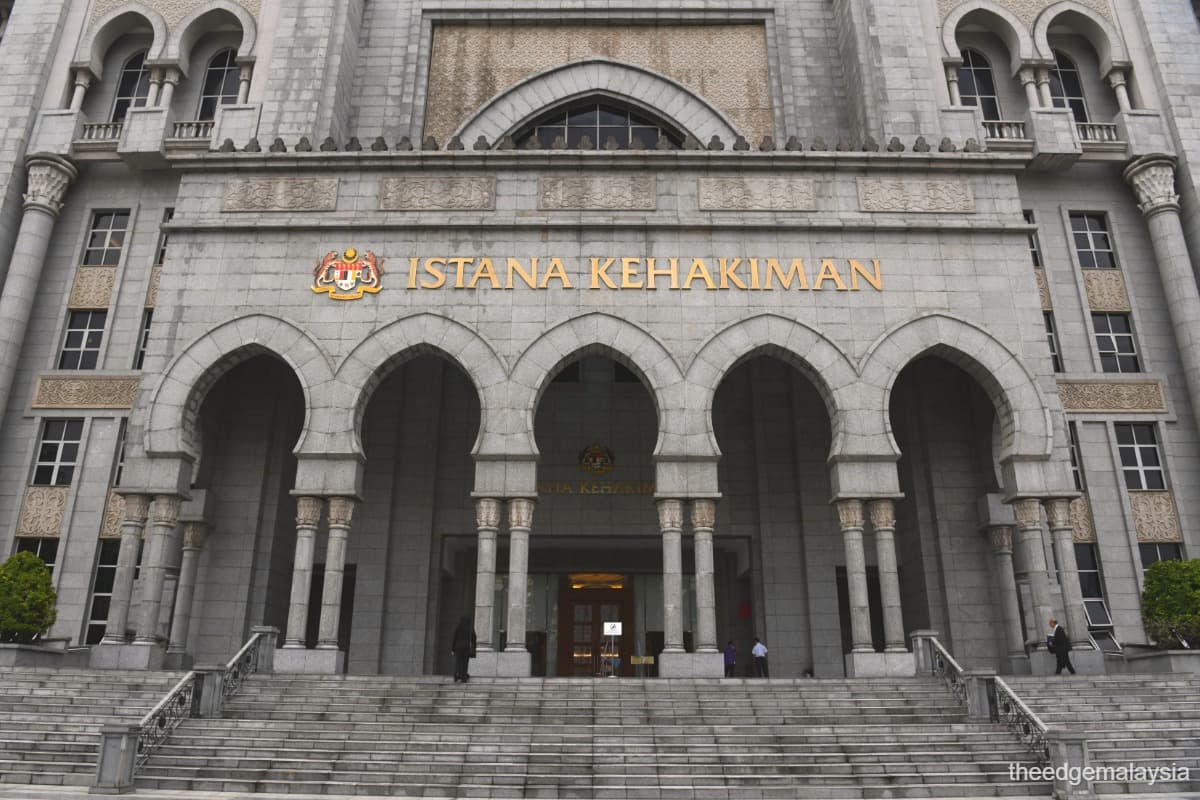
PUTRAJAYA (July 1): The Federal Court on Tuesday ruled that it is unconstitutional to criminalise organisers of peaceful assemblies for failing to give notice of the assembly to the authorities.
Reading out the unanimous decision, outgoing Chief Justice Tun Tengku Maimun Tuan Mat struck out Clause 9(5) of the Peaceful Assembly Act 2012 which stipulates that an organiser can be slapped with a fine of not more than RM10,000 for failure to provide a notice to the police, five days prior to the planned gathering.
"From this perspective, the act of criminalising the right of any citizen to organise an assembly is no different than any incursion of another citizen’s right to attend such an assembly.
"Yet, Subsection 9(5) makes this distinction by criminalising the organising of an assembly, but not the attending of the assembly itself. To make matters worse, the offence in Subsection 9(5) fastens even in a situation where the assembly so organised ends peacefully, as its organiser may nonetheless be called to face a criminal charge for, in effect, organising a peaceful assembly — a right otherwise guaranteed to him by Article 10(2)(b)," Tengku Maimun said.
She added that whether or not there is compliance with the notice requirement as required by the law, "there is no question that should any such assembly turn unruly, become unlawful, or cease to be peaceful, the police are fully empowered to take action in respect of offences against public tranquillity".
Tengku Maimun led a five-member apex court panel which also consisted of Court of Appeal President Tan Sri Abang Iskandar Abang Hashim, Federal Court judges Tan Sri Nallini Pathmanathan and Datuk Rhodzariah Bujang, along with Court of Appeal judge Datuk Mohd Nazlan Mohd Ghazali.
She added that the Peaceful Assembly Act 2012 was passed with the "noble intention" of preserving the right to peaceful assembly guaranteed by the Constitution. However, to criminalise the organiser for failure to adhere to the notice period was not consistent with that goal.
“Any laws passed by Parliament are not simply rendered valid because they are passed for the reasons stated in Article 10(2), but they must also be objectively fair and proportionate to the aim of, and reason for, those restrictions,” the CJ said.
Tuesday's decision was in relation to Malaysian United Democratic Alliance’s (Muda) former secretary general Amir Hariri Abd Hadi's case, where, as the organiser of the rally, he was charged in August 2022 with failing to notify the Dang Wangi district police five days prior to holding an assembly in front of the Sogo shopping complex in Jalan Tuanku Abdul Rahman here.
The assembly was held on Aug 14 that year, demanding answers from the government regarding the littoral combat ship (LCS) issue. Amir Hariri claimed trial to the charge.
In August last year, the High Court allowed Amir Hariri’s application to refer two constitutional questions to the Federal Court.
The questions were on whether Section 9(5) of the Peaceful Assembly Act 2012 violates the right to freedom of assembly enshrined in the Federal Constitution.
This is believed to be one of Tengku Maimun's last decisions as the Chief Justice, as Tuesday is her final sitting as a judge due to mandatory retirement.