

This article first appeared in Wealth, The Edge Malaysia Weekly on June 23, 2025 - June 29, 2025
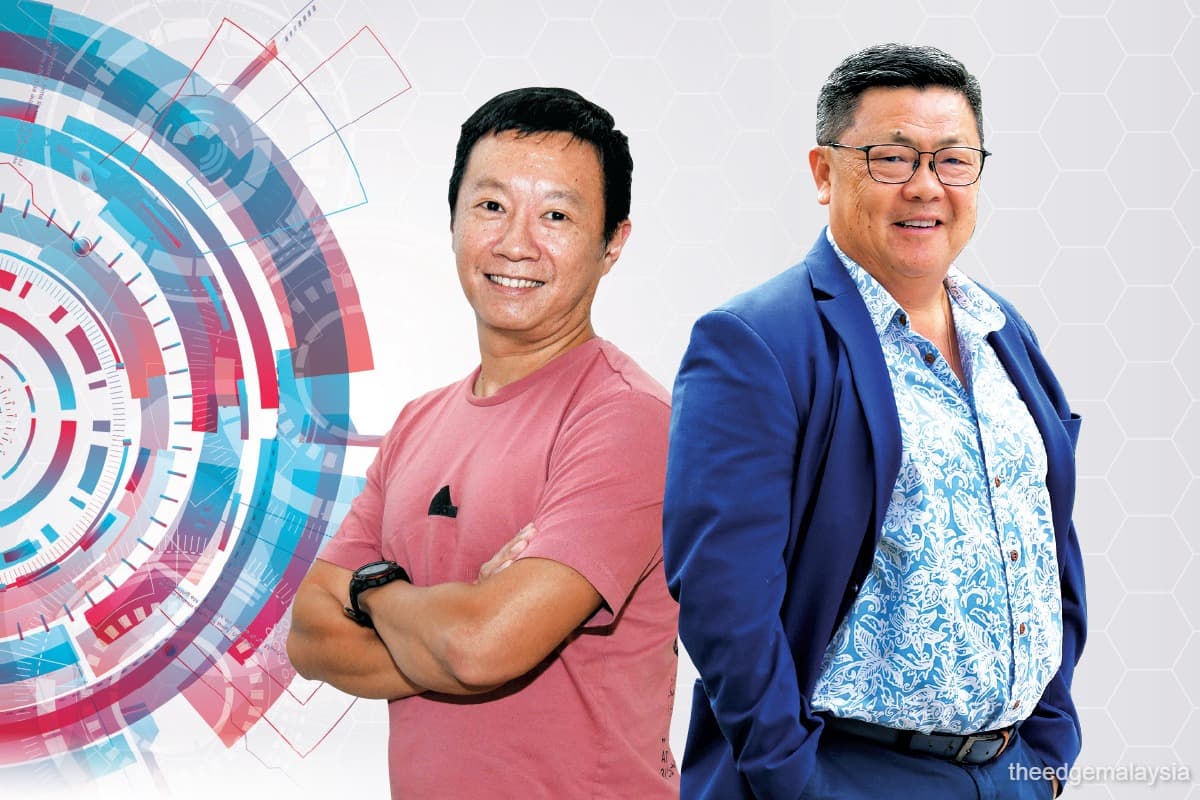
Two start-up founders, Foong Chee Mun, co-founder of MoneyLion Inc, and Chan Kok Long, co-founder of iPay88 Sdn Bhd, have made an indelible mark on the fintech landscape. Both have managed to build their start-ups from the ground up and subsequently sell their stakes.
Chan co-founded iPay88 in 2006, during the early stages of digital payments in Malaysia. The company played a crucial role in developing the country’s e-payment infrastructure, which paved the way for wider adoption of cashless transactions. In 2015, iPay88 was acquired by Japan’s NTT Data Corp.
Foong co-founded MoneyLion in 2013 in the US, leveraging artificial intelligence (AI) to disrupt traditional banking by offering financial services tailored to underserved consumers. MoneyLion went public on the New York Stock Exchange in 2021.
This is a rare milestone in the country’s start-up landscape. Malaysian start-ups had seen 482 acquisitions and 568 initial public offerings as at March 19, which represents a 5.5% exit rate for all Malaysian start-ups, according to Tracxn data, a global market intelligence platform that provides data on start-ups, private companies and emerging industries.
But what happens after start-up founders successfully exit their ventures? Famously in Silicon Valley, the PayPal Mafia, a group of former PayPal executives including Elon Musk, Peter Thiel and Reid Hoffman, revolutionised the tech industry after their company was acquired by eBay in 2002 for US$1.5 billion by launching or investing in other companies, creating billion-dollar businesses such as Tesla, LinkedIn, YouTube and Palantir.
Others have taken a different path. Dustin Moskovitz, co-founder of Facebook Inc, launched Good Ventures, a philanthropic foundation supporting global health and other altruistic causes. Some, like Tumblr founder David Karp, chose to step away from the spotlight after selling their companies — Karp did so, following Tumblr’s acquisition by Yahoo! in 2017.

Foong Chee Mun continues to make an impact with AI
After the roughly US$1 billion acquisition of MoneyLion Inc by Gen Digital Inc last December, Foong Chee Mun is now cash-rich. He wants to deploy the funds to make a lasting impact in the fintech and AI scene, nurture the second-generation of tech founders while preserving and growing his wealth for himself and his family.
Sharing his investment strategy, Foong says part of this wealth goes to public-listed mega-cap technology companies. The rationale is simple. He leverages his past experience by examining where his former company, MoneyLion, allocated most of its tech budget to.
Among them are members of the “Magnificent Seven” — tech giants that have seen their share price soar in the past two years. The seven include Microsoft Corp and Amazon.com Inc. MoneyLion’s investment also includes emerging and promising tech counters such as cloud-based data warehouse platform Snowflake.
“My philosophy is very simple. I look at the top five technologies my company is spending on. Then I invest in the top five companies in the public market,” he says.
That’s not all. As a battle-tested and proven tech founder with vast experience in investing and fundraising activities, Foong knows too well to not put all his eggs into one basket.
He invests in other promising markets and sectors that he does not understand as intimately as the tech sector. For these investments, Foong uses exchange-traded funds (ETFs) and relies on fund managers that he knows well. For example, he invests in biotechnology companies in the US and India through Good AI Capital, a venture capital firm of which he is an adviser.
“You don’t want to invest in stuff you don’t know, but you have to diversify. For me, when I want diversification, I invest in something like an index fund. [Venture capital firms] are an index fund for start-ups [for me]. You just invest and let them do their job.”
Foong has a soft spot for start-ups, however, and wants to help nurture the next generation of tech founders. Among his investments are Swipey, a financial services platform; and Vircle, a cashless payment solution for schools.
Why the two start-ups? Foong developed a close relationship with Swipey’s founder when he was with MoneyLion, as it uses the former’s solutions for operational needs. That was when he saw potential in the company’s ability to streamline payments.
Vircle, meanwhile, is a fintech platform that lets parents manage their children’s digital allowances, savings and spending via prepaid cards with parental controls that can be used at schools and Visa merchants. It also enables cashless transactions and meal orders for schools.
In fact, many of Foong’s friends from investor circles are familiar with the company because their children used it in international schools.
His investment in start-ups remained limited to just two companies, as he prefers to focus on his core expertise rather than actively managing multiple investments.
Back to the grind
AI gained attention in late 2022, when ChatGPT entered the market. Foong was already in the technology in 1999. This was when he founded Simulex Inc, a boutique research firm specialising in AI and advanced analytics for predicting human behaviour.
Foong, now chief product officer of the YTL-Sea Digital Bank Project and CEO of the YTL AI Labs, aims to continue making waves in that space.
With Ryt Bank, Foong sees an opportunity to improve financial access for older users and the lower-income segment. He aims to apply AI effectively and ensure it serves human needs.
One of its features, Ryt AI, is a personalised, AI-powered private banker designed to simplify banking services, deliver tailored financial insights and manage advanced savings strategies.
AI-powered banking bots will be able to help users navigate digital finance by guiding them through complex transactions in a conversational manner, he says.
In addition, Foong’s team developed Malay-language AI models for local users, ensuring that the technology is accessible to all. Plans include expanding support for Chinese and other regional languages.
Ryt Bank — a joint venture between YTL Digital Capital Sdn Bhd and Sea Ltd — commenced operations on Dec 20, 2024, and will be launched in phases over the coming months to ensure a smooth rollout.
How will Ryt Bank compare with other digital banks? Foong says its technical infrastructure was built from the ground up to support AI-driven innovation. This means the platform can continuously evolve with cutting-edge AI capabilities.
Essentially, Ryt Bank’s AI-first approach will allow for continuous experimentation and innovation. “Ryt Bank’s technology stack is built to support AI, to support experimentation from the ground up. Frankly, I don’t think other digital banks or non-digital banks’ technical stack is as well designed to support AI from the ground up,” he says.

Chan Kok Long looks to give back to society
Chan Kok Long is one of the earliest start-up founders who has managed to make a successful exit, but he is not resting on his laurels.
He co-founded iPay88 in 2006, during the early stages of digital payments in Malaysia. In 2015, Japan’s NTT Data Corp acquired a majority stake in the company to strengthen its presence in Asia-Pacific. Chan partially exited from his company when he sold a 51% stake to NTT in Malaysia that year. He then exited entirely when he sold his remaining shares in the company’s Asean operation across six countries recently.
Chan announced his departure from iPay88, effective from end-March 2025, after fulfilling his contractual obligation.
While he did not disclose the amount he received, Chan says it was substantial, as it covers six countries. iPay88 also held valuable financial licences, which significantly increased its market worth, he says.
Still, he has no intention of retiring. As one of the earliest entrepreneurs to achieve a successful business exit and accumulate significant wealth, Chan now aims to align financial success with meaningful social impact.
“As an entrepreneur, making money is important. But half of my heart is [on] how to give back. I want to do something that’s very meaningful, that every product that I launch helps some people,” he says.
With this intention, Chan is looking at channelling his wealth into four main investment areas: environmental, social and governance (ESG); AI safety; electric vehicles (EVs); and health tech.
In this regard, he is a limited partner in a fund that invested in Eclimo Sdn Bhd, a Malaysian EV bike company. Chan sees an ecosystem being built around EVs that include digital services, financing options and insurance integrated within an app.
He believes the real revenue opportunity is in the apps, which every EV user interacts with daily. Once users grow accustomed to regularly using an app, companies can easily expand into marketplaces that serve users’ daily needs.
“I am working with Datuk Dennis Chuah, founder of Eclimo, to work on the regional roll-up … [This is] with my connection in Southeast Asia. Chuah also has a strong connection in Southeast Asia. We will see how to leverage our synergy.”
In terms of AI safety, Chan will continue to explore opportunities in this space, working closely with his son, who is involved in AI safety initiatives. Although Chan has yet to make investments in this field, he anticipates that there will be significant opportunities.
He says there are multiple approaches to AI safety, which include cybersecurity, working on top-down policymaking and developing hardware solutions such as monitoring chips. Chan acknowledges, however, that AI safety is still a learning process for him.
He is investing in APR Innovation, a company that helps organisations recycle their IT assets and recover value while minimising their environmental impact. The company achieved RM33.3 million in revenue in 2021.
“E-waste is going to grow very big because there is a lot of [digitalisation]. And with all this AI, more data centres, more people using digital [technology], there will be more waste.
“You cannot just dispose of digital things like laptops, just throw in the dustbin and that’s it. You have to dispose of it properly.”
Moving on to the next venture
Chan was initially not interested when NTT approached him with an acquisition proposal in 2015. The company was persistent, however, and he eventually agreed to sell a 51% stake in iPay Malaysia while retaining ownership of iPay’s regional operations in Indonesia, Thailand and the Philippines.
NTT’s involvement instantly enhanced iPay’s credibility with banks and regulatory bodies, accelerating its expansion. As the market matured, the business became a “big boy’s game”, which required significant compliance measures and cybersecurity protection. This was when he decided it was time to exit entirely.
After Ipay88, his health-tech venture, Carehaus Sdn Bhd will be Chan’s next entrepreneurial challenge.
The company will focus on acquiring and distributing technologies that can solve life-threatening medical conditions. “[For example], there are Malaysians who develop good diagnostic technology but they don’t know how to market it. So, that’s where we come in,” he explains.
Carehaus is the holding company that will acquire medical companies and technologies through mergers and acquisitions, he says.
Chan has already shortlisted medical technologies for investment. For example, he is interested in a diagnostic test kit that allows multiple disease tests to be conducted with a single device.
His immediate focus is on wound-healing technologies. He says many people underestimate the risks of poorly treated wounds, especially for diabetics, where small cuts can escalate to severe infections and amputations.
“These are the kinds of technology I want to acquire. I want to own the distribution rights. So, that is why, for the last 12 months, I have been visiting a lot of all these technologies.
“For instance, there’s one from China, where a 10-minute scan can give you 60 pages of medical reports. It’s a quantum technology where the scanner goes to electron level,” he says.
He aims to build an ecosystem that integrates AI-driven diagnostics and healthcare solutions, medical technology and patent acquisitions, digital payment infrastructure and cybersecurity to protect sensitive data.
While he declines to disclose a specific amount, Chan says he can self-fund the business with several million dollars. He plans to seek external funding when pursuing patents or acquiring technology.
Chan aims to break even within 12 months, as he has conducted extensive research and identified best-selling models. This is because he focuses on strategy, market validation and securing a strong team instead of focusing only on raising capital.
As his business scales up and he sets out to acquire patents and advanced technologies, he recognises the need for venture capital and private equity funding.
“I [don’t] believe in seed funding. I’m not somebody who is new to business … Obviously, I can fund it myself. I don’t burn money unnecessarily. For every dollar I spend, I always look at what the return is. My strategy is I will invest and I make sure I break even within 12 months,” says Chan.
“Before I start the business, I do all the research and pick out the best-selling models … To me, whether I want to invest RM1 million, RM2 million, RM3 million or whatever, the funds are always there. Now, my joy and the reason to make money is to see people benefit from it.”
Chan pledges to allocate 20% of the company’s profits to charity, with a focus on education and healthcare as part of his commitment to social impact.
Adopting a multi-level investment strategy
On a personal note, Chan structures his investments across three levels: passion-driven, mid-term and long-term.
Passion-driven investments are those in which he is directly involved in building the business, such as iPay88 and his new health-tech venture. For mid-term investments, he favours bonds and blue chip stocks, especially in the banking sector. He believes banks will continue to thrive because of technological advancements that allow them to reach customers directly via digital platforms.
Overall, Chan views property as his primary investment vehicle, seeing it as a strong hedge against inflation. Real estate also holds personal significance for him. As a child, he watched his single mother struggle to afford even a modest flat — a memory that instilled in him a deep determination to own property. He bought his first house in his fourth year of university, funding it by offering tuition in mathematics and science.
Chan was a student at Universiti Kebangsaan Malaysia (UKM) and won a British Petroleum scholarship to help pay for his education. Over time, he has expanded his real estate holdings via a buy-and-sell strategy, continuously upgrading to larger properties.
On the other hand, start-up investments should be viewed as long-term commitments, notes Chan, because these investments often require at least a decade before they yield significant returns.
He adds that most start-up failures stem from founder-related issues rather than flaws in their business models. Chan shares an example of a failed investment in which the founder relied too heavily on minority partners rather than actively driving the business.
“You can speak to any VC or private equity firm. Ninety per cent of start-up failures are due to founder problems,” he says.
To overcome this obstacle, Chan says, founders must clearly understand their “why”. His own journey into entrepreneurship was driven by financial hardship after losing RM300,000 in the stock market while expecting his second child. His determination to provide quality education and a stable life for his family helped him build resilience and success.
He credits much of his success to his mentor, Dr Lai Yeng Chai of the Genting Group, who shaped his mindset and taught him the importance of accepting life’s unfairness without complaint.
Now an adjunct professor at UKM and a mentor, Chan advises young entrepreneurs that the right attitude and mindset are the true keys to success.
Save by subscribing to us for your print and/or digital copy.
P/S: The Edge is also available on Apple's App Store and Android's Google Play.