

This article first appeared in The Edge Malaysia Weekly on June 23, 2025 - June 29, 2025
A reduction in Indonesia’s benchmark interest rate in the second half of this year — something widely anticipated by economists — could help alleviate tight liquidity in the banking system and ease lenders’ elevated funding costs, analysts say.
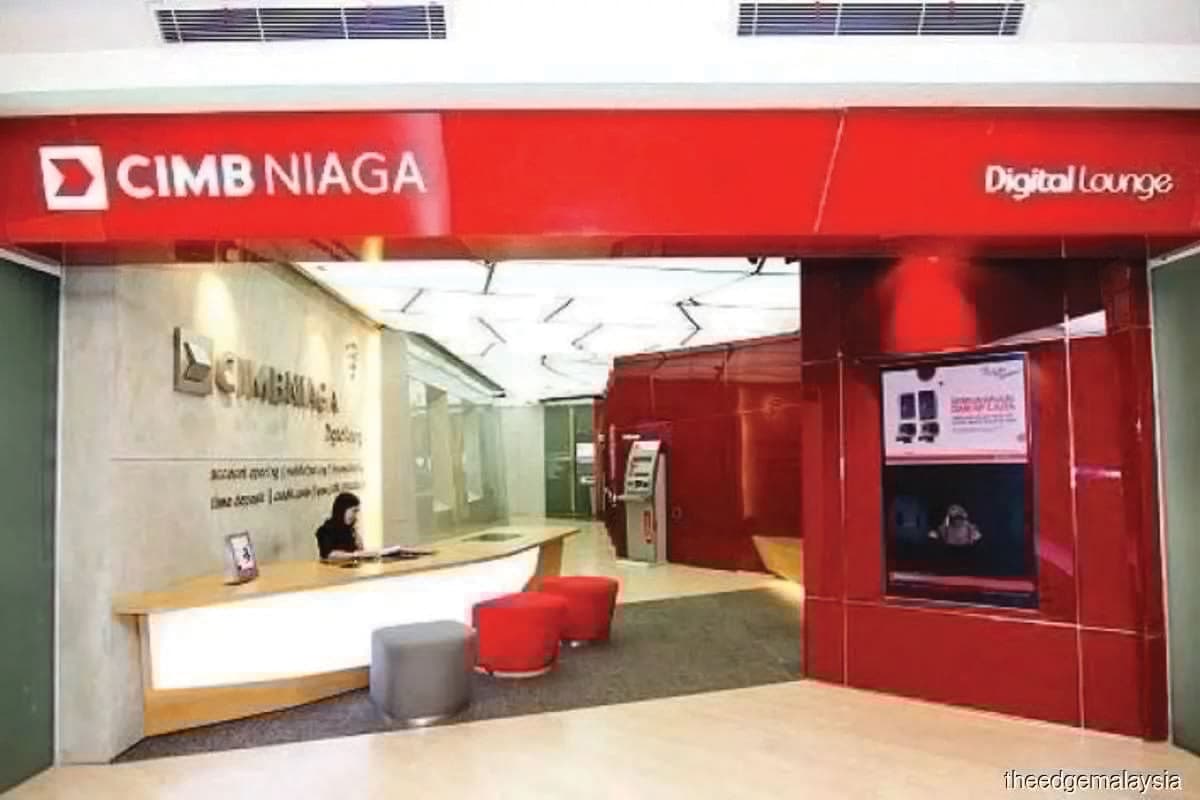
Persistently tight liquidity since last year has been one of the biggest challenges for Indonesian banks. Lenders, including Malaysian-owned Bank CIMB Niaga and Bank Maybank Indonesia, face intense competition for deposits, which puts a strain on their margins.
Last Wednesday (June 18), Indonesia’s central bank kept the benchmark interest rate steady at 5.5% as widely expected, but indicated that there was room for easing. Economists are predicting that there will be one or two 25-basis-point (bps) cuts in the second half of this year. Bank Indonesia (BI) had already cut the policy rate by 25bps twice this year, in January and May.
“Liquidity in the system has been tight thus far. Part of the tightness is seasonal due to a combination of government bond issuances, dividend payment [by banks and corporates] and Lebaran festivities, and these have been compounded by slower government disbursements due to the transition period associated with the reallocation of ministerial budgets. Because of the liquidity issue, banks are having to pay higher rates in their chase for deposits and this is why margins have been under pressure,” David Chong, a regional banking analyst from RHB Research, tells The Edge.
“Should there be further BI rate cuts, as expected, that will be helpful for banks as it will help ease the cost of liquidity via lower deposit rates, all else equal.”
While Indonesia banks have fixed and floating rate loan books, similar with regional peers, a portion of loans there are also on managed rates, Chong points out. “In Indonesia, it is common for banks to have quite a sizeable proportion of their loans on what you call managed rates or negotiated rates. So, in a situation of policy rate cuts, the loan rates for their managed and fixed rate loan books will continue to hold steady while, at the same time, they would be able to adjust down deposit rates, which will be helpful for margins.”

Margin pressures were apparent in the recent 1Q2025 financial results of Indonesian banks. Bank Mandiri, the largest lender by assets, saw net profit grow by 3.9% year on year (y-o-y) to 13.2 trillion rupiah. Quarter on quarter (q-o-q) earnings fell by 4.1%. Net interest margin (NIM), at 4.8%, fell by 27bps from a year ago, and 47bps a quarter ago.
“We expect tighter liquidity will continue to pressure [banks’] NIM in 2Q25. However, we believe liquidity could ease in 2H2025 from the impact of the easing monetary policies and higher fiscal spending realisation in 2H2025. Supported by their strong Common Equity Tier-1 ratios and robust provision coverage, Indonesian banks could weather current global and domestic macroeconomic uncertainties,” UOB Kay Hian says in a June 11 report on the sector. It maintained an “overweight” call on the sector.
The latest banking data shows that money supply (M2) growth in Indonesia slowed to 5.1% y-o-y in April from 6.1% y-o-y in March. Deposits only grew 4.4% compared with 4.7% in March. Amid slowing loan growth of 8.5% in April, the industry loan-to-deposit ratio stood at a higher 90% compared with 84.9% a year ago.
To its credit, despite the liquidity challenge, CIMB Niaga — a subsidiary of CIMB Group Holdings Bhd (KL:CIMB) — turned in a decent report card for the quarter, thanks to tightly contained credit costs. Its 1Q2025 net profit grew 7.4% y-o-y and 6.6% q-o-q to 1.8 trillion rupiah, falling within analysts’ expectations. Its NIM stood at 3.99%, which was lower than the 4.2% a year earlier, but higher than the preceding quarter’s 3.88%.
“Given the ongoing tight liquidity conditions, [CIMB Niaga’s] cost of funds are likely to stay challenging. However, management continues to highlight efforts to rebalance its loan portfolio towards higher-yield assets and grow its fixed-rate loan book (hire purchase, unsecured and personal financing), considering further cuts in benchmark rate by BI. Separately, loan exposure to tariffs is insignificant, accounting for less than 1.5% of CIMB Niaga’s loan portfolio. Therefore, we do not foresee major deterioration in asset quality,” Hong Leong Investment Bank Research says in a note following CIMB Niaga’s 1Q2025 results.
In the last four years, CIMB Niaga accounted for between 24% and 27% of CIMB Group’s profit before tax (PBT). In 1Q2025, it contributed to 24% of the group’s bottom line.
The relatively smaller Maybank Indonesia, a subsidiary of Malayan Banking Bhd (KL:MAYBANK), typically accounts for less than 5% of the group’s PBT. In 1Q2025, Maybank Indonesia’s net profit grew a strong 265.1% y-o-y to 376 billion rupiah, thanks to significantly lower loan loss provisions, but fell 32.5% q-o-q. NIM, at 4.33%, was down by 20bps y-o-y and 4bps q-o-q.
Analysts note that despite the ongoing NIM pressures and other macroeconomic headwinds, Indonesian banks are in a good position to handle the challenges.
“Indonesia banks are facing these headwinds from a position of strength. For example, Indonesia banks are among the best capitalised in the region, and we believe they will maintain a Tier-1 capital ratio of 22%-25% over the next two years,” Ivan Tan, a Singapore-based analyst at S&P Global Ratings, tells The Edge.
The sector could see some vulnerability within certain segments should economic headwinds intensify.
“We see some pockets of vulnerability. Indonesia’s loan-at-risk ratio — including gross non-performing loans (NPL), special mention and restructured loans — stood at 9.9% as at March 2025. Pockets of vulnerable, restructured borrowers could experience credit stress if economic headwinds intensify, particularly micro, small and midsize enterprises (MSMEs), which tend to have thin financial buffers,” Tan says.
The ratings firm notes that Indonesia’s reliance on exports to the US is low, which limits direct hits from rising US tariffs on key sectors that banks lend to. In March the NPL ratio was stable at 2.2%.
S&P Global Ratings forecasts Indonesia’s real GDP growth at 4.6% in 2025 and 4.7% in 2026, following the 5% expansion in 2024, reflecting domestic factors and global trade tensions. “While this is a slower pace of growth, we consider it to be still healthy by regional standards,” he says.

Save by subscribing to us for your print and/or digital copy.
P/S: The Edge is also available on Apple's App Store and Android's Google Play.