

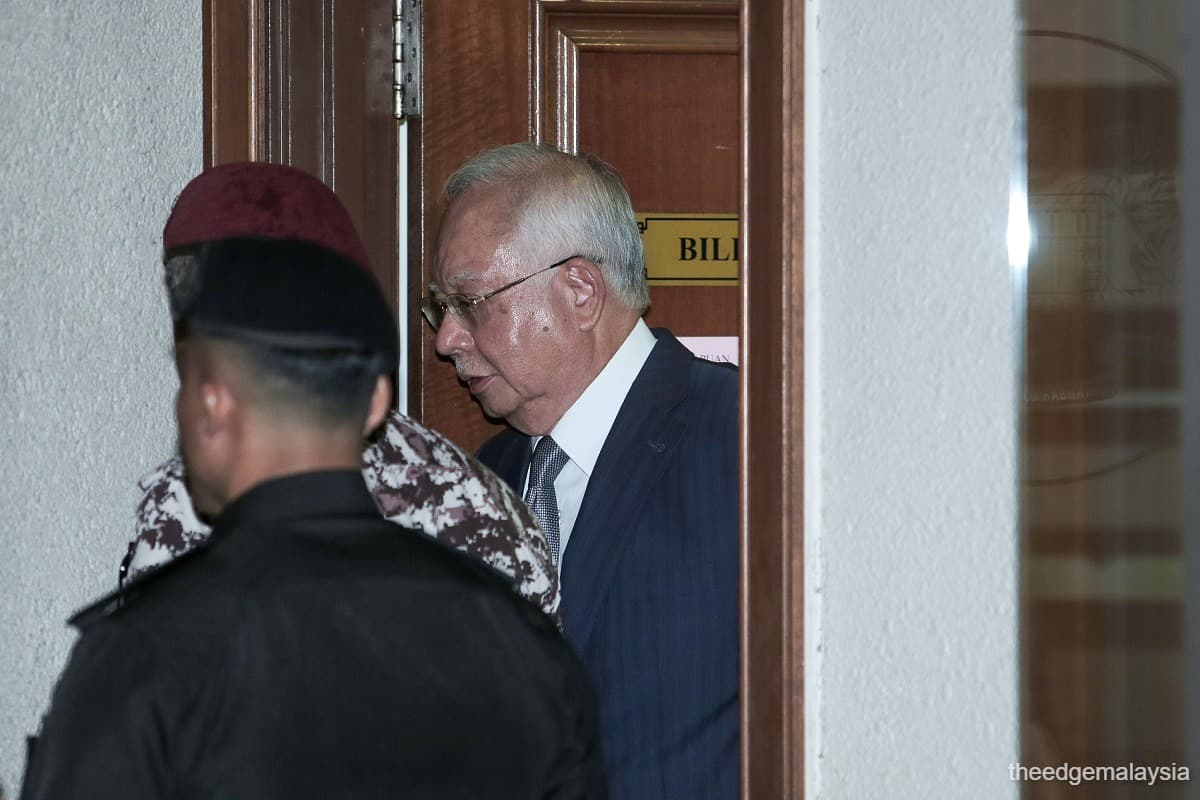
KUALA LUMPUR (June 20): The Center to Combat Corruption and Cronyism (C4 Center) has called on the Attorney General’s Chambers (AGC) to publicly explain the prosecution’s failure to bring former prime minister Datuk Seri Najib Razak to trial in a money laundering case involving SRC International Sdn Bhd.
This comes after the High Court on Friday granted Najib a discharge not amounting to an acquittal (DNAA), noting that the case — initiated in 2019 and yet to go to trial — had remained idle on the court’s schedule for too long.
In a statement, C4 Center said the SRC case is the latest in a growing pattern of high-profile prosecutions involving political figures that have ended in DNAAs or unchallenged acquittals.
Noting that the AGC has yet to adequately explain or address these prosecutorial failures, the anti-corruption watchdog said this has undermined public trust, weakened confidence in the rule of law, and reinforced the perception that justice in Malaysia is neither independent nor impartial.
C4 Center urged the AGC to address internal shortcomings and commit to refiling charges — not only in Najib’s case but also in other politically sensitive cases that have triggered public concern, including the case against Najib and former Treasury secretary general Tan Sri Mohd Irwan Serigar Abdullah, which saw the pair granted a DNAA for six criminal breach of trust (CBT) charges involving RM6.6 billion in government funds.
The group also cited the case involving Deputy Prime Minister Datuk Seri Ahmad Zahid Hamidi, who was granted a DNAA for 47 CBT and money laundering charges linked to Yayasan Akalbudi.
It also noted that the acquittals of Najib and former 1Malaysia Development Bhd chief executive offiver Arul Kanda Kandasamy in the 1MDB audit tampering case went unchallenged after the prosecution failed to file appeals on time, and that DAP lawmaker Lim Guan Eng was discharged in a case involving the purchase of a bungalow below market value nearly two years after being charged.
C4 Center, in is statement, also reiterated its long-standing call for the separation of powers between the attorney general and the public prosecutor, noting that the current structure — in which the attorney general, appointed on the prime minister’s advice, also serves as public prosecutor — raises concerns over executive influence in prosecutorial decisions.
“The only way to dispel these suspicions is for the offices of the attorney general and public prosecutor to be separated — a call more pertinent now than ever,” C4 Ceter added.