

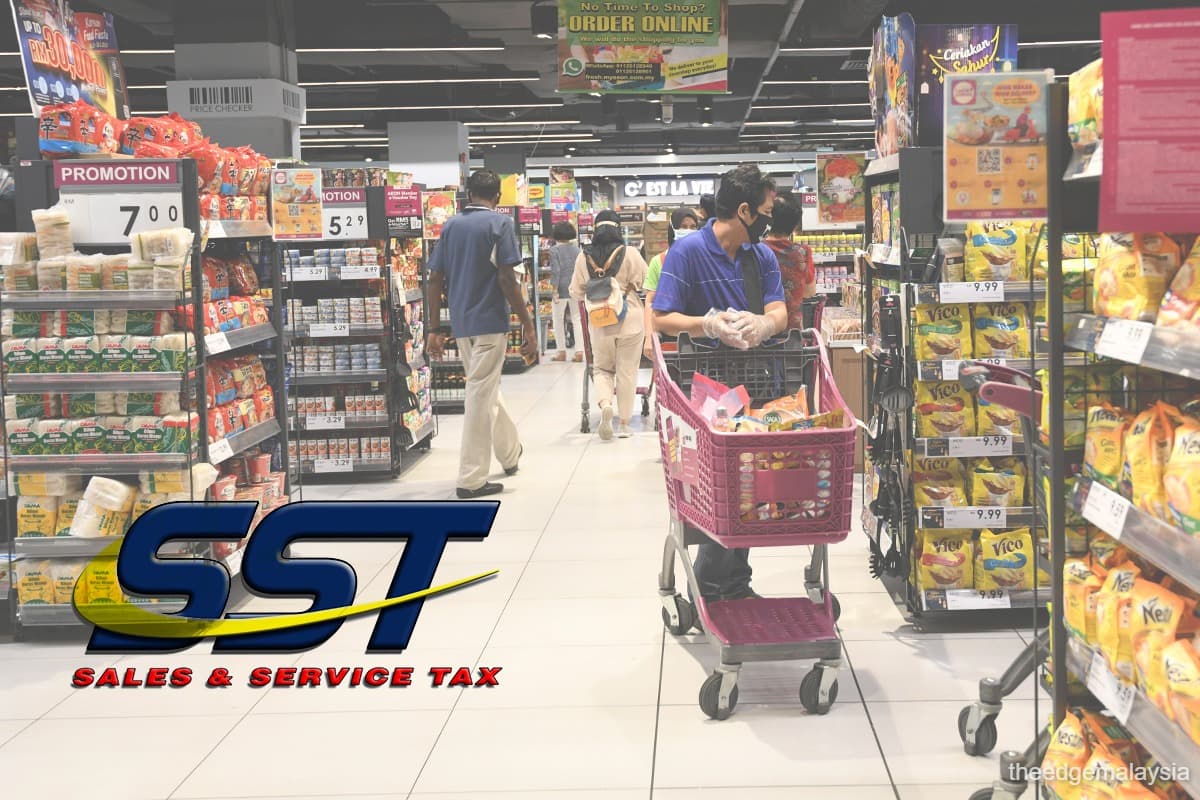
KUALA LUMPUR (June 20): The expansion of the sales and service tax (SST), which takes effect on July 1, is expected to have minimal impact on inflation, according to RHB Research.
The research house estimates the SST impact on inflation for the second half at 0.3% year-on-year, with the full-year average projected at 2%.
"For the entire year of 2025, inflation is expected to average 1.7% with the SST expansion, compared to 1.6% without any fiscal adjustments," said RHB, while keeping its 2025 consumer price index (CPI) forecast intact at 2.2%.
RHB noted that the tax expansion primarily targets discretionary or non-essential items — such as luxury goods, entertainment, and certain lifestyle services — rather than essentials like food, healthcare, or basic utilities.
"By doing so, the policy aims to reduce the burden on the average consumer, thereby limiting the potential for broader inflationary pressures and avoiding a significant dampening of household spending on necessities."
On the fiscal front relating to government revenue, the revised SST is expected to generate around RM5 billion in additional revenue in the second half of the year, and RM10 billion for the full year, said RHB.
The research house noted that the government modelled these estimates through Malaysia’s CPI composition, ensuring that essential items such as food, utilities and public transport remain outside the tax base.
RHB maintained its gross domestic product (GDP) forecast at 4.5% and held its 2025 inflation forecast at 2.2%. It added the fiscal deficit target of 3.8% of GDP for 2025 is achievable, noting that the additional fiscal room is expected to support the government’s efforts to reduce the fiscal deficit.
Additionally, the tax expansion is also expected to support the government’s target of reducing the fiscal deficit to 3% of GDP by 2026.
“Overall, the measured approach to SST expansion reflects a balanced effort to enhance public finances sustainably without significantly disrupting economic activity or consumer welfare,” it said.