

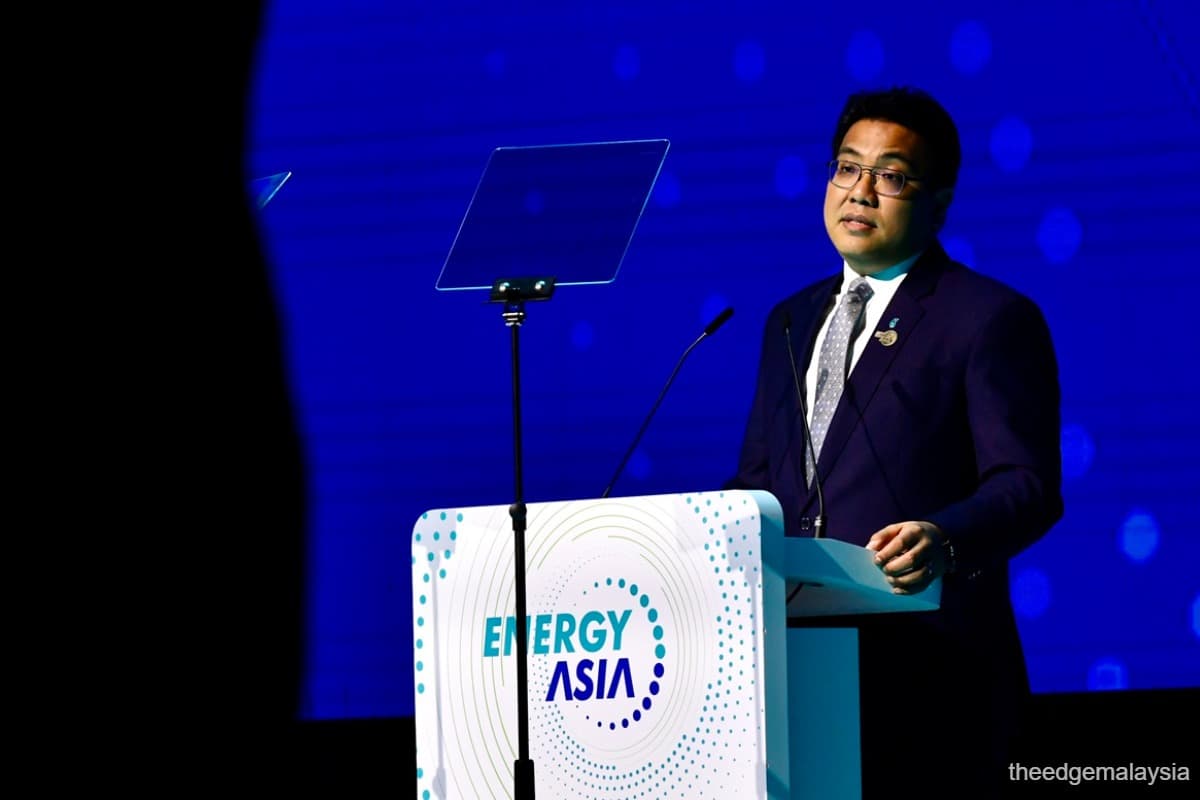
KUALA LUMPUR (June 16): The recent oil price rally — one of the most intense since the 2022 energy crisis — has once again laid bare the fragility of global energy systems, said Tan Sri Tengku Muhammad Taufik Tengku Aziz, president and group chief executive officer of Petroliam Nasional Bhd (Petronas).
Taufik cautioned that the spike in prices, triggered by escalating geopolitical tensions and trade-related conflicts, is unfolding at a time when the global economy is already grappling with the effects of reciprocal tariffs and a strained energy infrastructure.
“In the past few days, [due to] the escalation of the conflict around the Straits of Hormuz, where effectively — 20% of the total global supply flows through every day, we’ve seen price surging in anticipation of a supply shock,” he said at the second edition of the Energy Asia conference on Monday.
“Some may hail this. It’s an intense price rally, one of the most intense since the 2022 energy crisis. But we must remember this is unfolding at a time when the world is still reeling from the specter of reciprocal tariffs.”
He stressed that while the full impact of these developments remains unclear, they pose significant risks to an already overburdened global energy system. “The global energy system, which is already strained from the natural progression of our civilisation, is indeed at great risk,” he warned.
Taufik described the current confluence of global challenges — from persistent geopolitical fragmentation to surging technological demands and climate change — as a “poly-crisis” that demands a coordinated and pragmatic response.
“These seismic shifts of global conflicts, technological revelations, and climate change, have manifested in what Petronas describes as a ‘poly-crisis’. And this ‘poly-crisis’ is what sets the tone and the context for our gathering,” he said.
He noted that Asia-Pacific will play an important role in shaping the global energy transition, with the region expected to represent 50% of global energy demand through to 2050. This would require an estimated US$90 trillion (RM382.1 trillion) in energy investments across Asia-Pacific, to support the energy transition journey, while advancing the region’s net zero ambitions.
Taufik also outlined three key imperatives to navigate the current landscape: diversifying energy sources with a balanced mix of low-emission and traditional fuels, scaling up energy investments, and fostering greater regional collaboration.
“Investments will be critical to ensure energy availability and affordability. Governments, financial institutions and industries must work together to implement policies and frameworks that help unlock capital for energy projects, especially in emerging and developing economies,” he said.
Read also:
Asia-Pacific needs US$90 tril in energy investments to meet net zero goals by 2050, says Petronas chief
Oil and gas important in times of conflict, Saudi Aramco CEO says
Malaysia to spend RM43 bil on grid upgrades to support clean energy, says Anwar
TotalEnergies to double its stake in Malaysian portfolio via soon-to-be-announced deal, says CEO
Petronas CEO: Gas remains critical for Asia's energy transition
PM: Global interconnectedness under strain amid rising geopolitical tensions