

This article first appeared in Forum, The Edge Malaysia Weekly on June 16, 2025 - June 22, 2025
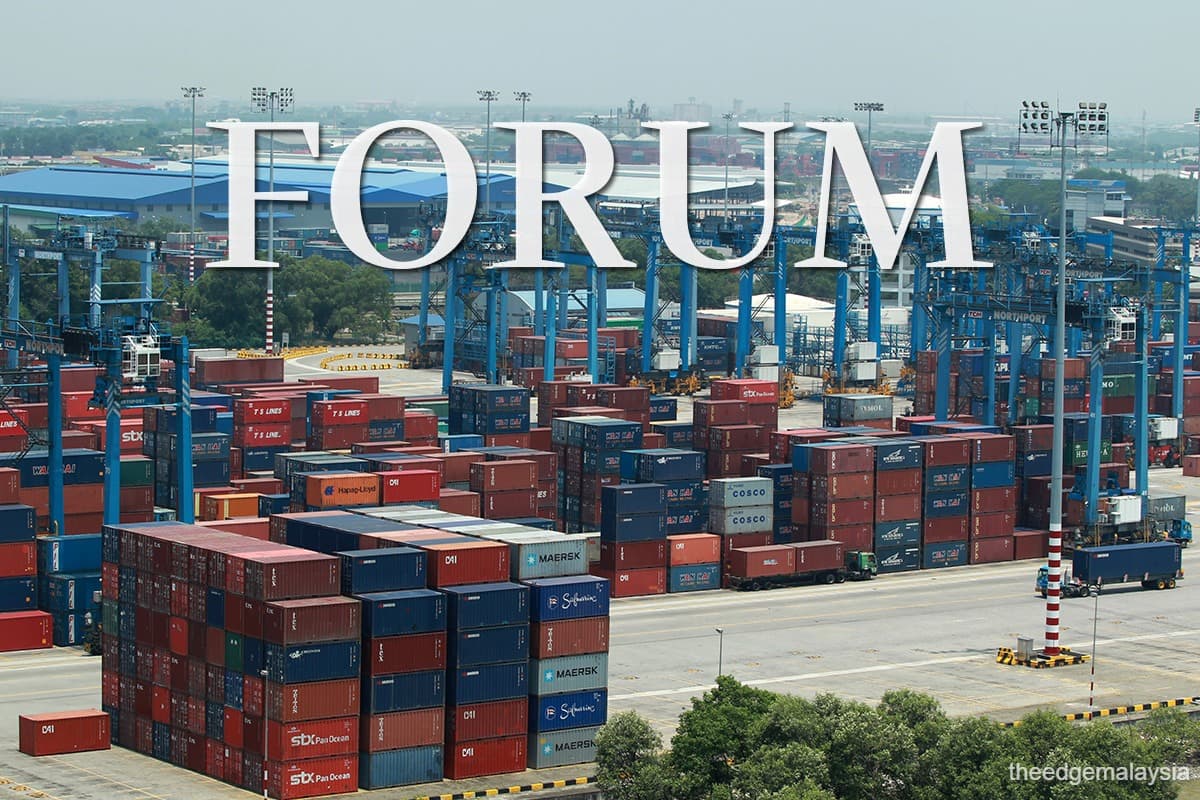
In the regional contest to be the transshipment hub of choice, Singapore continues its meteoric rise, while Malaysia has to confront the sobering reality of its outdated maritime strategies. Singapore’s Port of Singapore Authority (PSA) is adding over 2,500 workers this year, in roles spanning from frontline operationas logistics, culminating in the Tuas Megaport.
In sharp contrast, Malaysia’s fragmented regulatory framework and reliance on paper-based customs processes, even within designated free zones, undermine its competitiveness. The redundant paperwork, overlapping processes by various other government agencies, and the absence of a unified digital system erode the country’s position. Malaysia must transition to a national single window system, such as the TradeNet portal operating in Singapore. Such a move would streamline processes, enabling traders to submit all permits through a single digital platform, reduce bureaucracy and restore the country’s competitiveness in the global trade arena.
In Singapore, containers moving between vessels in a free zone bypass customs paperwork altogether, only requiring a minimum transshipment process, while Malaysia still requires detailed ZB1 and ZB2 declarations under the Free Zones Act 1990 and Customs Act 1967, even for pure transshipment cargo. Streamlining these procedures for standard, non-dutiable goods alone could transform Malaysia into a far more attractive transshipment destination. As the country grapples with the challenge of staying competitive in a rapidly evolving regional logistics landscape, voices calling for data-driven policy and governance have become increasingly urgent.
Yet, policy is racing ahead of demand. Plans for new ports in Port Dickson in Negeri Sembilan and Pulau Carey in Selangor proceed without clear evidence of cargo volumes, a robust industrial base or the road-and-rail links required to feed them. Ports aren’t mere collections of cranes and docks, they depend on market-driven demand, integrated customs processes and seamless government inter-agency coordination. Building new ports in close proximity to well-established hubs such as Port Klang and Port of Tanjung Pelepas along the Strait of Malacca also risks creating redundancy.
While Port Dickson’s inclusion in the Malaysia Vision Valley may appear strategic on paper, the reality is starkly different. Its limited industrial base and underdeveloped transport links are insufficient to generate the container throughput necessary for a viable high-capacity port.
Without robust supporting infrastructure and proven industrial demand, such projects are likely to fall short of their intended objectives, resulting in underutilised assets and wasted capital. The government must make this clear to all stakeholders to avoid costly missteps.
Although Malaysia’s total container throughput edged up by 3.4% to 28.24 million TEUs in 2023, more than 90% of that volume remains locked into Port Klang, Penang Port and Johor Port, with the smaller terminals barely growing or even shrinking. In this context, greenlighting new container ports in Port Dickson and Pulau Carey risks creating underused assets and using capital resources that would be better spent boosting efficiency and capacity at our existing hubs.
Moreover, Malaysia must prepare for the shifting competition being created by the Belt and Road Initiative (BRI). As China’s growing rail network plugs into Penang, Port Klang/Selangor, Johor and the East Coast via the East Coast Rail Link, cargo may bypass our ports entirely. Once Malaysia’s own rail infrastructure is woven into the BRI global system, rail trade volumes will surge and only seamless intermodal links will enable us to capture and balance that growth. The BRI rail option promises to cut delivery time by more than half (around 15 to 20 days from Southeast Asia to Europe, and from Malaysia to China, 13 days). It delivers greater schedule reliability and predictability than sea freight, with fixed train departures and fewer weather-related delays.
The government must recognise that the BRI’s expanding railway network will drive increased trade volumes in the future, particularly once Malaysia’s rail infrastructure is fully integrated into the BRI global rail system. This highlights the urgent need for seamless intermodal connectivity aligned with evolving trade dynamics. Therefore, the development of new container ports must be carefully balanced against actual economic demand and supply to ensure sustainable growth.
The Melaka Gateway project serves as a cautionary lesson in the country’s port and infrastructure planning. Initially envisioned as a transformative deep-sea port and urban hub, it ultimately faltered due to delays, opposition and insufficient demand. This underscores the urgent need for rigorous, data-driven strategies in all future port developments. Malaysia cannot afford a repeat of such costly missteps, especially amid intensifying regional competition. There is simply no room for trial and error. Every port decision must be guided by market realities, demand forecasts and sound strategy. Building new ports without sufficient cargo to sustain them is akin to constructing highways without traffic; expensive, underused and ultimately unsustainable.
In recent press statements relating to port tariffs, the government’s proposed 30% increase has fuelled growing industry concern and calls for a measured, consultative approach. On March 8 this year, Federation of Malaysian Manufacturers president Tan Sri Soh Thian Lai urged the government to postpone the hike, cautioning that higher container handling and storage fees would significantly raise manufacturing and shipping costs, and revealed that Westports, Northport and Port of Tanjung Pelepas tariffs were being finalised for ministry gazettement. On April 22, Transport Minister Loke Siew Fook confirmed that the proposal remained under review and outlined a phased implementation over three years to ease the impact on industry. Then, on May 20, Malaysia Shipowners’ Association chairman Mohamed Safwan Othman pressed for full stakeholder engagement via the Port Consultative Committee before any changes take effect, warning that unilateral increases could undermine Malaysia’s trade competitiveness.
Given that the Port Klang Authority already underwent a two-phase 30% tariff increase (15% in 2015 and a further 15% in 2018), adding another hike now or anytime soon would likely place an undue burden on the entire industry. Policymakers must engage in broad-based consultations with all stakeholders, from port users to manufacturers, shipping owners/agencies and logistics service providers; before making decisions that affect the country’s economic lifelines.
A former Singapore Civil Service customs officer, Gary Foong is senior consultant at Guppe Vision
Save by subscribing to us for your print and/or digital copy.
P/S: The Edge is also available on Apple's App Store and Android's Google Play.