

This article first appeared in City & Country, The Edge Malaysia Weekly on June 16, 2025 - June 22, 2025
Strata malls have played a significant role in Malaysia’s retail landscape since the emergence of shopping centres in the 1970s, yet they often receive less attention than those operated by a single owner, also known as non-strata malls, which have come to dominate the retail scene.
According to Malaysia Shopping Malls Association (PPKM), only 15% to 20% of the 730 shopping malls in the country are stratified. As the single-owner model has proved to be more sustainable for operating retail malls in Malaysia, what does the future hold for strata malls?
Under a strata title scheme, the mall’s units are owned by multiple parties. This long-standing model was started more than five decades ago, mirroring a trend in the region such as in Singapore and Hong Kong.
It was not a deliberate retail concept, but a financial necessity due to the high capital expenditure faced by developers when constructing commercial buildings at that time. As a solution, they began selling individual retail lots in the shopping centres to investors and business operators to generate immediate capital, allowing projects to proceed without requiring full upfront financing.
“This period coincided with Malaysia’s economic expansion, which led to a vibrant retail scene. Both local and international retailers took advantage of the situation by securing ownership of retail lots, allowing them to benefit from rising property values,” Proplead Sdn Bhd executive director Lum Youk Lee, who is vice-president of PPKM, tells City & Country in an email interview.

“Retail businesses that thrived in strata malls included jewellery stores, optical shops, fashion boutiques and speciality stores. The ability to own a retail space rather than lease it from the landlord gave business owners long-term financial security, making strata malls a popular investment choice then. Large department stores and supermarkets too are parcel owners of many old strata malls.”
Before strata malls became popular, most businesses were set up in traditional shophouses, which had several drawbacks such as limited parking space, lack of centralised security and no air conditioning, making them a less conducive environment for customers. With the emergence of strata malls, business owners saw a more attractive alternative, given the air-conditioned spaces, improved security and dedicated parking services, which enhanced both the customer experience and operational efficiency.
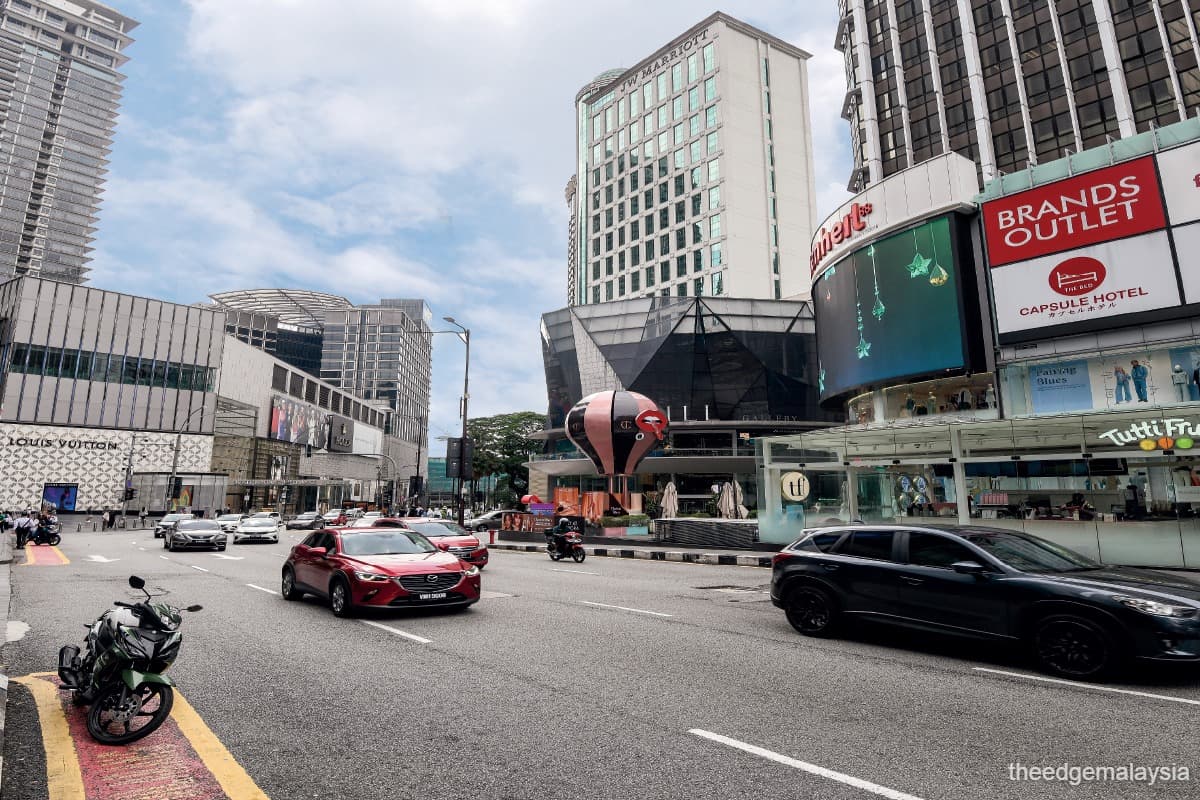
Some of the pioneering strata malls in Kuala Lumpur included Ampang Park Shopping Centre in Jalan Ampang (1973), Campbell Shopping Complex in Jalan Dang Wangi (1973), Pertama Complex in Jalan Tunku Abdul Rahman (1976) and Sungei Wang Plaza in Bukit Bintang (1977). Later developments such as Berjaya Times Square in Bukit Bintang (2003) continued using this model, with other strata malls having as few as 50 to 100 retail units.
Investors saw these commercial spaces as an attractive asset class, which contributed to the popularity of the strata mall model.

The decline of strata malls
As strata malls quickly gained traction in the 1970s, the multiple-ownership structure eventually presented a major challenge for mall operators and managers when it came to executing a cohesive and unified mall management strategy for the mall’s sustainable growth.
“Given that there is no control over unit owners, including their choice of tenants and asking rental rates, [strata] malls usually end up having a random tenant mix and no focus on brand adjacencies. It is a major deterrent, as those established brands emphasise a lot on overall trade mix, positioning of the mall, as well as co-tenancies and adjacencies,” says Savills Malaysia head of retail services Murli Menon.
“There are also instances when some of the individual unit owners have either very high expectations on rents or are not in a hurry to lease out their units, which leads to vacant lots. As a result, making the complex look weak and unattractive to potential shoppers. In contrast, there could be unit owners who are desperate to lease out at any cost to any brand or trade, which also adversely affects the mall’s attractiveness.”
Another key challenge facing strata mall operators is efficient facilities management. Murli explains that as each owner has a say for their unit and common areas of the mall, reaching a mutual agreement becomes a lengthy process. This delays key decision-making for the mall’s necessary improvements, affecting everything from daily maintenance to mid- to long-term refurbishment projects.
“As a result, things like cleanliness in the common areas and other aspects of the facility may decline over time. Well-established brands — whether local, regional or international — often shy away from strata malls. Today, these malls are typically favoured by non-chain, independent retailers seeking a specific catchment area or more affordable rent, as well as service-based and essential product retailers. It also explains why non-strata malls have become the industry’s mainstream now,” he says.
Sharing a similar view, Firdaus & Associates Group of Companies’ group managing director Prem Kumar says the lack of a cohesive mall management strategy is a key reason for an inappropriate trade mix, which leads to failure in generating adequate footfall. This has contributed to the significant shift in the retail landscape today.
He explains that the mismatch between the types of retailers and the needs of the consumer base has made it increasingly difficult for strata malls to maintain their appeal today. As the unit owners and tenants’ business volume declined, it prompted a re-evaluation of the retail industry in the 1990s. This transition sparked a change in how malls are designed and managed today, with a stronger focus on creating a more balanced and appealing tenant mix that is better aligned with consumer demand.
“The failure to generate adequate business volume due to an inappropriate trade mix led to this transition, which then led to a very successful business environment for retailers in non-strata malls,” he notes.
By offering a centralised management structure and a carefully curated trade mix, non-strata malls successfully attracted a wider range of businesses, including well-established brands that were previously hesitant to enter strata malls, says Prem. This model, with more control over operations and tenant selection, provides a more stable and efficient retail environment, fostering growth and profitability for the retailers.

The rise of non-strata malls
As non-strata malls quickly gained market share, strata malls continued to evolve to stay relevant, as the builders sought to include large corporations and department stores alongside smaller investors, creating a hybrid ownership model with both advantages and challenges, especially in management and financial responsibilities, according to Lum.
“One key advantage [of the hybrid ownership model] is that large stakeholders retain control over anchor tenant spaces, ensuring stability and a structured tenant mix. Anchor tenants like department stores and cinemas attract foot traffic, benefiting smaller retailers. Without them, smaller businesses may struggle to draw customers,” he explains.
However, this model also brings financial challenges as large stakeholders often subsidise maintenance costs while anchor tenants negotiate for lower service charges, creating a financial imbalance, says Lum.
For instance, an anchor tenant might secure a rate of RM1.50 psf, while smaller retailers pay RM1.60 psf, putting a strain on bigger parcel owners. Despite such financial burdens, large stakeholders accept them as necessary to maintain the mall’s success, absorbing short-term losses for long-term viability.
Nonetheless, this strategy became increasingly unfair to the bigger parcel owners over time, who raised concerns about long-term sustainability. This accelerated the market’s transition to non-strata malls in the mid-1990s to early 2000s, with developers increasingly focused on single-owner shopping malls for the operational advantages of centralised management.
Under the single-owner and facility management scheme, non-strata malls offer streamlined decision-making, operational efficiency and long-term strategic planning, making it a more sustainable and profitable model in a competitive market.
“The key benefits of non-strata malls include centralised tenant selection, which ensures a balanced retail mix and enhances the shopping experience. These malls also offer flexible rental structures, consistent branding and the ability to quickly implement upgrades and renovations, unlike strata malls, where decisions are often delayed due to multiple stakeholders,” says Lum.
Some of the successful non-strata malls that emerged during that period were IOI Mall in Puchong and 1 Utama Shopping Centre in Petaling Jaya. They demonstrate how centralised control leads to strong tenant performance, high foot traffic and financial stability. With these successful examples, developers are increasingly opting for the non-strata model for long-term profitability and growth.

Finding a way out
As the single-owner model became more popular and dominated the market, strata mall owners have sought to adapt to the situation, including looking to improve governance inefficiencies and simplifying the decision-making process.
“To prevent strata malls from further stagnating, many industry experts advocate for comprehensive legal reforms that would modernise strata mall regulations and introduce more practical governance structures. Such reforms would enable a more equitable cost-sharing model, clearer decision-making mechanisms and stronger enforcement policies to facilitate redevelopment and long-term sustainability,” says Lum.
“Without these reforms, strata malls will continue to struggle with governance issues, making it increasingly difficult for them to compete with modern, single-owner shopping centres that benefit from streamlined management and cohesive operational control.”
Apart from that, some strata mall operators have explored options such as buying back units from individual owners to gain full control over mall operations. This approach allows them to improve the tenant mix and implement the necessary changes to rejuvenate the property efficiently.
Savills’ Murli points out that this strategy comes with its own set of challenges, especially with regard to the price expectations of the unit owners.
“The cost of such buyouts can be significant, and finding an agreement on the fair market value of the units can be a complex and time-consuming process. Furthermore, even when developers successfully execute this buyout, they must carefully balance their investment with the goal of reviving the mall without overextending their financial resources,” he notes.

Perhaps one of the most successful strata mall transformations has been Fahrenheit 88, which was redeveloped from the former KL Plaza (1986) and repositioned to align with contemporary retail trends, says Lum.
“Its revival was marked by the introduction of Malaysia’s first-ever Uniqlo store, which became a key anchor tenant and significantly boosted foot traffic. Today, Fahrenheit 88 continues to operate as a prominent mid-sized retail mall in the heart of Bukit Bintang, illustrating how a well-executed modernisation plan can breathe new life into ageing strata malls,” he says.
The building was originally developed as KL Plaza in 1986 and faced growing obsolescence in its later years as retail trends evolved. Recognising its strategic location in the heart of Bukit Bintang, directly across from Pavilion KL, the property was acquired in 2010 for about RM400 million by parties associated with the Pavilion Group, an experienced mall owner and operator, according to Lum.

He says the acquisition proved to be a turning point as the single entity’s ownership of nearly a 100% stake in the strata scheme enabled the mall to be modernised comprehensively, with minimal stakeholder resistance, something typically difficult to achieve in fragmented ownership structures at other strata malls.
“The transformation included a full-scale renovation costing more than RM100 million, alongside a strategic repositioning of the tenant mix to cater for a younger, more trend-conscious consumer segment,” Lum notes.
He explains that Fahrenheit 88 is benefiting from the operational synergies with Pavilion KL. The two malls are physically connected at both the ground and basement levels, enabling cross-selling and upselling opportunities between the premium Pavilion tenant pool and more accessible brands incubated in Fahrenheit 88. This dual-format ecosystem mirrors successful models abroad, such as Siam Center and Siam Paragon in Bangkok, which have different positioning but function as a seamless retail cluster.
However, there have also been many unsuccessful attempts at such transformation. The underlying issue remains: fragmented ownership continues to create difficulties when it comes to ensuring a cohesive and successful management strategy for strata malls.
“As mentioned earlier, it is almost impossible to have a cohesive and progressive mall management strategy in place for strata malls as tenant relationship management is difficult. It does not exist, as each tenant only deals and interacts with the respective unit owner. Each of whom will have their own approach to managing tenants as well as rental expectations,” says Murli.
“Obtaining consent from owners of strata lots, such as for asset enhancement, has always been extremely difficult and has experienced failure in most situations. There are hardly any examples of successful transformation,” says Prem.
“Therefore, stratified malls are not sought after by investors and as such has led to erosion of value. Good-profile tenants generally avoid stratified malls now. The current true life examples have supported the historical perception.”
He adds that the leasing and tenancy arrangements for strata malls have relatively remained status quo, although some form of control on the trade mix has been initiated. However, such efforts have not led to any effective transformation.
“This trend has been evident for more than two decades and eventually stratified malls will be totally non-existent [in terms of market relevance]. Only a small proportion of malls have been developed on the basis of stratification in the last 15 years,” Prem points out.

Uncertain future
Murli believes that strata malls will struggle to keep up with the rapidly evolving retail industry, as the market requires constant monitoring of trends and reinvestment to stay competitive. The fragmented ownership structure makes it difficult to implement timely updates and adapt to changes quickly. Without the flexibility to act swiftly, strata malls risk falling behind their peers and becoming less relevant in the competitive market.
“To be honest, there is no ‘future’ for strata malls. But then again, that depends on the expectations of the developer and [demand from particular groups of] tenants going into such malls. Strata malls came into existence perhaps to offer a better option to pure-play shoplots in terms of centralised facilities management [to tenants with limited budgets],” he says.

“Strata malls may offer immediate cash out [for investors]. However, a well-planned commercial shoplot development in a good catchment or location would be a better option [for investors] in today’s context, as shoppers and consumers seem to veer towards casual outdoor shopping and dining experiences with convenient parking as a break from regular shopping malls. Both [shoplots and shopping malls] have a reason to coexist in this evolving retail environment, whereas strata malls do not.”
Meanwhile, Lum believes that the future of strata malls depends on the collaboration between property owners, financial institutions and policymakers.
“If governance and structural challenges can be effectively addressed, strata malls can be repositioned to meet modern retail expectations, integrating better tenant curation, updated facilities and a more cohesive management strategy. However, this transformation will require bold legal reforms such as the Urban Renewal Act, innovative financial solutions and strategic reinvestment efforts to ensure that strata malls remain relevant, competitive and profitable in the years to come,” he says.
“In short, the biggest hurdle now to strata scheme redevelopment is not money. It is the law,” he points out.
Save by subscribing to us for your print and/or digital copy.
P/S: The Edge is also available on Apple's App Store and Android's Google Play.