

This article first appeared in The Edge Malaysia Weekly on June 16, 2025 - June 22, 2025
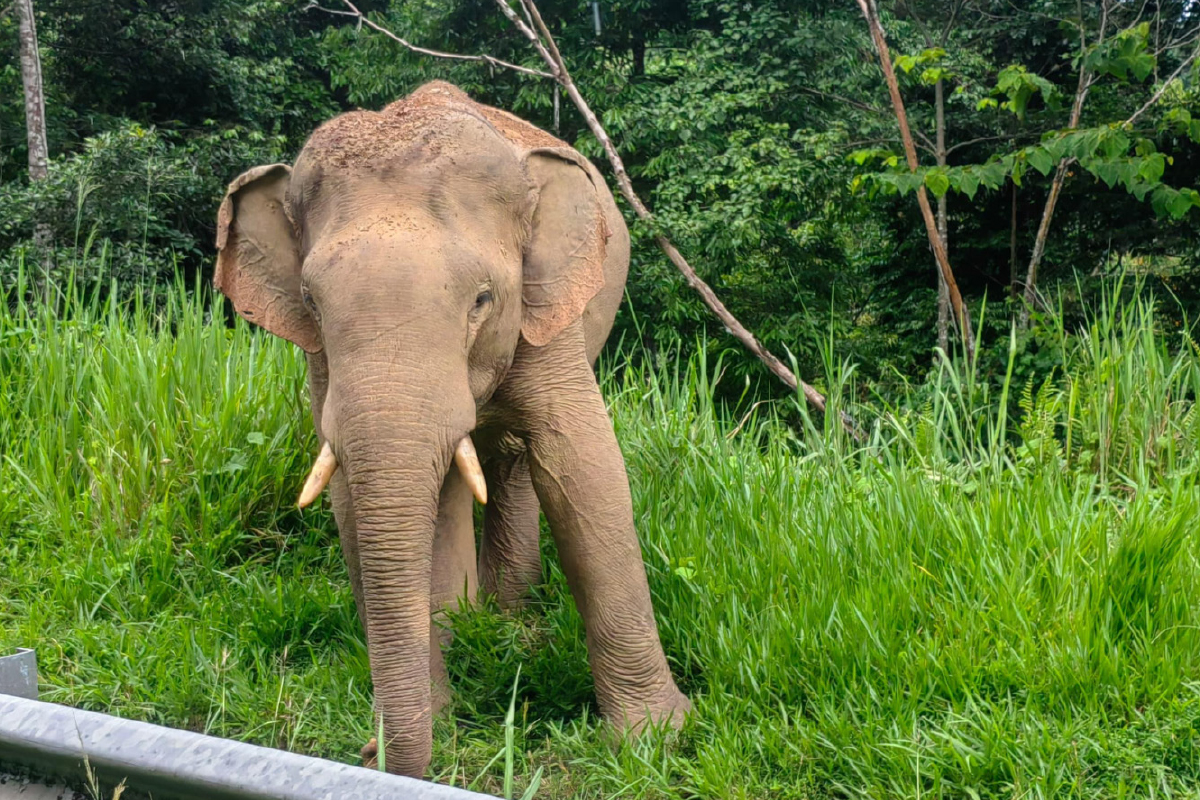
The recent heartbreaking sight of a mother elephant mourning her baby, struck and killed by a lorry on Mother's Day along the Gerik-Jeli highway, is a stark reminder of the growing challenges in human-wildlife coexistence.
The tragedy should serve as a wake-up call, urging us to rethink our road infrastructure — its design, development and the responsibilities we bear in creating a future where humans and nature can coexist in harmony.
It is imperative to bear in mind that encounters with wildlife on highways close to natural habitats are inevitable, and if precautions are not taken, it will result in a higher chance of accidents and wildlife deaths.
This roadkill incident must not be seen merely as an isolated problem for the authorities to address, for it is an outcome of how we as a nation have embarked on an economic growth trajectory that also seeks to preserve as much forest as possible.
The death of the baby elephant happened in the Amanjaya Forest Reserve, situated along along the East-West Highway that connects Penang on the west coast of Peninsular Malaysia to Kota Bharu on the east.
The reserve is at the heart of the northern part of Banjaran Titiwangsa and therefore is a major wildlife habitat. Road users should reduce their speed when driving along this highway especially at night, as many wild animals are more active during this time and are harder to spot.
The importance of driving cautiously cannot be overstated, especially in light of the recent fatal accident in Gerik. Tragedies like these underscore the urgent need for heightened awareness and shared responsibility on our roads.
Navigation apps such as Waze and Google Maps can play a critical role by integrating detection systems and highlighting wildlife-prone hotspots, thereby alerting drivers to slow down. Likewise, logistics companies should allocate additional travel time for drivers travelling along human-wildlife conflict zones.
Signboards and road markers indicating the speed limit in key biodiversity hotspots must be clearly placed, ensuring drivers know when and where to slow down.
We can also turn these biodiversity-rich areas into scenic settings by establishing rest stops with interpretation centres for travellers to enjoy the beauty and surrounding panorama. Through these measures, travellers will feel they are in a special place, and will naturally slow down.
Building roads while protecting biodiversity
Malaysia straddles the equator and its environment is characterised by lush equatorial rainforests. This makes our country a biological diversity hotspot with numerous wildlife species. As a responsible member of the global community, we seek to retain at least half of our country under forest cover, which also acts as wildlife habitats and a carbon sink to combat the global warming crisis. As such, we have several large forest complexes that are home to Malayan tigers, tapir, deer, elephants and tree-dwelling animals.
To provide efficient access between towns and cities on both the east and west coasts, as well as from the north to the south, we need roads. Most are constructed across the valleys and slopes of Banjaran Titiwangsa and various mountain ranges. These valleys are also used by wildlife for their movements between forest habitats. Roadkill incidents occur frequently in these areas.
The government recognises this issue and has established the Central Forest Spine (CFS) Masterplan to guide development and inform specific locations where proper road infrastructure should be developed.
Nonetheless, the frequent occurrence of roadkill suggests the lack of adherence to this master plan, the lack of behavioural change among road users at wildlife crossing hotspots or insufficient wildlife data to combat the crisis of roadkill effectively.
In 2023, WWF-Malaysia, in partnership with environmental consultancy Aurecon Lestari, introduced a training module called Green roads and highways: Protecting biodiversity. This effort was reviewed and received positive support from various federal ministries.
Following a workshop on green infrastructure organised by the Ministry of Public Works, we developed a Green Budgeting Checklist Tool in 2024 that facilitates the incorporation of wildlife needs in new road and highway development at the pre-planning stage.
In May this year, the Sabah Wildlife Department hosted a multi-stakeholder workshop on wildlife-friendly infrastructure, co-organised with the Center for Large Landscape Conservation, the IUCN WCPA/SSC Asian Elephant Transport Working Group and WWF-Malaysia.
The workshop focused on integrating environmental and ecological safeguards into road and highway development and saw the launch of Handbook to Mitigate the Impacts of Roads and Railways on Asian Elephants.
Essentially, these guidelines call for a mitigation hierarchy in road planning and development.
First, avoid constructing roads in biodiversity hotspots and forest areas, which are stated in the CFS. Second, if we cannot prevent the construction of roads across forests in the CFS, we need to realign our routes to avoid the biodiversity hotspots. Third, mitigation measures like viaducts, culverts and canopy bridges in biodiversity hotspots can facilitate safe passage for wildlife and maintain connectivity. Finally, affected areas should be restored through habitat rehabilitation and reconnection.
The National Biological Diversity Policy of the Ministry of Natural Resources and Environmental Sustainability, as well as various National Species Action Plans, should be adhered to in all future road planning.
As a nation, we face a choice. Ignore these guidelines, and risk irreversible biodiversity loss caused by poorly planned road infrastructure, or act responsibly to protect our natural heritage.
In this regard, taxpayers should call out to the government to allocate more resources during the annual national budget to enable small-scale and immediate works, such as clearer road signs and streetlights, to be put up and repaired where damage has occurred.
All hands on deck
These efforts must be paired with immediate action on the ground by every stakeholder.
Following the unfortunate incident on Mother’s Day, former minister of Natural Resources and Environmental Sustainability, Nik Nazmi Nik Ahmad, emphasised that connecting wildlife habitats through ecological corridors is among the long-term measures that can be implemented to deal with human-wildlife encounters, especially those involving elephants.
The Ministry of Works responded to the accident by committing to ensuring that all new roads and highways will be designed and built with wildlife tunnels to create a safe passage for animal crossing.
Corporate entities and businesses have built their success by using road infrastructure to move goods, reach markets and expand operations. The expansion of plantations, particularly for commodities such as palm oil and rubber, has been a significant driver of land-use change in the country.
As major beneficiaries of such infrastructure, companies that profit from the road infrastructure and the plantation sector can help by contributing their corporate social responsibility funds to environmental and research organisations to undertake wildlife surveys.
Satellite collaring of elephants, tapirs and deer provides data on their movement.
Analysis using methods such as the Least Resistance Pathway or Wildlife Circuitscape Map can help develop scenario-based predictions of how different wildlife species are likely to move across large habitats.
Plantation companies should also use these findings to plan the overall layout of their estates and planting blocks. Places identified as important pathways between biodiversity hotspots should be demarcated and earmarked for restoration. These include wildlife corridors and feeding or grazing grounds.
The Ministry of Plantation and Commodities and its agencies that regulate and manage the palm oil industry can enhance the role of oil palm plantations towards supporting biodiversity conservation. Their approval and monitoring procedures should include elements that we have mentioned above.
Bank Negara Malaysia should also require the financial industry to adopt measures that minimise human-wildlife encounters. The Biodiversity Risk Filter is an instrument that generates warning signs for the banking industry to heed.
The Securities Commission Malaysia and Bursa Malaysia can ensure that all public-listed companies (PLCs) compel companies down the value chain to adhere to these policies, procedures and guidelines.
Institutional investors such as the Employees Provident Fund, Kumpulan Wang Persaraan (Diperbadankan), Permodalan Nasional Berhad and Lembaga Tabung Haji should likewise ensure the compliance of their investee companies. Lastly, shareholders of PLCs should ensure their companies contribute to avoiding human-wildlife conflicts.
WWF-Malaysia is committed to stopping wildlife roadkill. In light of recent tragedies and growing concern over wildlife roadkills, we reaffirm our unwavering commitment to addressing this issue with urgency and compassion.
We commend the government’s recent initiatives and renewed focus following the Mother’s Day tragedy, and we stand ready to support and build upon these efforts. However, meaningful and lasting change can only happen if all stakeholders — government agencies, corporate entities, non-governmental organisations and the public — come together.
WWF-Malaysia shall continue to work closely with all relevant stakeholders on short and long-term plans such as identifying and addressing wildlife roadkill hotspots through data collection, mapping and monitoring, installing appropriate road signage and speed control measures in known conflict areas, and integrating wildlife-friendly considerations into infrastructure planning and land-use development policies.
We call on every Malaysian to be part of the solution. Continued public engagement and awareness are crucial. By keeping this issue in the spotlight and voicing our concerns to the relevant authorities, we can help shape practices and policies that prioritise both road safety and wildlife protection.
Save by subscribing to us for your print and/or digital copy.
P/S: The Edge is also available on Apple's App Store and Android's Google Play.