

This article first appeared in City & Country, The Edge Malaysia Weekly on June 9, 2025 - June 15, 2025
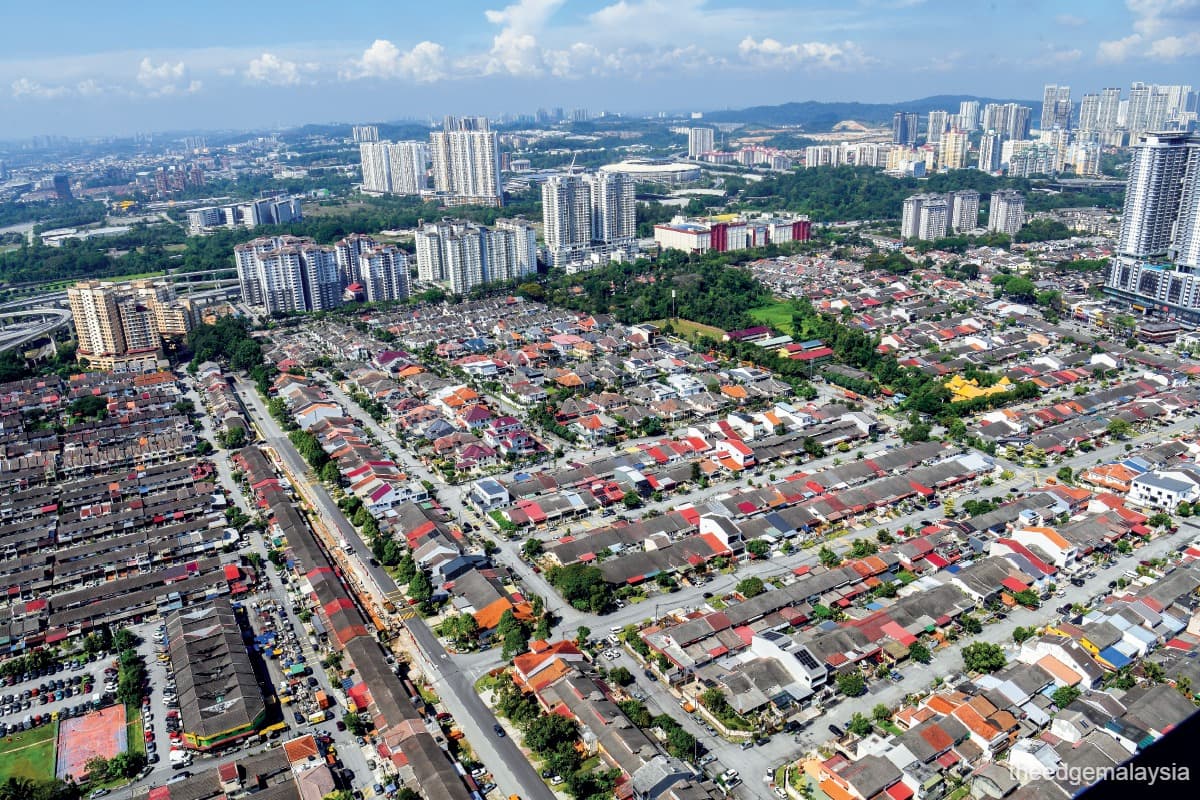
Driving past Bandar Baru Sri Petaling along the Maju Expressway (MEX), high-rise developments such as M Oscar by Mah Sing Group Bhd (KL:MAHSING) and Aster Green by UOA Development Bhd (KL:UOADEV) stand out in the predominantly landed township in Kuala Lumpur. These stratified projects were completed within the past two to three years.
Within the matured suburb are other newer high-rise projects such as Pinnacle Sri Petaling by Pinnacle Homes Sdn Bhd and 8th & Stellar by Chin Hin Group Property Bhd (KL:CHGP). Serina Residence (Residensi Wilayah) and Aurum Residence, both by Amber Homes Sdn Bhd, are under construction there.
Also known as Sri Petaling, the mixed-use township was established more than three decades ago by Petaling Garden Bhd, a subsidiary of S P Setia Bhd (KL:SPSETIA). It was originally a rubber plantation known as Castlefield Estate.
The township is also known as Da Cheng Bao in Mandarin and Tai Seng Poh in Cantonese, which means “big castle”, a reflection of its original name. Its current name is believed to have been derived from the property developer, which later acquired the land and developed the township.

Most property experts would agree that Sri Petaling is one of the earliest well-planned mixed-use developments in Kuala Lumpur.
In its early days, Sri Petaling comprised mainly landed residential properties, such as terraced, semi-detached and detached houses. Recently, like many other mature townships in the Klang Valley, small pockets of land there have been developed into high-rise residential buildings, including condominiums and serviced apartments, driven by increasing land costs and growing popularity among the suburb’s second-generation residents.
CBRE | WTW Malaysia group managing director Tan Ka Leong says Sri Petaling, which spans 620 acres, now has more than 7,000 residential, commercial and mixed-use properties.
“Its strategic location, accessibility and comprehensive amenities make it a highly sought-after place to live in. The area attracts a diverse range of buyers, including families, young professionals and business owners, drawn by its well-developed infrastructure, connectivity and vibrant commercial scene,” Tan says.

CCO & Associates (KL) Sdn Bhd executive director Chan Wai Seen adds that the population in Sri Petaling has steadily increased, alongside the township’s growth, with a mix of Gen X and even younger Gen Z residents.
“When the township was first launched, it attracted many Gen X buyers, while newer serviced apartment developments appeal to the younger Gen Z,” Chan says.
The township is complemented by essential amenities such as educational institutions, healthcare facilities and retail hubs, and public transport options such as the Taman Naga Emas MRT station. It is also well connected to several highways, including MEX, the Shah Alam Expressway, Kuala Lumpur-Seremban Expressway and Sungai Besi Expressway.
These factors have made Sri Petaling a self-contained township, which appeals to potential homebuyers.

Laurelcap Sdn Bhd executive director Stanley Toh, highlights that the area’s convenient access to major highways is a big attraction. Its proximity to Bukit Jalil, OUG and Kuchai Lama further enhances its appeal.
“The demographics here consist primarily of Chinese Malaysian families from the middle to upper-middle class, young professionals working in the Kuala Lumpur city centre or nearby business districts, young families looking for their first or second home in a suburban setting, multigenerational families seeking spacious homes, as well as both local and foreign investors attracted by rental yields and appreciation potential,” Toh says.
CBRE | WTW’s Tan concurs, adding that the middle to upper-middle class contributes to a steady demand for quality housing and commercial spaces in the area.
“Landed homes and older properties continue to be sought after for their spacious layouts and established communities, while high-rise developments and serviced residences are becoming increasingly popular with younger buyers and investors because of their affordability and proximity to public transport,” he says.

Property prices in Sri Petaling have appreciated steadily. Tan estimates a compound annual growth rate (CAGR) of 2% to 3% for selected 1- and 2-storey terraced houses and 4% for shopoffices.
“This steady growth is attributed mainly to continuous infrastructure improvements, better amenities and sustained demand for landed properties in Kuala Lumpur. The township’s strategic location and well-developed commercial scene have also contributed to the rising value of properties, making it a desirable residential area.”
He adds that rental performance has also gradually improved in recent years, following a subdued period during the pandemic. With economic recovery and increased mobility, he notes, rental transactions have picked up, reflecting renewed interest from tenants seeking well-connected residential areas with access to public transport, retail hubs and lifestyle amenities.
Shopoffices have seen 30% price hike since pandemic
In addition to the growing interest in high-rise developments in the suburb, demand for existing shopoffices has also significantly increased post-pandemic, says Laurelcap’s Toh.
“Prices of shopoffices, particularly in the commercial centre, where The Store supermarket is located, have risen about 30% to date. This growing demand is driven by high foot traffic in the area, owing largely to the diverse range of F&B outlets available,” he says.

The Store is a key landmark in Sri Petaling, centrally located in its commercial area, which includes Jalan Radin, Jalan Radin Anum, Jalan Radin Tengah, Jalan Radin Indah and Jalan Radin Bagus. Additional streets such as Jalan Radin Anum 1 to 5 and Jalan Radin Bagus 1 to 8 further expand the district.
The term “Radin” or “Raden” was historically used as an honorific for the children of kings, specifically Javanese royalty. The streets are named after the sons of Sultan Megat Iskandar Shah of Melaka, with Radin Tengah eventually succeeding his father as Sultan Muhammad Shah.
The commercial area in Sri Petaling caters for the local community. Its 3- and 4-storey shopoffices are home to businesses such as food and beverage outlets, car workshops, beauty salons, hotels and entertainment venues.
Landmarks in the area include the former Hotel Sri Petaling, Pasar Sri Petaling and Sri Petaling police station. There are no details as to what will become of the former Hotel Sri Petaling building.

Unlike many commercial centres in the Klang Valley, the Jalan Radin commercial area enjoys ample parking space, yet double-parked cars remain a persistent issue.
Thea, who stays in Bukit Jalil, frequents Sri Petaling’s commercial area for its array of food offerings, says the parking problem in the area is perennial — whether by day or night, weekdays or weekends — and that double-parking is a common issue even when there are available lots in paid parking areas.
There are two paid carparks in the area — an open-air lot on Jalan Radin Bagus 8 and an indoor carpark in the Pasar Sri Petaling building on Jalan Radin Bagus. The open-air carpark is normally closed on Tuesday evenings to make way for the night market.
Ripe for rejuvenation
Similar to many established townships in the Klang Valley, Sri Petaling faces a significant challenge, owing to limited land for development, particularly for younger generations who wish to remain in the area because of its familiarity, accessibility and proximity to family.
Another challenge that the suburb faces, as Laurelcap’s Toh points out, is traffic congestion on the main roads, especially during peak hours. He adds that other issues, such as the parking situation in the commercial area, deteriorating infrastructure and flash flooding during heavy rainfall, should also be addressed.

“There are plans to tackle these issues, such as road-widening projects, improvements to traffic management through new systems and smart traffic lights, drainage upgrades to mitigate flash flooding, and community policing to enhance security and support neighbourhood watch programmes,” he says.
Sri Petaling could also see some rejuvenation and renewal, says CBRE | WTW’s Tan. “Older commercial lots and residential areas may require upgrades to maintain their appeal and functionality. Plans could focus on urban renewal initiatives, such as refurbishing older buildings, improving public infrastructure and enhancing pedestrian-friendly spaces. Encouraging business and commercial rejuvenation could also ensure that Bandar Baru Sri Petaling remains competitive and attractive for new generations,” he explains.
Nonetheless, the suburb continues to appeal to those looking for a mature and established township.
CCO & Associates’ Chan takes a positive view of the landed homes and shopoffices in the area, but is wary of an oversupply of high-rise residential units.

Laurelcap’s Toh believes Sri Petaling is likely to maintain its position as a stable, middle- to middle-upper-class suburb with strong community characteristics. Rather than explosive growth, he says, the area demonstrates the traits of a mature suburb, with established value and relatively predictable price movements aligned with broader economic conditions and infrastructure developments in the surrounding areas.
“Rather than experiencing dramatic transformation, the township’s future will be marked by gradual improvements, strategic redevelopment and optimisation of existing assets. The area’s greatest prospects lie in its established character, convenient location and solid community foundations. While it may not lead the way in Kuala Lumpur’s development boom, it offers stability and completeness, attracting residents who seek reliable suburban living and strong urban connectivity,” he says.
Having evolved into a thriving, self-sustaining township in a strategic location, Sri Petaling is likely to remain a stable and attractive location for future generations.
Save by subscribing to us for your print and/or digital copy.
P/S: The Edge is also available on Apple's App Store and Android's Google Play.