

This article first appeared in Forum, The Edge Malaysia Weekly on June 9, 2025 - June 15, 2025
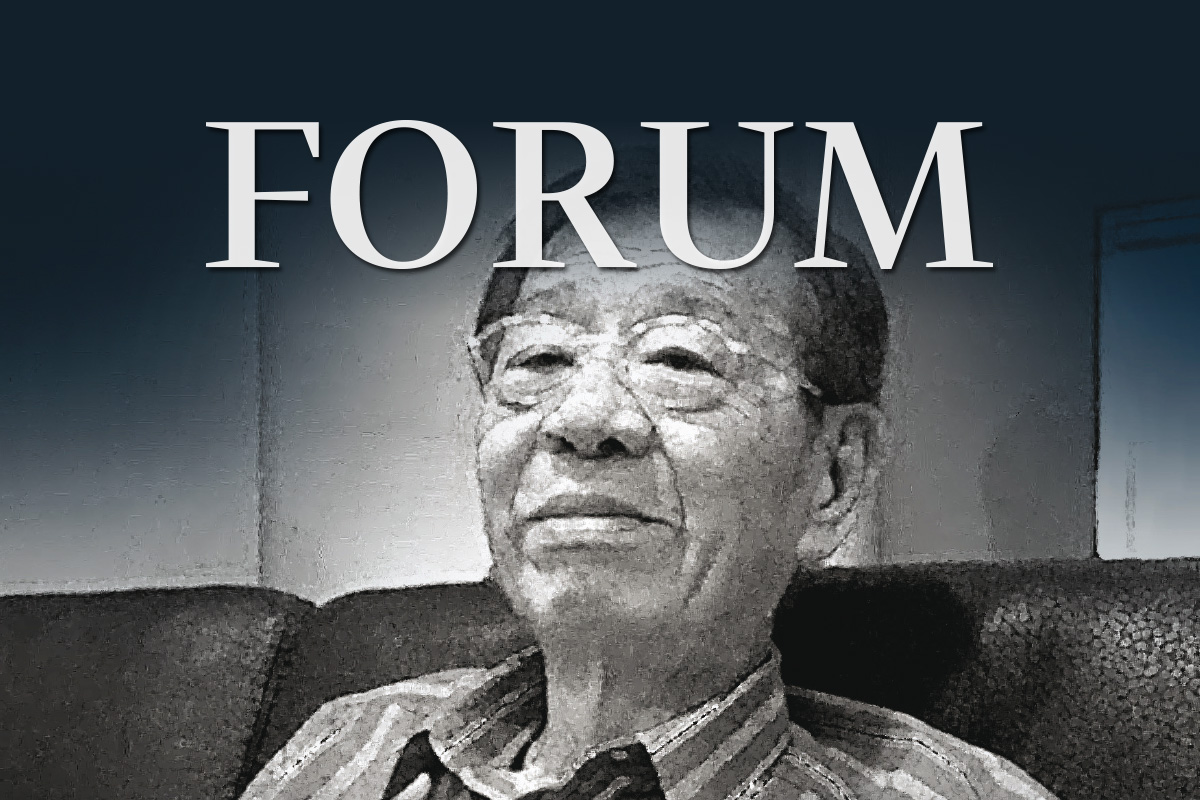
Many ask why I remain so passionate about palm oil. Upon reflection, one defining moment stands out. An epiphany sparked in 2003 during an encounter with Tun Dr Lim Keng Yaik. As then minister of primary industries (1986 to 2004), he was a fearless advocate who elevated palm oil from a humble crop to a global commodity. More than a decade after his passing, his legacy still stirs something deeply personal in me.
A moment that mattered
In 2003, I had the honour of presenting a speech, titled “A century of oil palms in Malaysia”, at a Malaysian Palm Oil Association (MPOA) gathering, thanks to then chief executive M R Chandran. I spoke with passion, but my eyes were fixed on one man: Lim, silent, with cigarette in hand, but fully engaged.
I floated the idea of appointing Michelle Yeoh as Malaysia’s palm oil ambassador — a counter to how groups like the World Wide Fund for Nature or Forest Stewardship Council used stars like Jennifer Lopez. After the talk, I approached his VVIP table. He smiled and said, “Splendid, young man. Palm oil has a future with you.” Then, with a twinkle: “And I like the Michelle Yeoh idea — she’s my niece, you know?”
That moment stayed with me. His charisma, humour and instinct for messaging left a deep impression.
Man behind the mission
Born in Tapah, Perak, Lim faced a profound loss at the age of 12 with the passing of his mother. He studied medicine in Belfast, Ireland, returned in 1964 as a young doctor, and quickly gained a reputation for kindness — often treating patients for free. Known affectionately as “sor chai yee sang” (silly doctor), he carried that selfless spirit into politics. His life was rooted in public service.
Appointed minister of primary industries in 1986, he dove headfirst into the complexities of Malaysia’s commodity sector, armed with a formidable elephant memory and a strategic mind. During the critical 1987 American Soybean Association (ASA) anti-palm oil campaign, he led from the front — fearless, informed and strategic.
War of oils: A masterclass in strategy
Palm oil’s defining test came when ASA pushed anti-palm legislation in the US in the late 1980s. Though the market was small, Lim foresaw the broader implications — a health scare masking a trade war.
Drawing from Sun Tzu, the game of mahjong and a dose of Irish wit, he launched a three-pronged counterattack. Diplomacy, led by himself; science, led by Tan Sri Prof Dr Augustine Ong; and industry funding, backed by the late Tan Sri Bek-Nielsen through the Palm Oil Promotion Fund.
Together, they hit back. By 1989, Lim hinted at his “hydrogen bomb” — exposing the dangers of hydrogenated soybean oil and trans fats. His gambit worked. ASA backed off.
Bek’s bold rebuttals in the US: “I thought there was free speech here!” rattled ASA in international forums. Ong’s research on “sn-2 positioning” helped dismantle the myth of palm oil being unhealthy.
If Lim was the strategist, Bek-Nielsen was the fiery defender and Ong the scientific engine. Together, they formed a remarkable and dynamic trio.
It was not just a tactical win, it was a master class in advocacy: combining political will, scientific facts and sustained funding to defend a national interest.
‘Hydrogen bomb’ and palm oil’s strength
What was this “hydrogen bomb”? It referred to the harmful trans fats produced when liquid oils like soy are hydrogenated into solids — a process palm oil doesn’t require. Lim understood this science and used it cleverly.
At one event, he quipped with a mischievous grin, “I’m a real doctor, you know — trained in Belfast!” Then, with perfect comedic timing, he added, “I trained with the IRA!” before delivering his punchline: “And I’ve got a hydrogen bomb up my sleeve!”
Beneath the humour was a razor-sharp intellect and conviction. Behind the theatrics lay real substance: palm oil’s natural stability made it healthier and more versatile than its critics claimed — no hydrogenation, no trans fats, no gimmicks. Just science, strategy and the charm of a man who knew exactly how to make a point stick.
Visionary goals and humour with purpose
Lim had a clear vision: he called for a 25% oil extraction rate and 35 tonnes of fresh fruit bunches per hectare — “Vision 25:35” by 2020. Today, we remain far off the mark.
He would bluntly scold underperformers: “If you can’t compete, get out!” But he also encouraged innovation. He would joke that he wanted oil palm fruitlets “the size of Dolly Parton’s” — behind the humour, a serious call to plant breeders to push boundaries.
Lim was famous for speeches that were powerful, emotional and unfiltered. He once said, “Don’t mind my spit. I’m just passionate!” He earned the affectionate title of “Umbrella Minister” because front rows often needed cover from his booming, animated delivery.
But every word had a purpose. He connected with workers, growers, scientists and policymakers alike, not just with data but with heart.
Once, in a diplomatic mission to the Arab world, he broke the ice with, “Would you rather buy halal Muslim palm oil or kafir soybean oil?” Startling at first but effective. Laughter followed. Minds opened. That was his art — humour with precision. He disarmed, then persuaded.
A straight shooter, even with NGOs
When Chandran proposed MPOA joining the Roundtable on Sustainable Palm Oil (RSPO) in 2004, Lim raised an eyebrow. “So, you’re venturing to sleep with the non-governmental organisations (NGOs), eh?”
Chandran replied, “We’ll be sharing the same bed, but chasing different dreams.”
Lim shot back, “Remember, it’s your neck!” Classic Keng Yaik. Witty, sceptical, but supportive — and always keeping things real.
More than a minister
Lim was not just a minister. He was its voice, conscience and protector. A colleague put it best, “He stood head and shoulders above all in the plantation industry. His intellect and passion helped him master palm oil and rubber with remarkable speed and depth.”
Lim was a man who believed that plantations were about people, not just yields. One of his cheekiest remarks during a wage debate still lingers. “When the generator goes off and the estate goes dark, I wonder what the workers get up to. Funny how blackout nights often lead to baby booms!”
Behind the humour was an abiding respect for those who kept the industry alive.
Today, many younger voices in the industry may have never heard Lim speak. But those of us who did, know what we have lost and what we must strive to keep alive. His legacy is more than a chapter in palm oil’s history. It is a blueprint for courage, clarity and conviction.
Rest in peace, Tun Lim Keng Yaik (1939-2012). Your fire lit the way. It is up to us to carry the torch forward.
Joseph Tek Choon Yee is a former president of the Malaysian Estate Owners’ Association and past chief executive of the Malaysian Palm Oil Association
Save by subscribing to us for your print and/or digital copy.
P/S: The Edge is also available on Apple's App Store and Android's Google Play.