

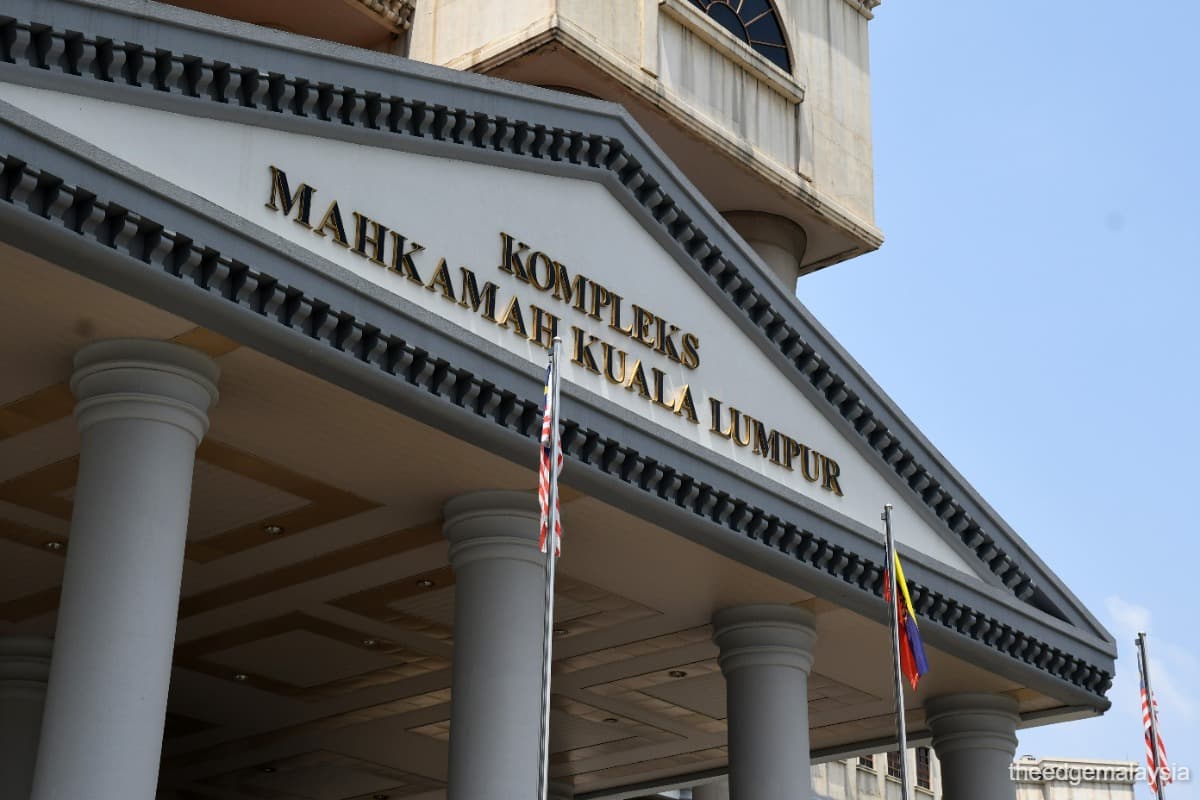
KUALA LUMPUR (June 4): The High Court on Wednesday affirmed that the Federal Constitution guarantees that everyone is equal before the law, and said its articles should not be used to carve out exemptions to that doctrine.
High Court judge Roz Mawar Rozain said this as she dismissed Prime Minister Datuk Seri Anwar Ibrahim’s bid to refer legal questions to the Federal Court on whether a sitting prime minister has immunity from civil lawsuits.
The High Court determined that the application Anwar filed, in relation to a lawsuit Muhammed Yusoff Rawther initiated against him, had failed to meet the necessary threshold for referral to the country's highest court, as the questions posed were "speculative" and lacked "genuine constitutional controversies".
In her judgement, Roz Mawar examined articles of the Federal Constitution that formed the basis of the constitutional questions raised by Anwar, in particular Articles 5, 8, 39, 40 and 43.
Regarding Article 5, which concerns right to life and personal liberty, the High Court judge ruled that being involved in civil litigation as a PM does not infringe upon one's liberty. "The defendant remains at liberty with full legal capacity and procedural safeguards available," the judge stated.
On Article 8, which guarantees equality before the law, the judge highlighted that all were equal before the law and that Muhammed Yusoff's civil suit adhered to the standard "procedural and substantive law" that is applicable to everyone.
"The provision is a shield, not a sword for immunity. Article 8(1) ensures equal treatment under the law, not exemption from it," she asserted.
The judge also cited Articles 39, 40 and 43, which defined executive functions.
"These structural provisions allocate executive powers but do not confer personal immunity. No express or implied protection against civil liability exists. Constitutional silence on immunity must be interpreted in favour of equal legal accountability," she said.
In his application, Anwar had posed a total of eight questions, including:
1. Does a sitting prime minister have some legal protection under the Constitution from being sued in a civil case for something that allegedly happened before he took office, if the lawsuit could affect his ability to do his job, or upset the balance of power between the government and the courts?
2. Whether the High Court, in allowing a civil suit against a sitting prime minister, where he has raised a credible plea of abuse of process (including allegations of politically motivated reputational sabotage and a manufactured claim), violates the constitutional guarantee of equality before the law under Article 8(1).
3. Whether the Federal Constitution, by necessary implication, requires courts to conduct a threshold inquiry prior to trial, into whether a civil suit against a sitting prime minister (based on pre-office conduct) constitutes an abuse of process, or a threat to public interest, and if so, whether such proceedings must be stayed or dismissed to preserve constitutional governance.
4. Whether the courts are constitutionally obliged under Article 5(1), read in light of the principle of due process and natural justice, to protect a public officeholder’s liberty and dignity from litigation that may impair the ability to discharge public duties, where no criminal guilt has been established.
Anwar is represented by Messrs Zain, Megat and Murad, while Muhammad Yusoff is represented by Law Practice of Rafique.
Anwar's lawyers have said they will be appealing Wednesday's decision.