

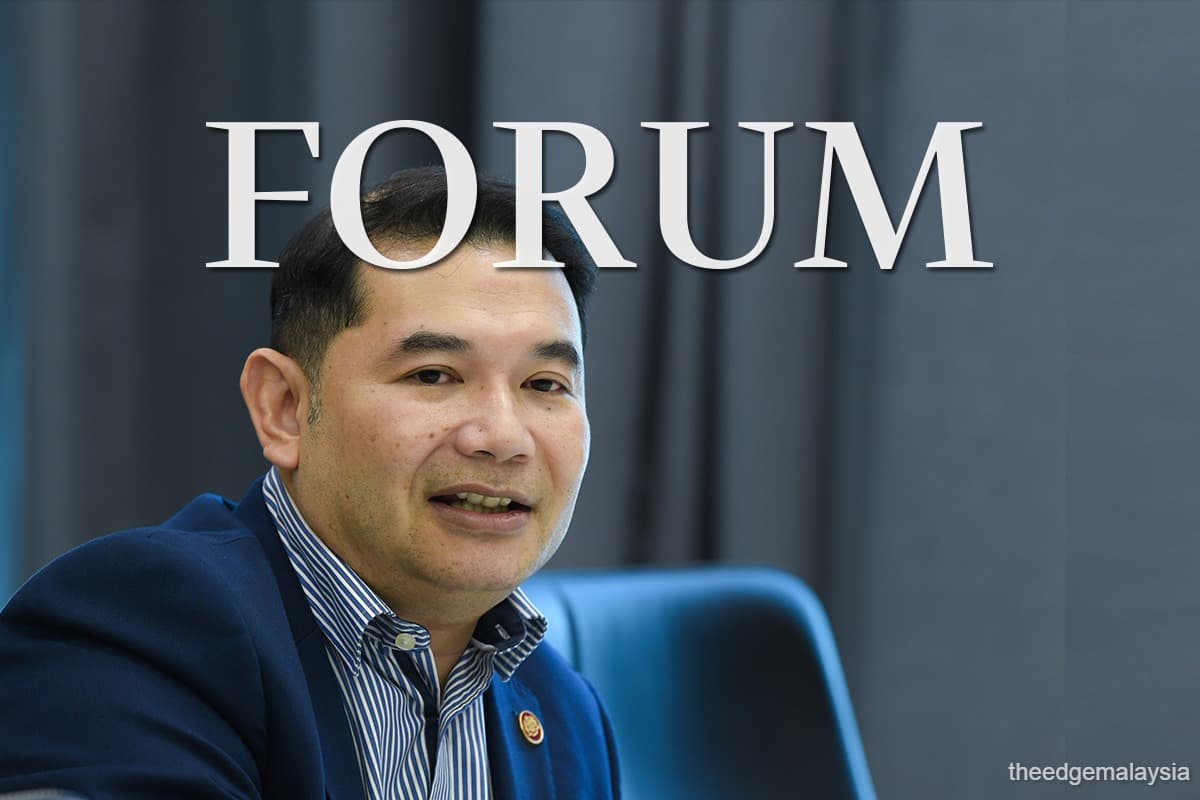
This article first appeared in Forum, The Edge Malaysia Weekly on June 2, 2025 - June 8, 2025
When Prime Minister Datuk Seri Anwar Ibrahim was released from jail in September 2004 after winning an appeal at the Federal Court, he had a coterie of highly qualified young people around him who formed the bedrock of the “Reformasi” movement.
Operating from a bungalow in Section 16, Petaling Jaya, key figures such as Anwar’s daughter Nurul Izzah, outgoing Minister of Natural Resources and Environmental Sustainability Nik Nazmi Nik Ahmad and Sim Sze Tsin, now the Member of Parliament for Bayan Baru, worked behind the scenes while Anwar carried out his daily routine of interviews, forums and political ceramah.
Parti Keadilan Rakyat (PKR) was a five-year-old party then and represented by only one MP, Anwar’s wife, Datin Seri Wan Azizah Wan Ismail.
This circle of young people on a mission formed the backbone of PKR’s machinery for the 12th general election (GE12) in 2008, when the Reformasi movement denied Barisan Nasional (BN) a two-thirds majority in Parliament. It was the first dent in the armour for the formidable BN, which had been in power since 1974.
By 2008, Datuk Seri Rafizi Ramli, who was with Petronas then, was already playing a significant role in the party.
In 1999, he was among those involved with the international Free Anwar Movement lobbying the parliament in the UK and was an appointed member of the PKR Central Leadership Council a few years later. In 2003. Rafizi returned to join Petronas, which he left in 2009 to become the chief executive to the office of the Selangor State Economic Adviser. The adviser was none other than Anwar.
In the run-up to GE12, PKR’s young candidates caught the imagination of both old and young voters yearning for reforms. Nurul Izzah won in Lembah Pantai, an urban Malay seat, beating Wanita Umno chief Tan Sri Shahrizat Abdul Jalil, a political heavyweight. Branded by the media as “Puteri Reformasi”, Nurul Izzah became a rising star.
Both Sim and Nik Nazmi contested and won state seats in Penang and Selangor respectively — two states that fell to the Opposition.
In GE13, GE14 and GE15 (2013, 2018 and 2022 respectively), Rafizi, Nurul Izzah, Nik Nazmi, Sim and many new faces established themselves in PKR as agents of Reformasi. Their campaigns were based on issues, and they did not come with baggage such as the taint of corruption and money politics and did not touch on the politics of race and religion. These younger PKR leaders represented all that Umno was not.
Yet, the outcome of the party elections concluded last week showed that PKR itself needs to reform. Rafizi alleged that money politics had seeped into the party. And, to some extent, Nurul Izzah’s statement on money laundering added credence to Rafizi’s allegations.
“If money politics were not rampant, there would be no reason for Nurul to raise the matter of ensuring it (money politics) does not become part of the culture in PKR,” says a divisional leader.
At the time of writing, Rafizi and Nik Nazmi had tendered their resignations from the Cabinet, though these had yet to be accepted. Technically, both were appointed by Anwar, and the party elections have nothing to do with their positions in government.
Nevertheless, whatever the outcome, the party elections conclude with PKR being split between two factions.
One faction, linked to Rafizi, is hell-bent on keeping the party away from Umno-style money politics. Among those alleged to have influenced the party elections are former MIC treasurer Datuk R Ramanan, who has vehemently denied the accusations. Ramanan is a newly elected vice-president and is poised for a full ministership.
The other faction, which opposes Rafizi, has sent two clear messages. The first is that he and his allies can be outmanoeuvred within PKR without breaking any rules; that he needs to sharpen his skills as a team player as he rises through the party ranks; and he must not underestimate the strength of other leaders.
The second, and equally important, message to the Rafizi faction is that Anwar’s successor after 2028 — when Anwar can no longer serve as PKR president — is expected to be his daughter Nurul.
In the recent PKR elections, where the Rafizi faction was outclassed, the losing faction blamed the changes in the election voting system made in December last year. Previously, PKR used a “one-man, one-vote” system, allowing every member to vote for the top six positions and 20-member council. The changes to the constitution that were passed during the December congress introduced a delegate system, however, giving branches with more members greater delegate representation at the national level. The Rafizi faction contends that this system was compromised by money politics at branch meetings, influencing delegate selection and the election outcome.
Another change in the party polls was the introduction of blockchain technology for e-voting, requiring members to complete an e-KYC process to be eligible. The Rafizi faction claims flaws in the e-voting system disadvantaged them. Their concerns are not without merit.
Before PKR demands “Reformasi” in the next general election, it must first clean up its own house and rid itself of money politics. The election results clearly suggest that something is amiss — especially when incumbents lose branch positions to newcomers. This may explain why Nurul has begun focusing on educating members about anti-money laundering laws.
Apart from reforming PKR, Nurul faces her biggest test leading the party’s seat negotiations ahead of the Sabah State Election. The negotiations will be tough because Gagasan Rakyat Sabah is a coalition of eight parties whereas Pakatan Harapan (PH) comprises four parties, including Sabah’s United Progressive Kinabalu Organisation. If BN joins the talks, more than 14 parties will be vying for 73 state seats.
Meanwhile, PKR must also gear up for GE16, which is due by November 2027.
Since 2008, Rafizi has been key in shaping PKR’s strategy, focusing on the party’s strengths. The party is weak in Malay-majority seats but has a fighting chance in mixed constituencies — areas also targeted by Umno and BN.
Given the party’s current state after the recent elections, PKR remains fragile. Uniting the party is the next major task for the untested Nurul.
As for Rafizi, his focus is unlikely to be on the next general election but his sights will be on the 2028 party elections and GE17, when Anwar will no longer be president. For the moment, Rafizi and Nik Nazmi have to play the long game. As Nik Nazmi said when resigning, quoting a British politician, “I left cabinet to focus more on politics and public service”.
For now, Rafizi,47, and his allies such as Nik Nazmi have to play the long game in politics and bide their time.
As Nik Nazmi aptly said, quoting the late British MP Tony Benn: “I am leaving the Cabinet to give more time to politics and public service.”
M Shanmugam ([email protected]) is a contributing editor at The Edge
Save by subscribing to us for your print and/or digital copy.
P/S: The Edge is also available on Apple's App Store and Android's Google Play.