

This article first appeared in The Edge Malaysia Weekly on May 26, 2025 - June 1, 2025
THE European Investment Bank (EIB), the lending arm of the European Union (EU), is keen to participate in more infrastructure-related investments in Malaysia and is open to expanding its reach here.
According to sources, EIB is currently in discussions with the Ministry of Finance (MoF) to set up a legal framework to expand activity in the country, particularly in the Johor-Singapore Special Economic Zone (JS-SEZ).
When contacted, an EIB spokesperson confirms the bank is open to exploring investment opportunities in Malaysia. However, the bank rules out any immediate plans for a dedicated EIB office in Kuala Lumpur, and will maintain its operations at its regional hub in Jakarta.
The EIB, which is one of the world’s largest multilateral financial institutions, opened its regional representation office for Southeast Asia and the Pacific in Jakarta in September 2022.
The EIB spokesperson emphasised that formalising a country framework agreement would be a critical first step towards establishing the legal basis for EIB’s operations in Malaysia.
“Once such an agreement is in place, we would be pleased to engage with both public and private sector stakeholders to explore and develop a pipeline of potential investments,” the spokesperson says.
The move aligns with the EU’s ambitious Global Gateway strategy, which aims to boost smart, clean and secure links in the digital, energy and transport sectors, and to strengthen health, education and research systems worldwide. EIB typically focuses its financing on projects in sustainable infrastructure, the green energy transition, climate resilience, digitalisation and innovation.
Depending on the sector and project readiness, EIB says its investments can range from long-term sovereign or municipal lending to direct financing or intermediated loans through partner banks, particularly for private sector initiatives that contribute to the green and digital transitions.
“Malaysia is an important partner for the EU,” the EIB spokesperson says. “As the bank of the EU, we are open to engaging with Malaysian authorities to explore opportunities for future collaboration.”
In April, the EU ambassador to Malaysia Rafael Daerr expressed interest in future funding support via loans, grants or financial guarantees as well as potential EIB investments for the Lumut Maritime Industrial City (LuMIC) in Perak.
“That decision has not been finalised, but the LuMIC project aligns with the EU’s goals under our Global Gateway strategy. It has the potential to become a high-standard, mutually beneficial gateway between Malaysia and Europe,” Daerr reportedly said at the LuMIC Masterplan launch on April 10.
The LuMIC project — one of Perak’s five regional growth nodes identified under the Perak Sejahtera 2030 blueprint — has completed early-stage feasibility and spatial studies, funded by a €1.9 million (RM9.2 million) grant from EU.
Daerr also mentioned discussions between EIB and MoF for the bank to set up a framework in the country.
Presently, there are several European banks in the country, including Deutsche Bank and BNP Paribas. Deutsche Bank has been operating in Malaysia for over 55 years, with offices in Kuala Lumpur and Labuan, its website shows. BNP Paribas has a locally incorporated subsidiary, BNP Paribas Malaysia Bhd.
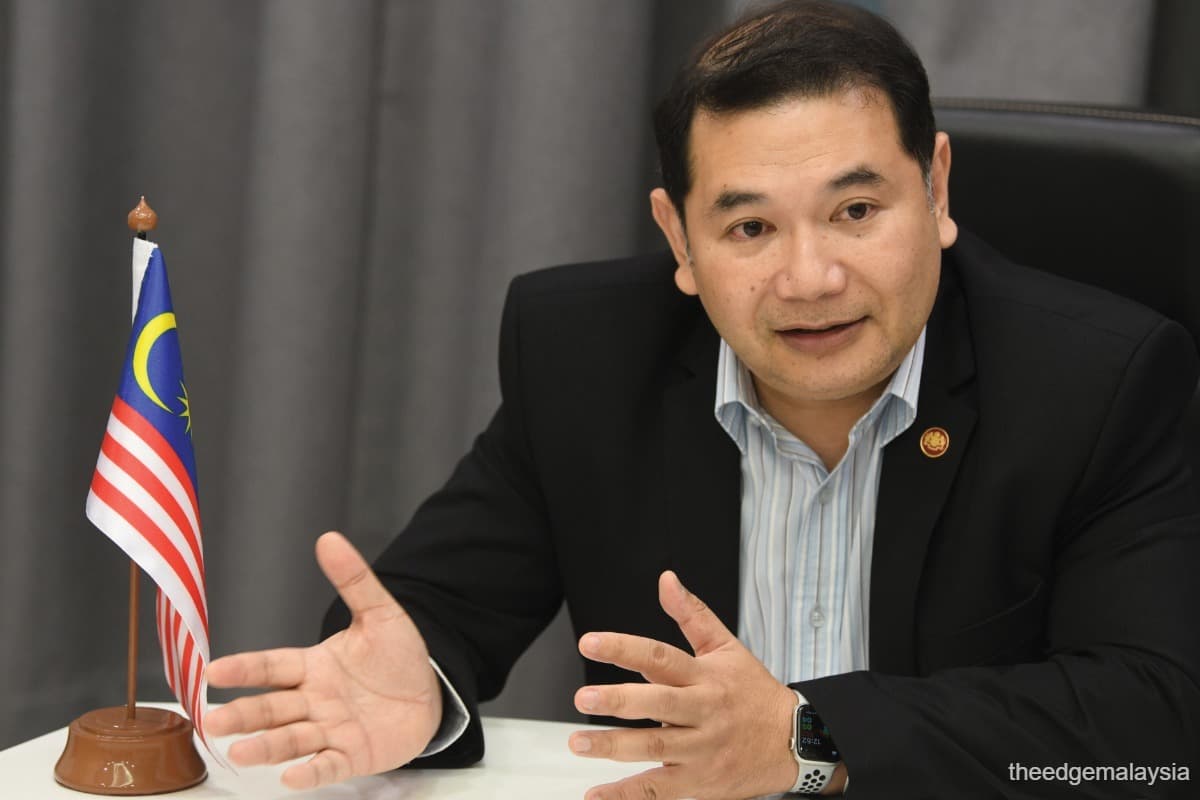
While MoF has yet to respond to The Edge’s queries as at press time, Minister of Economy Datuk Seri Mohd Rafizi Ramli last week hinted at ongoing discussions with a “European bank” to attract investments for JS-SEZ.
“We have one European bank that we have been talking to for a while. I think they will come on board. They have been working with us. It’s just that I think it takes slightly longer to go through the internal process, so the banks will plan and will develop their own programme themselves,” Rafizi said during his keynote address at the JS-SEZ Partners’ Dialogue: Advancing Facilitation session on May 19.
At the event, six major local and international banks signed letters of intent with the Ministry of Economy to help bring investments to JS-SEZ. A total of RM2.35 billion in investment interest had already been secured. The signatories were Malayan Banking Bhd (KL:MAYBANK), CIMB Group Holdings Bhd (KL:CIMB), CGS International, Sumitomo Mitsui Banking Malaysia, Bank of America Malaysia and HSBC Malaysia.
Rafizi said the banks will realise the vision of JS-SEZ through financing support, promotion, stakeholder engagement and market intelligence. He noted that the lenders will have direct access to government policy and support to convince their clients to invest in the zone. The banks were picked to ensure broad international investor outreach, with CGS International targeting Chinese investors, Sumitomo Mitsui covering East Asia, and Bank of America representing the US market, he said.
Save by subscribing to us for your print and/or digital copy.
P/S: The Edge is also available on Apple's App Store and Android's Google Play.