

This article first appeared in City & Country, The Edge Malaysia Weekly on May 26, 2025 - June 1, 2025
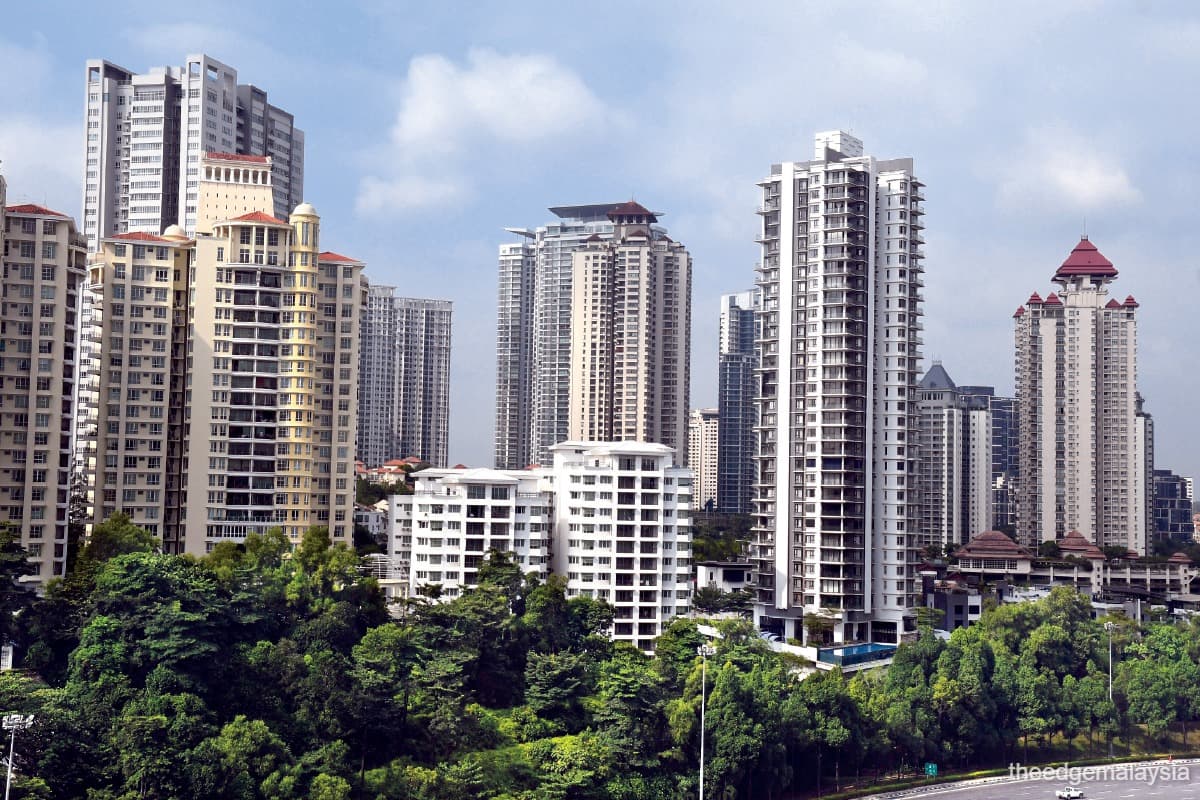
Kuala Lumpur’s prime residential property market is beginning to show encouraging signs of stabilisation, a welcome development amid the broader uncertainties in the global and local economic landscapes, according to international real estate consultancy firm Knight Frank in presenting its 1Q2025 Prime Global Cities Index report.
This development suggests a potential shift towards renewed buyer confidence and market resilience, after a prolonged period of volatility.
Knight Frank Property Hub managing director Enoch Khoo says in the report’s press statement on May 13 that although Kuala Lumpur’s property market remains largely buyer-driven with a variety of options, there is a growing appetite for high-quality real estate.

“Buyers are maintaining a selective approach in their property choices. There is a noticeable shift in preference towards properties that are not only well-situated but also well managed, offering features that align with modern and evolving lifestyle needs,” Khoo says.
The Knight Frank Prime Global Cities Index is a valuation-based index that tracks the movement of prime residential prices in key cities worldwide. Prime property is defined as the top 5% of the housing market in each city. The index provides insights into the global dynamics of luxury residential real estate and acts as a benchmark for developers, investors and policymakers.
According to the 1Q2025 index report, Kuala Lumpur ranked 35th among the cities tracked, with a modest 0.2% year-on-year (y-o-y) increase in the prime residential property price index, while registering no change on a quarter-on-quarter (q-o-q) basis.
The report notes that this subdued performance reflects a market that appears to be in a holding pattern. It demonstrates a degree of resilience and stability, yet lacks the momentum needed for robust growth, such as large-scale foreign investment, major policy shifts or substantial infrastructure developments. These are the key factors that continue to temper prime residential properties’ price growth and limit upward mobility in the short term, it adds.
Nonetheless, Knight Frank Malaysia group managing director Keith Ooi highlights in the statement that despite external economic uncertainties and cautious buyer sentiment, Kuala Lumpur’s prime residential sector has managed to avoid significant downturns.

“The absence of decline, despite prevailing headwinds, suggests a degree of resilience in the market. Having said that, the pace of recovery is likely to remain measured in the short term as market participants continue to respond to interest rate trends, policy signals and affordability considerations,” he says.
Ooi adds that while investor sentiment remains tentative, particularly among overseas buyers, demand is steady for niche products offering integrated living, strong connectivity and future-ready infrastructure.
Developers are also seen exercising greater discipline in pricing and delivery timelines, a shift that supports long-term sustainability but may moderate short-term growth expectations.
“Malaysia’s value proposition — in terms of cost, liveability and quality of life — remains compelling, particularly for regional buyers looking beyond traditional investment hotspots. However, structural reforms and greater clarity on policy direction will be key to unlocking a stronger rebound,” Ooi says.

Asia and Middle East the top performers
In terms of overall global prime residential property market performance in 1Q2025, the Prime Global Cities Index recorded a moderate annual growth of 2.8%, a marginal dip from 3.2% in 4Q2024. This reflects the ongoing impact of persistent macroeconomic headwinds, including elevated interest rates and inflationary pressures, as well as an uneven pace of market recovery in different regions.
While the index’s q-o-q growth continued to ease in 1Q2025, the global market has now experienced two consecutive years of positive annual growth following a downturn that saw the index fall to -0.6% in 1Q2023. However, the current growth rate still lags the long-term average of 5.3%, suggesting a more cautious and stabilising market rather than one in full expansion.
Among the top-performing regions, Asia-Pacific and the Middle East continued to lead global recovery in the quarter under review, driven by resilient domestic demand, supportive policy environments and relative economic stability.
Notably, Seoul emerged as a standout performer, topping the list with an impressive 18.4% y-o-y increase in prime residential property prices, underscoring the city’s robust market fundamentals and strong buyer confidence.
Dubai, which ranked second, has stabilised with double-digit growth of 16.4% y-o-y and 3.6% q-o-q after a sharp deceleration in 2024, suggesting that the market remains resilient and attractive to both domestic and international investors.
For Tokyo (No 3), Knight Frank foresees that overseas demand will continue to influence the top end of the market, as there are expectations that the yen will strengthen through 2025. The city recorded a 15.5% y-o-y and 0.3% q-o-q increase in its prime residential prices in the quarter under review.
Meanwhile, Hong Kong, Beijing and Guangzhou — also key cities for prime residential space in Asia — recorded y-o-y price declines of 3%, 4.7% and 3.2% respectively, indicating that prime property market recovery in these cities is struggling.
“The resilience of prime global property prices is evident, particularly in overall Asia and parts of Europe. To unlock the next phase of growth, however, markets need the support of lower borrowing costs,” says Knight Frank global head of research Liam Bailey in the same statement.
Looking ahead, Knight Frank believes the direction of interest rates remains the pivotal factor for prime property price growth. Although inflation has been easing in many key economies, the US policy on tariffs has created the potential for significant future volatility.
“There is the potential for disinflationary pressures to increase outside of the US, while the US itself faces a risk of higher inflation. While expectations of interest rate cuts have risen outside the US, greater clarity on the pace and extent of future cuts is needed before we see significant upside in pricing in most housing markets,” it says.
Save by subscribing to us for your print and/or digital copy.
P/S: The Edge is also available on Apple's App Store and Android's Google Play.