

This article first appeared in City & Country, The Edge Malaysia Weekly on May 26, 2025 - June 1, 2025
The Klang Valley’s urban sprawl has spurred development in areas once seen as undesirable for living or doing business. Among them were Putrajaya, Cyberjaya and southern Puchong — now thriving hubs in the southern corridor of Greater Kuala Lumpur. Over time, they have expanded and merged into a growing conurbation. City & Country spoke with property experts about the key catalysts behind this transformation, the performance of their property markets, and what homebuyers and investors can anticipate in the future.
Nawawi Tie Leung Property Consultants Sdn Bhd executive director and regional head of research and consulting Saleha Yusoff says the area bordering Putrajaya, Cyberjaya and southern Puchong has undergone significant transformation over the years.
She notes that current land use in the area includes residential developments in townships such as 16 Sierra and Setia Eco Glades, which offer a mix of landed homes and high-rises catering for the middle- and upper-income groups.
“Initially characterised by agricultural land and underdeveloped spaces, the area has evolved into a mixed-use urban hub featuring residential, commercial and industrial developments,” she says.
She adds that beyond housing, the region hosts a growing number of commercial, industrial and logistics developments, as well as educational institutions. “There are several industrial projects, primarily semi-detached and superlink factories designed for light to medium industries.”

Notable industrial areas include Putra Industrial Park, Golden Industrial Park @ Taman Mas Industrial Park and Perdana Industrial Park. She also highlights upcoming industrial hubs such as Binastra Business Park @ Pulau Meranti, which is slated for completion in 2027.
Similarly, PPC International Sdn Bhd managing director Datuk Siders Sittampalam says: “Putrajaya, Cyberjaya and southern Puchong are rapidly developing areas in the southern and western Klang Valley, blending residential, commercial and industrial land uses. This region is strategically located around key administrative areas such as Putrajaya, with ongoing residential projects and commercial spaces to support growing populations.”
Henry Butcher Real Estate Sdn Bhd chief operating officer Tang Chee Meng says the administration of the three areas are Perbadanan Putrajaya for Putrajaya, Majlis Perbandaran Sepang for Cyberjaya and Majlis Bandaraya Subang for southern Puchong.
“Putrajaya is well planned and designed with extensive greenery and wide roads to minimise traffic congestion and also has a mix of shopping malls and commercial hubs as well as recreational and leisure spots to cater to residents and visitors,” he says, adding that certain areas in Putrajaya are set aside for residential properties to house government servants.
“Cyberjaya is the tech hub and smart city of Malaysia and is often referred to as Malaysia’s Silicon Valley. It was developed as part of Malaysia’s Multimedia Super Corridor (MSC), aiming to attract global tech companies, start-ups and digital businesses.”

Building on Tang’s point, Siders says Cyberjaya’s role has evolved over the years. “The area is now home to numerous technology parks, research and data centres, as well as multinational corporations, making it a focal point for professionals in the tech industry. Properties here are typically modern and suited to those seeking proximity to the innovation-driven economy, with high-rise condominiums and mixed-use developments being particularly popular.”
Tang says the area also has universities such as Multimedia University (MMU), University of Cyberjaya (UOC) and University of Malaya Centre @ Cyberjaya. Retail and entertainment outlets include DPULZE Shopping Centre, Tamarind Square and Cyberjaya Lake Gardens. “There are several residential development schemes in this area such as Serenia Amani, Setia Eco Glades and Shaftesbury Residence,” he adds.
Southern Puchong, however, is a different story. Siders says unlike Putrajaya or Cyberjaya, the boundaries of southern Puchong are not well defined.
“[The boundaries are] described by private developers, which have undertaken the majority of [the area’s] development through a mix of residential and commercial projects, rather than by local authorities. The area’s growth is driven by the efforts of various developers while it continues to evolve as part of the larger Klang Valley’s urbanisation,” he explains.
Tang says southern Puchong was originally developed with low- and medium-cost housing developments, but that has changed. “Owing to improved infrastructure and accessibility, the area has seen a surge of higher-end residential and commercial developments, notably 16 Sierra, MIRA and ANYA at Shorea Park and Astella D’Island Residence,” he adds.
Although southern Puchong has no officially defined boundaries, Nawawi Tie Leung’s Saleha considers the area north of the South Klang Valley Expressway (SKVE) as falling under southern Puchong.

Infrastructure a major growth catalyst
The three areas are now so closely linked that the conurbation appears to have merged into a single, larger region. Consultants attribute this to infrastructure development, urban expansion and a growing population.
Henry Butcher’s Tang says: “Key catalysts that helped these areas blossom include improved accessibility via highways such as the North-South Expressway Central Link, Lebuhraya Damansara Puchong, SKVE and Maju Expressway.
“The government’s master plan to relocate federal government offices to Putrajaya has also been a catalyst in the development there. For Cyberjaya, government initiatives through Cyberview Sdn Bhd focused on building a smart city and attracting companies in smart mobility, smart healthcare and digital services to set up base there.
“As for southern Puchong, urbanisation and connectivity have increased developments in this area, which led to more township developments sprouting up in this area.”
Nawawi Tie Leung’s Saleha concurs and highlights that the proximity of Putrajaya to Cyberjaya has been a catalyst for growth between the two areas. “As Malaysia’s administrative capital and a technology hub respectively, these cities have driven demand for housing and commercial spaces in the neighbouring area,” she says.

Improved infrastructure, including highways and public transport networks such as the MRT and LRT lines, has made the areas more accessible to both businesses and the public, particularly residents.
She also highlights how government and private investments have flowed into the area, resulting in large-scale developments such as business parks and townships, which have “contributed to the area’s economic vitality”.
In terms of population growth, PPC International’s Siders says Putrajaya has seen consistent growth in residential populations, with the development of high-end residential properties and Perumahan Penjawat Awam Malaysia projects attracting government staff, retirees and expatriates.
“Cyberjaya remains a vibrant hub for students, expatriates and tech professionals, driven by the presence of numerous educational institutions and technology companies,” he says.
“These institutions have also raised demand for residential developments as students and professionals seek convenient places to live. Rapid technological growth in Cyberjaya has also created jobs, further driving expansion.”
Meanwhile, southern Puchong has seen an influx of people working in nearby areas such as the Kuala Lumpur International Airport, Cyberjaya and Putrajaya, many of whom reside there with their families, Siders notes.
Saleha says these areas have evolved to cater for the changing lifestyles of its residents, with the emergence of lifestyle hubs, retail centres and entertainment zones that appeal to families and professionals. This has increased demand for residential properties as well as public services and amenities, such as schools, healthcare facilities and shopping centres.
She has also observed a rise in mixed-use developments with residential, retail and offices catering for the younger market segment, which prioritises modern lifestyles. This, in turn, has contributed to the growth of business sectors, including technology-based businesses such as financial technology, cybersecurity, AI start-ups, data centres, cloud services, co-working spaces and tech incubators.
She adds that educational amenities have grown alongside the rise of international schools and universities, attracting both local and international students. This has triggered a “multiplier effect”, where population growth fuels demand for housing, retail spaces and support services. In addition, corporate training centres and R&D hubs have emerged to support the expanding tech-driven industries, particularly in Cyberjaya.
The increase in population has also benefited the retail and hospitality industry as well as logistics and e-commerce fulfilment, the consultants observe.
“The conurbation’s strategic location and enhanced connectivity have transformed it into a thriving technology, business, education and lifestyle hub, attracting investments and fostering economic growth,” says Saleha.
Tang remarks that infrastructure improvements and strategic urban planning have opened up the area to business and industry growth.
“Cyberjaya’s status as Malaysia’s Silicon Valley attracts businesses and educational institutions, while Putrajaya’s role as the federal administrative centre complements Cyberjaya’s status. Southern Puchong benefited from being in proximity to these areas and provides affordable housing as well as commercial amenities to those working in Cyberjaya and Putrajaya,” he says.

Evolving residential needs
Siders notes that housing demand in all three areas has evolved significantly. “In Putrajaya, demand for high-end residential properties has remained steady, catering largely for government employees, expatriates as well as retirees seeking a quiet, well-planned environment. Cyberjaya has seen strong demand for modern, affordable housing options, particularly among tech professionals, students and expatriates, with condominiums and mixed-use developments catering for a younger, transient workforce,” he says.
“Meanwhile, southern Puchong has experienced a surge in demand for middle-income housing, with families attracted to its proximity to both work centres and a more suburban lifestyle. As commuting between these areas becomes easier with improved infrastructure, including MRT and LRT connectivity, people are increasingly seeking more affordable and flexible housing options in suburban areas such as southern Puchong while maintaining close access to both work and leisure destinations in Putrajaya and Cyberjaya.”
Tang highlights that a range of amenities is within easy reach for residents there. “These areas have easy access to commercial and recreational activities in the area of southern Puchong, including outdoor recreational areas, shopping and entertainment such as IOI City Mall, Uptown Puchong Night Bazaar and Swiftlet Eco Culture Museum for cultural experiences.
“Cyberjaya has the Lake Gardens for outdoor activities, DPULZE Shopping Centre and Tamarind Square for shopping and dining, and the nearby SplashMania water park for family activities. Putrajaya has the Putrajaya Botanical Garden, Taman Putra Perdana and Taman Saujana Hijau for outdoor activities. Cultural sites in the area include Putrajaya Mosque and Moroccan Pavilion Putrajaya,” he says.
Saleha agrees with Tang that improved infrastructure has opened up the area and significantly influenced housing demand across the conurbation. She also says the influx of people has created steady demand for new accommodation.
“We expect the property market in this conurbation to continue to evolve as developers are adapting their strategies to meet the shifting preferences of homebuyers. Mixed-use developments integrating residential, commercial and recreational spaces seem to be in the pipeline for many developers. These developments have the potential to transform CBDs (central business districts) from being solely retail/office-focused into vibrant, multifunctional hubs where residents can live, work and play,” she says.

One such development that has played a role in enhancing the property landscape across the Putrajaya-Cyberjaya-southern Puchong corridor is IOI Resort City in Putrajaya.
Saleha says, “Its large integrated footprint — anchored by IOI City Mall, Grade-A office towers, international hotels and golf courses — has repositioned the wider area from being a predominantly administrative and suburban district into an emerging lifestyle and commercial destination.”
In terms of property values, she says the success of IOI Resort City has contributed to sustained demand for both landed and high-rise residential projects in the surrounding conurbation.
“While Putrajaya and Cyberjaya have historically seen moderate capital appreciation (averaging 2% to 4% a year), the attraction of retail, hospitality and leisure amenities at IOI Resort City has helped stabilise landed residential values in precincts such as Putra Heights, Bandar Kinrara and Cyberjaya’s developments.
“Beyond price impact, IOI Resort City has added value to the conurbation by creating a critical mass of destination traffic, turning the area into a hub for shopping, events and leisure, thus supporting the retail, F&B and hospitality sectors. The ripple effect of these amenities is that the nearby residential areas become more attractive for owner-occupiers and investors because of proximity to the lifestyle epicentre.”

Upcoming developments
With strong demand, there are property development in the pipeline.
In Putrajaya, Tang highlights several Residensi Madani projects, recently launched by Prime Minister Datuk Seri Anwar Ibrahim, with a total of 4,000 units scheduled for completion by 2028.
“Setia Seraya Residences and UM Land Putrajaya will be the future housing development projects in the area. The MRT Putrajaya line, which is currently in operation, has improved public transport access to this area as well,” he says.
In Cyberjaya, new data centre developments include the Vantage Data Centers Campus on a 32-acre parcel, AWS Data Centre, Bridge Data Centre and Edgeconnex Data Centre, according to Tang.

“New residential developments will be Sanderling 2 by Avaland Bhd (KL:AVALAND), Sejati Lakeside 2, Myra Cove and a mixed-use development by Compugates on a 14.5ha tract, with an estimated gross development value (GDV) of RM1.36 billion over a 13-year period,” he says.
Also in Cyberjaya is the Integrated Circuit (IC) Design Park project, says Saleha. “The success of the 60,000 sq ft Selangor IC Design Park at the Puchong Financial Corporate Centre has prompted the state government to launch a second IC Design Park in Cyberjaya.
“The space is fully taken up, creating more than 300 high-value jobs for IC design engineers. This initiative aims to bolster the tech ecosystem, attracting businesses and professionals, which could positively influence property values.”
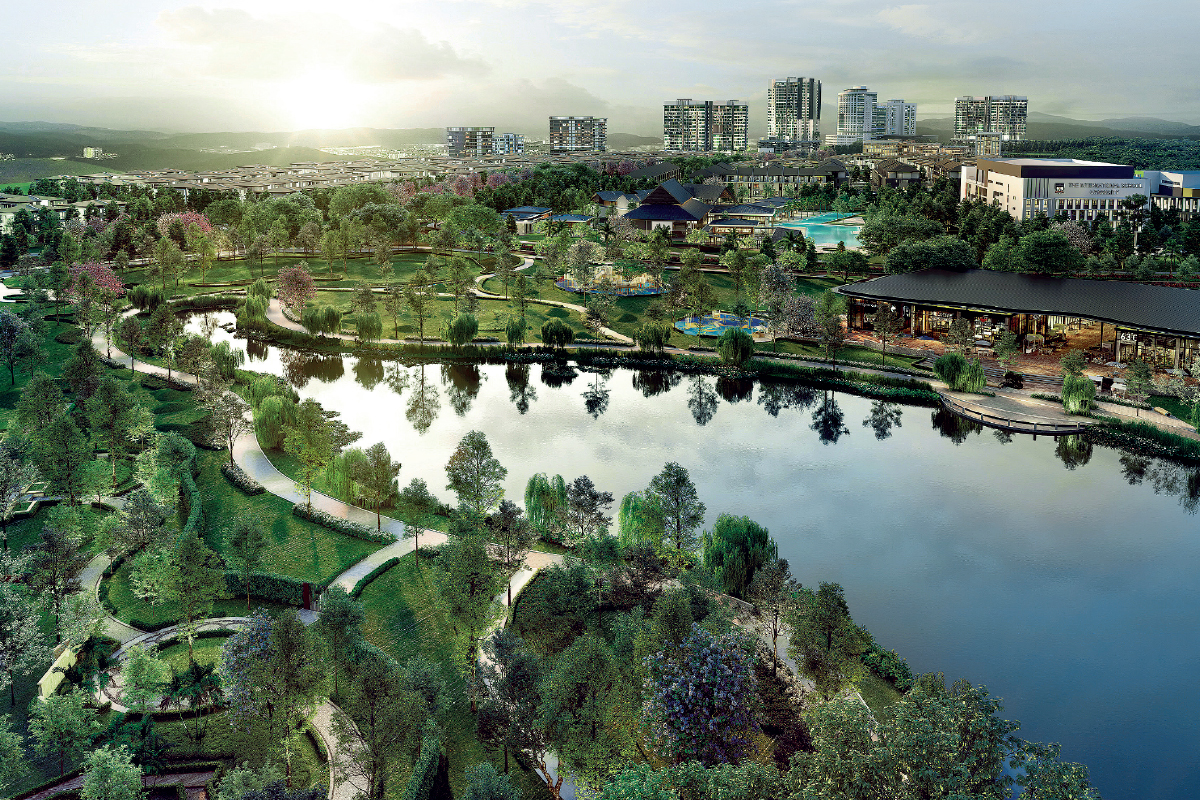
An upcoming township in Cyberjaya, ParkCity Botanika, will span 259 acres and be developed by ParkCity Botanika Sdn Bhd (ParkCity Group), with an estimated GDV of RM7.3 billion. The township will feature about 7,400 units — including landed homes, condominiums, serviced apartments and affordable housing (55%) — alongside commercial units (11%), open spaces (10%), amenities (9%) and infrastructure (15%). The development is slated for completion over 15 years.
Saleha says, “ParkCity Botanika is poised to make a meaningful impact on Cyberjaya’s residential landscape by raising the bar for liveability and community-focused design, while filling a gap in family-friendly, multigenerational housing.
“Currently, developments with a similar concept in Cyberjaya, such as Sejati Lakeside by Paramount Property Development Sdn Bhd and Garden Residence by Mah Sing Group Bhd (KL:MAHSING), have been quite successful in attracting upgraders and families seeking affordable space compared to Kuala Lumpur and Petaling Jaya.
“Set to redefine lifestyle living in Cyberjaya, ParkCity Botanika is expected to elevate the township’s residential appeal by introducing a park-inspired, multigenerational living concept. Its arrival marks a shift towards more holistic, self-contained townships in the southern Klang Valley.
Meanwhile, Saleha notes that, in southern Puchong, that the opening of the 16 Sierra MRT station in March 2023 has enhanced accessibility to 16 Sierra, a 536-acre residential development by IOI Properties Group Bhd (KL:IOIPG).
“Launched in January 2010, the township has an estimated population of 12,000 (as at March 2024), with more than 3,000 units of residential properties completed. Improving connectivity is anticipated to enhance property values in these areas,” she says.
To leverage this MRT station, in 1Q2024, IOI Properties launched COVO, comprising 601 serviced apartments, and the development is only 100m away from the station. In September 2023, Sierra Fresco, a 10.6-acre commercial hub with 98,000 sq ft of lettable space in 16 Sierra, was launched.

What the future holds
With the conurbation rapidly developing and its population growing, what lies ahead for the region? Tang notes that Putrajaya aims to evolve from a Garden City into a Green City by 2025, guided by the Putrajaya Smart City Blueprint, which prioritises sustainability through initiatives such as inter-park rides, pedestrian walkways and bicycle lanes. Meanwhile, Saleha says Putrajaya will continue to add new housing and amenities to support its expanding workforce. Siders believes that, in Cyberjaya, steady growth will continue as the area becomes increasingly attractive to investors.
“The growth of the data centre industry in Cyberjaya is likely to drive demand for commercial properties, particularly office and industrial spaces. As data centres expand, nearby properties, such as those catering for tech firms and employees, may see higher demand and increased rental yields,” Siders says, adding that surrounding land values will increase and investors may capitalise on Cyberjaya’s data centre growth.
Tang says, “Cyberjaya aims to be a smart and low-carbon city by 2025 by implementing seven key strategies, including smart mobility, walkability and integrating nature into urban spaces. It will also be home to data centre campuses. The Selangor State Development Corporation (PKNS) plans to launch 12 projects with a total GDV of RM1.5 billion in 2025.”
Meanwhile, Saleha says government support is driving Cyberjaya’s transformation into Malaysia’s premier tech hub, while positioning it as a green and smart city under the Smart City 2025 master plan.
As for southern Puchong, Tang says several property projects are expected to be completed in 2026. They include Anggun Villa II and III, Erica Residence and Temasya Prisma Serviced Residence.
Saleha notes that the growth of southern Puchong will be shaped by the rise of transit-oriented developments (TODs), following the completion of the Putrajaya MRT Line and new commercial hubs, which she says will attract professionals, urban workers and digital nomads. “The younger demographics will prioritise walkability, last-mile connectivity and mixed-use developments over suburban style,” she says.
“Improved accessibility will draw skilled workers from Cyberjaya, Putrajaya and KL. This will encourage tech start-ups, e-commerce firms and service-based industries to establish offices, leading to a more affluent workforce settling in southern Puchong.”

As such, demand for premium condos, smart homes and lifestyle-driven developments will increase. Co-living and co-working spaces are expected to grow, attracting foreign professionals, digital entrepreneurs and expatriates, especially those working in Cyberjaya’s tech ecosystem, she says.
The modernisation of southern Puchong will make it into a vibrant and sought-after locale in the Greater KL area, she notes. In addition, industrial and businesses will expand as logistics, e-commerce and small and medium enterprises leverage the area’s proximity to major highways and transit hubs. “The growth of these activities will significantly transform its property market, driving higher demand for commercial, industrial and residential properties,” she points out.

Looking ahead, Siders says Putrajaya, Cyberjaya and southern Puchong are poised to become an integrated area, with significant growth in both the tech and residential sectors.
“Strategic infrastructure projects such as the MRT lines, improved highways and smart city initiatives will be key to shaping the area’s future. Property values are likely to continue to rise, driven by better connectivity, economic development and the influx of businesses and residents.”
Saleha concurs. “We foresee that in the next decade, Putrajaya, Cyberjaya and southern Puchong will be transformed into a seamless metropolitan zone, balancing government, tech innovation and urban living. With strong infrastructure investments, sustainability initiatives and economic diversification, these areas are poised to become one of Greater KL’s most dynamic corridors for real estate, businesses and modern lifestyles.”
As Malaysia’s population becomes increasingly urbanised, the Putrajaya–Cyberjaya–southern Puchong conurbation appears well positioned to accommodate this growth.
Save by subscribing to us for your print and/or digital copy.
P/S: The Edge is also available on Apple's App Store and Android's Google Play.