

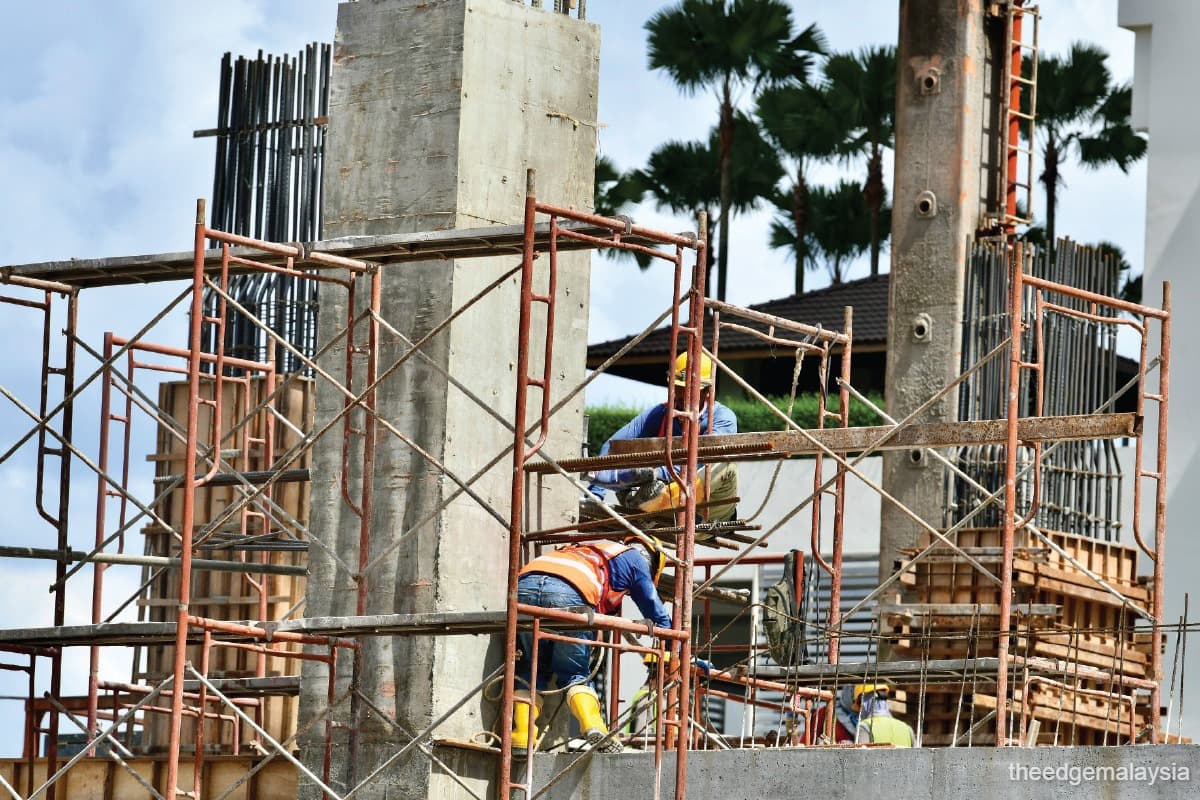
This article first appeared in Digital Edge, The Edge Malaysia Weekly on May 26, 2025 - June 1, 2025
In today’s volatile global economy, resilience is no longer just a competitive advantage — it is a necessity. While political decisions such as the Trump-era tariffs may seem distant, their impact reverberates through the interconnected fabric of international industries, and construction is no exception.
Malaysia, with its strategic role in regional infrastructure and development, is uniquely exposed to these global economic shifts. Yet, in this complexity lies an opportunity: to move away from outdated systems and embrace digital tools — particularly artificial intelligence (AI) — to build a more agile, transparent and future-ready construction sector.
The imposition of tariffs on steel, aluminium and Chinese goods during President Donald Trump’s administration triggered a wave of global supply chain restructuring. While much of the focus has been on direct US trading partners, the knock-on effects have reached countries like Malaysia that rely heavily on imported raw materials and components.
Malaysia imports over 70% of its construction materials from abroad, particularly steel and aluminium, making the industry highly susceptible to external pricing shocks and supply volatility.
Construction projects across the country may face rising costs, supply shortages or delivery delays. Beyond pricing, project timelines are at risk of being extended due to longer lead times and the complexity of securing alternative suppliers.
According to the Construction Industry Development Board (CIDB), cost overruns and project delays affect nearly 80% of large-scale construction projects in Malaysia, and external supply issues are among the top three contributors.
Malaysia is also a key player in Asean’s infrastructure landscape. Any slowdown in trade flows or shift in regional project financing due to global uncertainties could have a cascading effect on local contractors, developers and public-private partnerships.
Urgency to rethink business models
What these trade shocks underscore is a deeper truth: volatility is here to stay.
Whether driven by tariffs, pandemics, raw material price swings or geopolitical tensions, construction firms must move from reactive firefighting to proactive strategy. That means greater investment in scenario planning, diversifying procurement pipelines and having the digital visibility to make informed decisions fast.
A McKinsey report shows that digital transformation can improve productivity in construction by up to 20% and reduce costs by up to 15%, highlighting the business case for investing in tech now — not later.
The traditional linear project delivery model is no longer sufficient. Companies must be agile, with integrated platforms that allow stakeholders to manage documentation, track progress, communicate changes and assess risk in real time.
How AI and automation can change the game
Digital tools are no longer “nice to have”, they are mission-critical. Platforms that enable building information modelling (BIM), real-time site visibility or digital documentation can drastically reduce delays, miscommunication and rework.
AI takes this a step further. It empowers construction firms to transform how they plan, build and manage projects. AI is already being used to predict maintenance needs before they become critical failures; model risks across the project lifecycle; forecast labour and material needs more accurately; and streamline procurement and logistics based on real-time market conditions.
According to Deloitte, over 60% of large global construction firms are investing in AI, and early adopters have reported project cost reductions of 10% to 20% and faster decision-making cycles.
At PlanRadar, we have seen first-hand how companies in Southeast Asia are leveraging our platform to digitalise inspections, defect tracking and team coordination. During recent periods of supply disruption, our customers were able to reassign tasks instantly, update site teams remotely, and maintain accurate documentation for handovers and compliance.
Leadership and culture as the human factor in digital change
While the technology exists, the key to adoption lies in leadership.
In a 2023 Autodesk study, 87% of construction professionals in Asia-Pacific cited “leadership alignment” as the most critical factor for successful digital adoption, surpassing budget and technical infrastructure.
The digital shift must be driven from the top. Business leaders need to articulate a clear digital vision, invest in upskilling their workforce and ensure alignment between back-office and field operations.
It is also critical to bring small and medium enterprises (SMEs) and subcontractors into the fold. These smaller players are the backbone of Malaysia’s construction ecosystem, and their participation is essential to the success of any digital rollout.
SMEs account for over 90% of registered construction companies in Malaysia, according to CIDB — meaning any meaningful digital change must include this majority.
By making digital tools user-friendly, mobile-compatible and scalable, companies can ensure that the entire supply chain benefits, not just the largest contractors.
Turning challenge into competitive advantage
The tariffs may have been the spark, but the fire reveals a deeper need for change. Global construction is being shaped by automation, intelligence and interconnectedness. Those who cling to legacy systems and manual processes will find themselves increasingly outpaced.
According to the Asian Development Bank, Southeast Asia needs US$210 billion in annual infrastructure investment through 2030. The winners in this next phase will be those who are digital, data-driven and resilient.
Avtandil Mekudishvili is the Asean regional lead for PlanRadar, a platform for digital documentation, communication and reporting in construction, facility management and real estate projects
Save by subscribing to us for your print and/or digital copy.
P/S: The Edge is also available on Apple's App Store and Android's Google Play.