

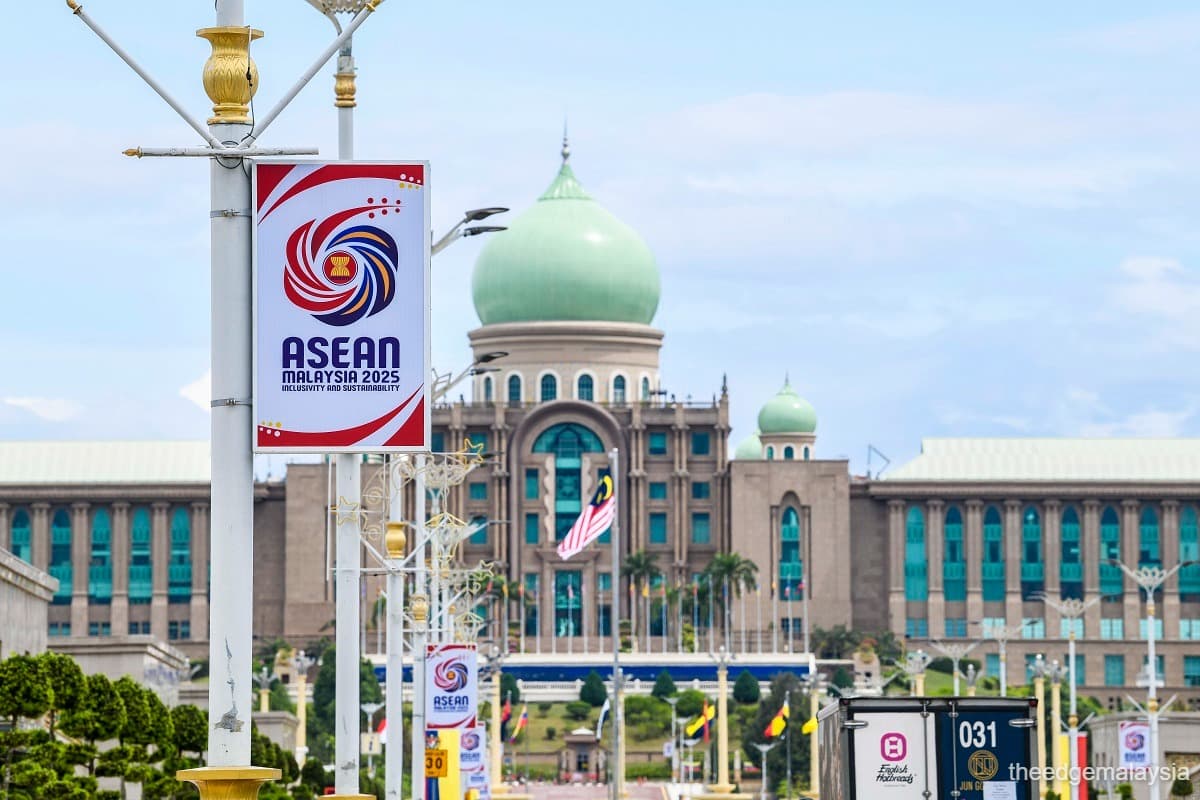
This weekend, roads in Kuala Lumpur will be filled with police officers and personnel, foreign delegates and dignitaries from 10 member states for the 46th Asean Summit. Much rests on our leaders to steer this crucial regional dialogue to a new level of effectiveness.
It is a well-known fact that Asean’s consensus-oriented, non-interference approach has long been subject to criticism, often viewed as a barrier to meaningful, unified action in the face of urgent regional crises, notably the Myanmar crisis and the South China Sea dispute. What is less often emphasised, however, is how this long-standing critique is now manifesting as an urgent, real-world challenge amplified by the volatility of “post-normal times.” “Post-normal times” — a term coined by British-Pakistani scholar Ziauddin Sardar — describes a period where crises unfold rapidly, unpredictably, and with far-reaching implications.
What were once clearly defined problems—territorial disputes, migration flows, or economic disagreements—have now become multi-dimensional challenges involving cyber security, environmental stress, human rights concerns, and shifting geopolitical allegiances. For example, recent social media disinformation towards Myanmar migrant workers in Thailand fuelled xenophobia, further complicating bilateral relations and marginalising already vulnerable communities. Emerging technologies such as AI-powered drones and naval operations, and cyber espionage have also added new layers of complexity to the already tense territorial disputes in the South China Sea.
In a time period where “normal” no longer applies, constructively addressing these challenges will require more than just formal dialogue, agreements and communiqués, for the complexities of today’s crises often defy linear solutions and traditional diplomacy. It requires courageous and dynamic leadership willing to ask deeply philosophical, ethical questions and to re-examine Asean’s foundational values in light of the unpredictability and complexities of today’s world.
Firstly, post-normal times are a period where moral clarity is lacking. With the breakdown of familiar structures of meaning and authority, traditional ethical frameworks — often rooted in stable assumptions about society—struggle to provide adequate guidance. Instead, moral narratives are shaped by convenience, familiarity, tribal allegiance, nationalism and disinformation, rather than a shared sense of justice.
In a context where ethical direction is unclear, Asean’s inertia reflects a deeper crisis: the absence of a unified moral compass. For example, some member states refrain from strongly criticising the military junta in Myanmar, adopting a cautious, status-quo approach. Others prioritise national interests or geopolitical alignments over regional solidarity, with some even believed to be serving as conduits for war supplies, rendering Asean’s Five-Point Consensus largely symbolic.
Without a shared moral framework to guide its response, Asean risks normalising impunity and neutrality in the face of injustice. And the consequence of this is far-reaching. For example, when leaders or institutions choose silence or delay to act on Myanmar's humanitarian crisis, preventable suffering is prolonged. Furthermore, in post-normal times, where events escalate rapidly, every inaction is actively reinforcing injustice and deepening instability. In such a period, where uncertainties challenge conventional thinking, Asean leaders must confront a difficult question: Is neutrality a strength — or a form of quiet complicity — when basic human rights and justice are at stake?
Post-normal times also prompt us to revisit the question of whether we have a moral responsibility toward other Asean neighbours. It is easy to argue against this, citing limited resources to address the problems of “others” or the need to prioritise national concerns — especially in times of uncertainty. However, it is precisely because of the prevailing uncertainties that we must act by placing humanitarian issues first—not just attend to our citizens’ needs, as crises do not respect national borders. Violence, displacement, economic disruption and authoritarianism have ripple effects that can destabilise entire regions. And these effects are already happening. The suffering of people in Myanmar, for example, is no longer just a “domestic issue” — it has triggered an outflow of refugees, cross-border tensions, human trafficking, and regional insecurity. Just look at our own country, which has borne the brunt of the Rohingya migration. As of April 2025, Malaysia has accepted 197,430 registered Myanmar refugees and asylum seekers — impacting not only regional security, but also contributing to the strain on healthcare and social services, and economic pressures.
To draw the boundaries between “your problem” and “our problem” is no longer just unethical, but also highly untenable, when it risks regional disruption and humanitarian fallout. This logic applies not only to external member states offering assistance, but also to member states experiencing human rights crises. At times of crises, the question arises: Does national sovereignty override the value of human lives? By resisting regional intervention, a government may prolong the suffering of its people — both inside and outside the country. And allowing suffering to persist is a moral issue; it involves a conscious decision to let harm occur when it can be prevented.
Furthermore, given the scale of global crises and their rapid evolution, along with the growing complexities and interconnectedness among nations, the consequences of inaction extend far beyond national borders, as previously discussed. For example, public health emergencies, such as the Covid-19 pandemic, showed us how quickly problems can spread beyond borders when initial containment is delayed or cooperation is lacking. Lack of timely cooperation and openness to assistance are no longer just signs of poor decision-making, but represent irresponsible ethical leadership that jeopardises human lives and regional stability, potentially leading to far greater human and financial costs in the future.
Next, post-normal times have also fast-tracked a world of disproportion and inequality. Unrestrained capitalism and global events such as the Covid-19 pandemic and climate change have disproportionately impacted marginalised communities and those already living at the peripheries of global economic systems.
This gives rise to pressing questions that Asean leaders must confront: Are richer and more developed member states obligated to equitably share resources and opportunities with their less-developed counterparts? And is the continued prioritisation of national sovereignty over regional integration a sustainable path forward? Asean’s position in this matter has been largely guided by non-interference, national sovereignty and voluntary cooperation. While the bloc promotes regional integration and mutual support through initiatives like the Asean Socio-Cultural Community and the “Initiative for Asean Integration” (IAI), the extent of support often falls short of addressing deep-rooted disparities, hampered by weak coordination, uneven political commitment, and a lack of robust accountability mechanisms.
What is often not widely discussed is that wealthier member states often reap disproportionate benefits from and compared to their less-developed counterparts — through access to cheap labour, natural resources, broader markets, and the stability that regional peace provides. It is therefore not only fair, but necessary, that greater redistribution of benefits be directed toward less-developed states.
Furthermore, this is not just a matter of justice, but also a matter of pragmatism. The narrowing of development gaps between Asean countries helps enhance Asean’s capacity to respond more swiftly and collectively to emerging challenges, by reducing the reliance of less-developed members — Cambodia, Myanmar, Laos, and Vietnam (CLMV) on external powers, and thereby strengthening internal capacities and regional integration. In post-normal times, where the impacts of injustice, instability, and inequality spill across borders faster than ever, failing to close development gaps is not only unjust — it is self-defeating when deep inequalities impede Asean’s ability to act decisively and in unison.
Post-normal realities call for post-normal thinking and post-normal solutions. It involves Asean leaders going beyond their roles as diplomats and representatives of member states and adopting the mantle of philosophers, ethical stewards, and justice advocates for a shared regional future. In fact, these ideals may already be within reach. They are reflected in our national aspirations through the Madani values, which the current government has introduced as a response to the complexities of post-normal times. These values call for a re-examination of core assumptions surrounding ethics, justice, and the deeper purpose of governance.
Applied to the 46th Asean Summit, this entails:
- KeMampanan (Sustainability) — Adopting forward-oriented strategies that align with principles of ethics, justice and inclusivity, and ensuring development at the national level does not compromise the well-being of other neighbouring Asean countries or future generations.
- KesejAhteraan (Prosperity) — Ensuring prosperity is shared equitably, narrowing development gaps between Asean-6 (Brunei Darussalam, Indonesia, Malaysia, the Philippines, Singapore and Thailand) and CLMV through more targeted support and strengthened accountability and contribution frameworks.
- Daya cipta (Innovation) — Having the courage to innovate from Asean’s traditional approaches grounded in non-interference and consensus, reimagining governance and cooperation models that are agile and fit for post-normal challenges.
- hormAt (Respect) — Fostering a regional culture of mutual respect that goes beyond sovereignty, by upholding shared ethical standards and practicing unwavering commitment to universal principles of human rights and dignity.
- keyakiNan (Trust) — In times of fragmentation and disinformation, restoring and reinforcing trust through consistent, transparent, and accountable leadership and frameworks.
- Ihsan (Compassion) — Being compassionate towards all human beings, doing what is right even when it is difficult, and prioritising protecting the most marginalised, disadvantaged and displaced beyond national borders.
The 46th Asean Summit can be a turning point for Asean unity and progress, if Prime Minister Datuk Seri Anwar Ibrahim shows visionary leadership that is signalled by the Madani values. As the Summit convenes, citizens across the region eagerly await a new era of regional solidarity, forward-looking leadership, and people-centered development.
Chew Zhun Yee is co-founder and managing director of Malaysian Philosophy Society, a non-profit NGO focusing on making philosophy accessible to everyone.