

This article first appeared in City & Country, The Edge Malaysia Weekly on May 19, 2025 - May 25, 2025
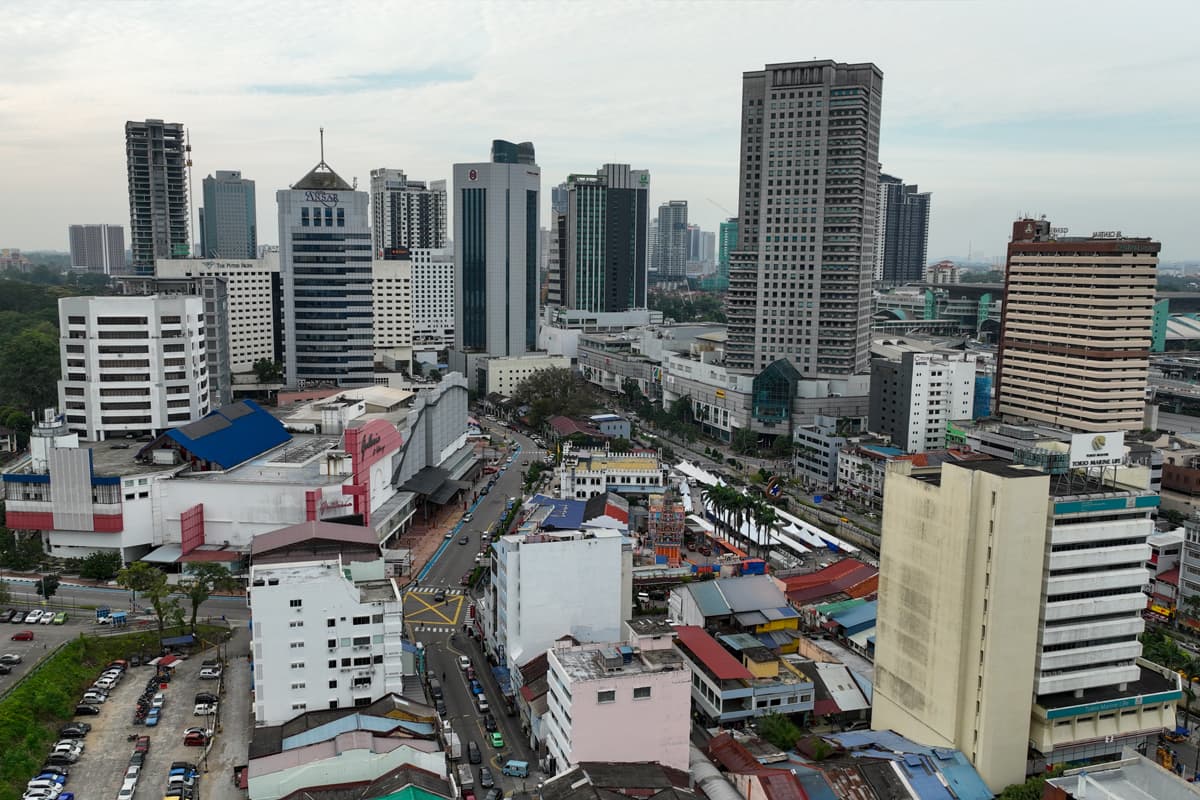
While Malaysia faces pressure from the new US tariffs, Johor Bahru’s property market still has a silver lining, thanks to catalyst projects and government initiatives such as the Johor Bahru-Singapore Rapid Transit System (RTS), Elevated Autonomous Rapid Transit (E-ART), Forest City Special Financial Zone and the Johor-Singapore Special Economic Zone (JS-SEZ), says Olive Tree Property Consultants (Johor) Sdn Bhd CEO Samuel Tan in presenting The Edge Malaysia | Olive Tree Property Consultants Johor Bahru Housing Property Monitor 1Q2025.
“All these [catalyst projects and government] initiatives will be the critical differentiating factors for the Johor property market. Already, some manufacturers have indicated their intentions to relocate their plants to JS-SEZ, owing to lower tariffs and operating costs. Their headquarters and trading arm will remain in Singapore to enjoy the lower corporate tax,” says Tan.
US President Donald Trump announced on April 2 the implementation of reciprocal tariffs — ranging from 10% to 50% — on various imports to address trade imbalances and protect its domestic industries. Malaysia was subjected to a 24% tariff rate.

Trump paused the drastic hike on April 9 for 90 days, however, citing stock and bond market volatility as the reason for the U-turn and, instead, imposed a flat 10% reciprocal tax on all its trading partners except China.
Malaysia is actively engaging with the US to seek clarification on tariff derivation, negotiating for a lower tariff while diversifying its trade partnerships with more countries.
Tan notes that, as one of the US’ largest trading partners and a key destination for US investments, Malaysia’s economy will be affected by the outcome of the negotiations — with the extent depending on how the talks progress.
“The breadth and depth of the initial US tariff announcement caught many by surprise. Not only were the tariffs notably high, but the methodology behind their derivation was unclear, raising questions among trading partners. The 90-day pause announced shortly after the implementation further added to the uncertainty.
“Every country is still monitoring and digesting the news of these tariff shocks. It will be detrimental to the world economy if such drastic tariff policy becomes the norm that changes the global economy order and international trade structure. The US reciprocal tariffs escalate the risk in areas such as determining manufacturing location/relocation, global supply chain disruption, surge in inflation and ambiguity of trade policy,” says Tan.
He notes that the unpredictability of policy direction contributes to a volatile environment, prompting corporations to adopt a more cautious approach to new investments in the short to medium term.

Ongoing catalyst projects
Having said that, catalytic projects such as the Johor Bahru-Singapore RTS and E-ART continue to progress. In February, Mass Rapid Transit Corp Sdn Bhd and Sunway Bhd (KL:SUNWAY) formalised a strategic partnership in February to develop a RM2.6 billion integrated mixed-use and transit-oriented development that will be linked to the Bukit Chagar RTS station. The station connects Johor Bahru to Singapore’s Woodlands North station.
The 4.23-acre project will include high-rise residences, a retail mall, an educational hub, a health and wellness centre and a hospitality component. A central feature of the project is the RTS multi-storey car park, which will come with 1,550 car and 1,015 motorcycle parking bays to cater for cross-border commuters.
Construction began in March and the multi-storey park-and-ride facility is set to open in November 2026, ahead of the RTS Link’s targeted launch in December 2026.
Tan says commuters using the Johor Bahru-Singapore RTS Link will not only have direct access to the mixed-use development but also to other transport services in Johor Bahru, including the KTM electric train service, city buses and future intra-city public rail service called the Autonomous Rail Rapid Transit (ART).
Referring to the benefits of the Bukit Chagar station and the mixed-use development, he says: “The multi-storey car park will help ease the problem of illegal parking and facilitate the park-and-ride to Singapore. However, an efficient intra-city public transport system in the form of buses and ART is still critical to ensure a smooth journey. An efficient feeder bus system is still required as a last-mile connectivity to various housing schemes.”
As the Bukit Chagar station is also a transit hub, it is integrated with other transport systems such as the RTS, KTM electric train service, city buses and the E-ART system. “This facilitates the connectivity of public transport and encourages more people to use public transport,” he adds.
Meanwhile, the mixed-use development component, such as the retail mall and hotel, will serve visitors who are on transit. “As the JB-Woodlands Causeway is one of the busiest cross-countries links in the world, the Bukit Chagar Transit Hub is [expected] to be a vibrant commercial hub when the RTS commences operation,” Tan says.
In addition, the government is working with the private sector to construct E-ART in Johor Bahru. “The cabinet has instructed the public-private partnership unit (Ukas) to call for a request for proposal on the matter after a proposal for a multi-storey ART by the Johor government,” says Tan.
Covering more than 50km, the E-ART will have 32 stations covering three routes on flyovers that combine bus lanes and rail tracks to enable smoother travels.
Tan notes that the project’s low development cost and shorter construction time make it favourable to the authorities.
“The E-ART system is estimated to be developed at a cost of nearly RM7 billion compared to the LRT, [which has an estimated development cost of RM20 billion]. Apart from the lower cost, Johor is said to have chosen the E-ART system for its shorter construction time, which would allow it to complement the RTS Link project, scheduled to commence operation in January 2027,” he says.
“Once the RTS Link is completed, it is set to transport about 20,000 people in and out of Johor Bahru within an hour. Therefore, there is an urgent need for efficient intra-city public transport. Considering the lower implementation cost involved and shorter project timeline, the option of an elevated ART is favoured by the authority to tackle the issue.”

Supply and price trends in 1Q2025
Tan notes, during the quarter under review, that the Johor Bahru residential market exhibited a stable performance across all segment, except for a few exceptions.
“As a whole, the property yields in the portfolio remained largely stable except for the few properties which showed marginal changes in prices and rentals,” says Tan.
As such, several 2-storey terrace units in Taman Mount Austin, Taman Molek and Taman Impian Emas experienced a price increase of between RM20,000 and RM50,000.
For instance, a 1,400 sq ft unit in Taman Mount Austin saw its price rise to RM770,000 in 1Q2025 (4Q2024: RM750,000); the selling price for a few units in Taman Molek increased to RM900,000 (4Q2024: RM850,000); and a 1,765 sq ft unit in Taman Impian Emas saw its price increase to RM750,000 (4Q2024: RM730,000).
Meanwhile, a 2,240 sq ft 2-storey cluster house in Austin Height saw a price increase to RM1 million from RM950,000 (4Q2024).
Based on the selected apartment/condominium schemes in the monitor, only Sky Executive experienced a price increase to RM380,000 (4Q2024: RM370,000) for a 750 sq ft unit.
In the rental market, three housing schemes — Taman Impian Emas, Horizon Hills and Taman Bukit Indah — showed an increase in rental rates. In Taman Impian Emas, a 1,765 sq ft 2-storey terraced house experienced a rental increase from RM1,800 to RM2,000 per month quarter on quarter (q-o-q); and a 2-storey, 3,200 sq ft semi-detached house in the same development saw its rental rate rise to RM2,800 per month, from RM2,500. The rent of a 2-storey, 3,003 sq ft semi-detached house in Horizon Hills saw an increase to RM3,800 per month q-o-q, from RM3,600; and a 2,240 sq ft cluster house in Taman Bukit Indah also experienced a rental increment by RM200 to RM3,200.
For high-rises, Sky Executive exhibited a marginal increase from RM1,700 to RM1,800 per month for a 750 sq ft unit.

Launches in 1Q2025
Six new projects were launched in 1Q2025 — four were landed developments and two were serviced apartments.
In January, Keck Seng (Malaysia) Bhd (KL:KSENG) launched the second phase of Greenwoods Residence. The freehold phased development comprises 88 two-storey and semi-detached units that come with a land area of 2,080 to 9,062 sq ft and built-up of between 2,114 and 3,053 sq ft. The selling price starts from RM899,980. Tan says the take-up rate has reached about 60% and the development is expected to be completed in September 2026.
Also in January, Tropicana Corp Bhd (KL:TROP) launched Fraser Height @ Gelang Patah in Iskandar Puteri. It has a total of 518 two-storey terraced houses with a land area of between 1,170 and 1,260 sq ft and built-up sizes of 1,500 to 1,895 sq ft. The selling price starts from RM730,000. It is slated for completion in March 2026.
Soft-launched in January, SA.YOUNG 3 D’Eco Botanic by Eco World Development Group Bhd (KL:ECOWLD) will have 1,200 units that come in three built-up sizes (549, 872 and 947 sq ft). The units are priced from RM378,000 and the development is expected to be completed in 2029.
Sanubari 3A by JLand Group Sdn Bhd was launched in February in Bandar Dato’ Onn. The development features 108 two-storey terraced houses with a land area of 1,400 sq ft and a built-up area of 2,189 sq ft. The selling price starts from RM1.07 million and the take-up rate is about 10%.
In March, Prinsip Alpha Sdn Bhd launched Ponderosa Regency, a 1,132-unit serviced apartment, in Taman Molek, which has received a sales rate of 30% to 40%. The units will have built-up sizes that range between 532 and 1,211 sq ft and a selling price that starts from RM405,000. This freehold development is expected to be completed in December 2026.
Elsewhere, Gunung Impian Development Sdn Bhd continues its progress for its freehold Taman Impian Emas master-planned development with the launch Iconia Garden (Zone 10C3) also in March. It features 105 two-storey terraced houses (land area: 1,920 to 5,048 sq ft; built-up: 2,198 to 2,284 sq ft) and a price tag that starts from RM860,000. Tan says the project is 100% taken up and estimated to be completed in March 2027.
Save by subscribing to us for your print and/or digital copy.
P/S: The Edge is also available on Apple's App Store and Android's Google Play.