

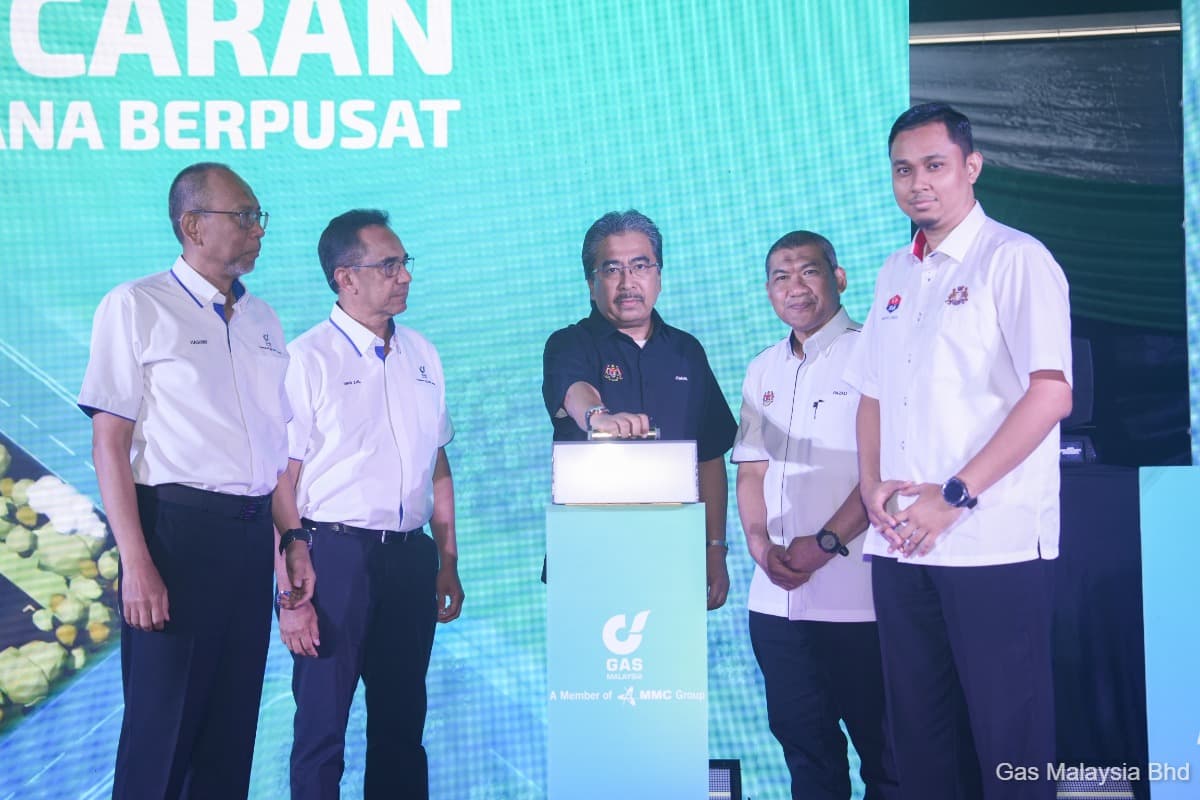
KLUANG (May 20): Gas Malaysia Bhd (KL:GASMSIA) expects its newly launched centralised biomethane injection station in Kluang, Johor, to break even within seven to nine years, according to its president and group CEO Ahmad Hashimi Abdul Manap.
The facility, which is expected to be fully operational in the second half of 2025, could achieve payback sooner than expected with increased supply volumes from palm oil millers, Ahmad Hashimi said.
"If we have one area — either the individual millers able to increase their volume or we have a few other millers able to collaborate with us and we are able to buy from them — they will make our payback period faster,” he told The Edge after the plant’s launch.
The Kluang biomethane station, spearheaded by Gas Malaysia's wholly owned subsidiary Gas Malaysia Green Venture Sdn Bhd, is part of the group strategy to drive cleaner energy growth through the utilisation of biowaste from palm oil mills.
The station works by receiving biowaste from surrounding palm oil mills and offers a centralised solution for injecting the biomethane into its own natural gas grid. The gas is then sold to selected industrial customers looking to meet environmental, social and governance (ESG) standards.
“When they buy [the biomethane], they will also fulfil their ESG requirements, especially if they are multinational companies [which] have stringent requirements," Ahmad Hashimi said.
“For instance, you buy 100 units from me, but out of 100 units I can only sell 10 units of so-called green gas. For that, we are selling at a premium price,” he added.
To secure biowaste supply from Kluang palm oil millers
The biomethane venture happens at a time when Malaysia attempts to develop its biogas ecosystem, backed by biowaste from industries such as oil palm where the country is the world's second-largest producer.
However, challenges remain from lack of regulation to secure domestic use of biowaste such as empty fruit bunches which could fetch higher prices from buyers seeking to produce other products like paper at home and overseas.
According to Ahmad Hashimi, Gas Malaysia is presently working with several palm oil millers, including Tereh Palm Oil Mill, and has more than 10 additional agreements in the pipeline with both corporate and private players.
The company aims to engage 30 to 40 millers within a 200km radius of Kluang to ensure a reliable supply of raw gas. While the group declined to disclose the purchase price of the raw gas from the millers, Ahmad Hashimi said "the company offers competitive terms".
“If they produce more, we are willing to even offer better terms and prices. We are fair, we are reputable, we are an established organisation doing this for the long term,” he said.
Currently, Gas Malaysia is also developing its fourth biomethane plant in Ampang Jajar, to be partly financed by the RM150 million green financing loan facility secured from AMMB Holdings Bhd (KL:AMBANK).
Ahmad Hashimi noted that "the upcoming facility will be sizeable”, with the capability to scale production within the same site by up to seven times.
“What we offer is that you don’t have to invest [as] we will do the investment. If they [millers] were to invest RM20-25 million, I think the payback period could be in the region of 10 to 11 years. So, we provide the right business model, especially for those millers who can’t afford it,” he explained.
Ahmad Hashimi further noted that the group’s extensive 2,900km pipeline network across Peninsular Malaysia offers a strategic advantage in transporting and injecting biomethane into the natural gas grid.