

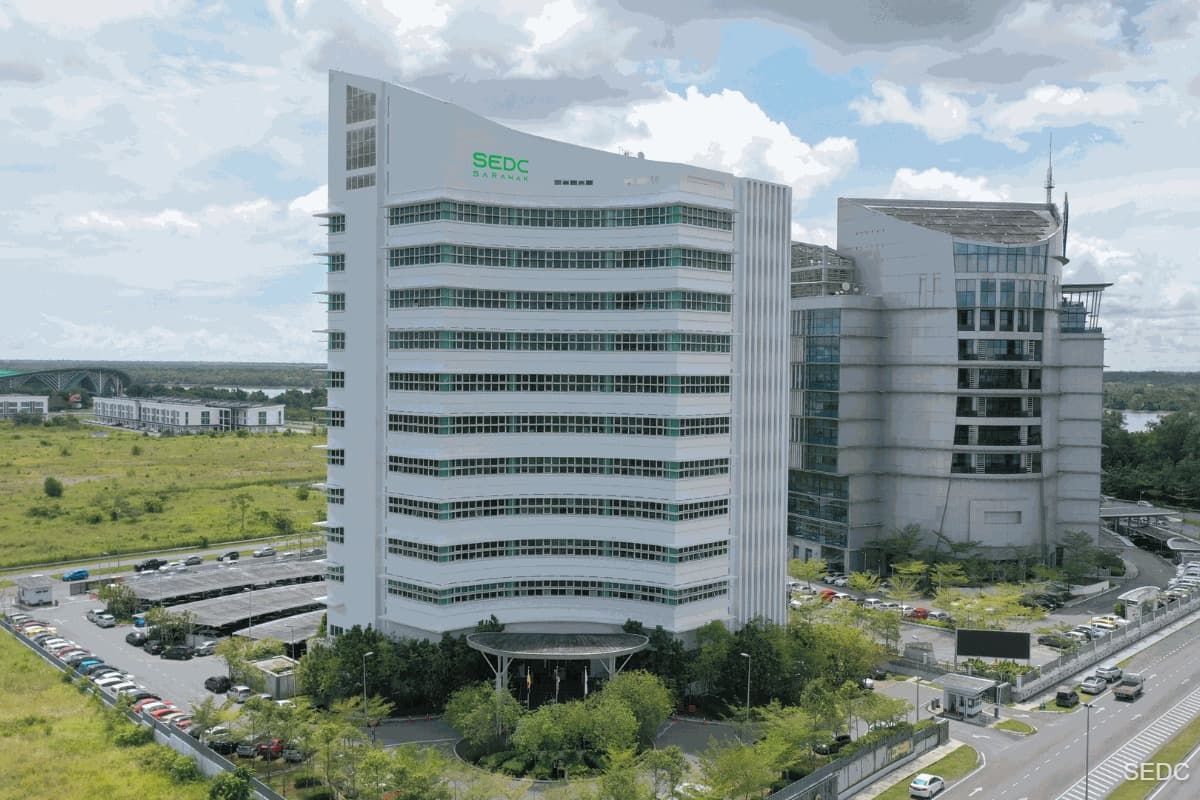
KUALA LUMPUR (May 19): Kenanga Research noted Sarawak's gradual transition from a state-led model to a private sector-driven economy may include the listing of assets under the Sarawak Economic Development Corporation (SEDC).
In a research note on Monday, the house said the transition could see SEDC and Bintulu Development Authority lose government allocations in the coming years, requiring their assets to become self-sufficient.
"We believe this strategic move will be advantageous for the state government," the research house stated, highlighting that private capital-driven companies generally offer greater transparency and the state's assets could experience significant scaling in the long term with access to public market funding.
Kenanga said these assets could include Hemisphere Corporation Sdn Bhd (hospitality and retail), SEDC Energy (hydrogen and renewables), Sarawak Metro (automated rail transit) and overseas investments such as cattle ranches in Australia.
The firm anticipates that Sarawak's major projects, including the Autonomous Rail Transit (ART) project, the proposed new Kuching airport and the Borneo rail, will remain dependent on state government funding. Therefore, the research house does not anticipate significant asset initial public offerings in the near term.
These initiatives must establish consistent earnings and growth potential to achieve self-sufficiency before attracting private capital market investments, enabling their assets to be offered for public investment.
Although Sarawak Energy Bhd is the most mature and stable asset, there are no immediate plans for a listing.
Beyond local players, the state must strengthen its domestic economy to attract foreign investors, ultimately boosting private capital participation in Sarawak, the house noted.
As Sarawak transitions toward a private capital-driven economy, it is diversifying its key construction material sources to lower supply costs and reduce the risk of bottlenecks during periods of heightened demand, the house said.
Current annual cement demand is estimated at around 1.7 million to 1.8 million tonnes, which is adequate given that Cahya Mata Sarawak Bhd's (KL:CMSB) plant is operating at a 60% to 65% utilisation rate. However, with the advent of several megaprojects, demand is expected to rise in the coming years.
For example, the proposed new international airport in Tanjung Embang, Samarahan, is designed to handle up to 15 million passengers annually — three times the capacity of the existing Kuching International Airport.
This development indicates that cement demand could exceed 1.7 million tonnes per year, potentially reaching 2 million tonnes or more in the medium term, depending on the successful advancement of these projects.
Although CMS is sufficient for the capacity of meeting 2 million tonnes per annum for upcoming projects, a new cement manufacturing facility in Sarawak may become necessary if additional construction and infrastructure projects are announced in the long term.
Other than that, higher logistics costs in the state due to its geographic characteristics may extend the cement cost in Sarawak.
Additionally, higher logistics costs in Sarawak, driven by its geographic characteristics, may increase the overall cost of cement. "It will no doubt enhance competition in the cement industry and ensure consistency of cement supply in the state in the longer run," said the house.
Although challenges remain, such as manpower mobility and the ease of establishing business entities in the state, the research house believes Sarawak is moving in the right direction from a macro perspective. With strong political will, the state’s economy has the potential to develop multiple pillars of growth over the long term.