

This article first appeared in The Edge Malaysia Weekly on May 19, 2025 - May 25, 2025
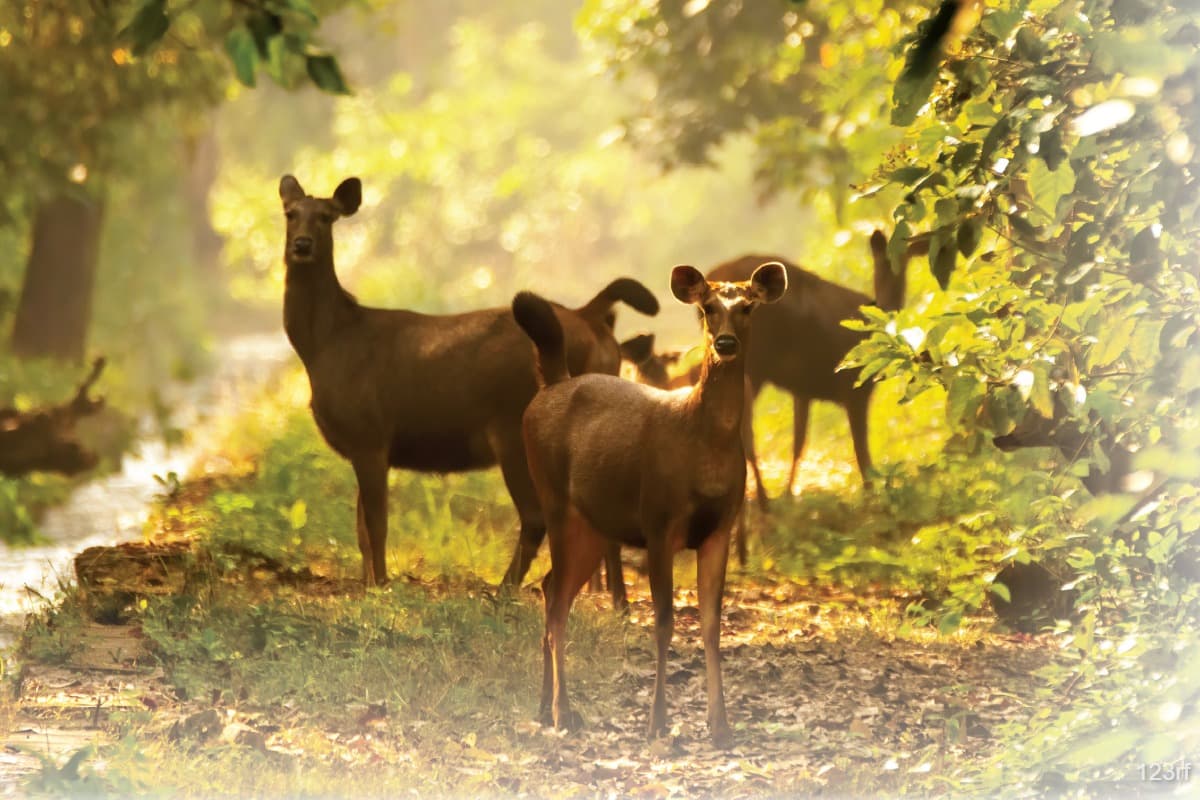
Of the many threats to the survival of tigers in Malaysia, one of the most overlooked is the decline of its primary prey: the sambar deer, one of the largest deer species in Southeast Asia. Marked by a dark brown coat and large antlers in males, sambar deer are vital in sustaining the population of its predator.
Sambar deer numbers continue to decline, however, owing to habitat loss from deforestation, poaching for meat and its antlers, and competition with livestock for food resources.
Consequently, some studies have shown that areas with fewer sambar deer also have declining tiger populations. This phenomenon is also linked with increased human-wildlife conflict as the tigers, starved of their prey and habitat, wander into villages in search of food.
“If the sambar deer is gone, then the tiger has to rely on wild pigs, barking deer, serow and [other] smaller species. So, it has to compete with leopards [and other predators] for prey,” says Azlan Mohamed, head of the tiger conservation programme at WWF Malaysia.
Currently, the exact population of sambar deer in Peninsular Malaysia is unclear, but estimates range from 700 to 1,000 individuals, according to a Department of Wildlife and National Parks (Perhilitan) spokesman.
The primary habitats for the sambar deer are in protected areas under the stewardship of Perhilitan, which include Taman Negara Pahang, Taman Negara Terengganu, Taman Negara Kelantan and the Tengku Hassanal Wildlife Reserve.
Sambar deer are rarely detected outside protected areas, which account for only 16% of the total available habitat for the deer in the peninsula, according to a 2014 study titled “Extinction process of the sambar deer in Peninsular Malaysia”. The sambar deer have lost more than half of their historical range in the past century and only a quarter of their current habitat is protected.
The study was conducted by scientists from the Malaysian Conservation Alliance for Tigers, WWF Malaysia, the Wildlife Conservation Society Malaysia Programme and TRAFFIC Southeast Asia.
“Massive and sustained recovery of sambar deer is absolutely central to Malayan tiger recovery. This should be one of the top priorities of the wildlife authority,” warns Datuk Dr John Payne, CEO of the non-governmental organisation Bringing Back Our Rare Animals.
Poaching remains a major threat
A main threat to the sambar deer is hunting. It is the only wild meat species consistently hunted across all communities, making it especially vulnerable to human exploitation, according to Payne. Sambar deer are targeted both for their meat and as trophies.
In fact, the hunting of sambar deer has a long history in Peninsular Malaysia. Payne notes that they have been hunted intensively for more than 130 years. By the late 19th century, many rural communities owned firearms primarily for hunting, with the sambar deer being among the most prized game. For many years, hunting the deer with a licence was legal in the region.
The deer are particularly valued locally as food, which creates constant hunting pressure. The species’ slow breeding rate means that even limited hunting can rapidly reduce populations to dangerously low levels, says Lau Ching Fong, acting director of Perak State Park Corp.
In response, Malaysian authorities introduced a six-year hunting moratorium in 2009, which was extended until 2016 because of continued threats to the sambar deer. To further protect the species, it was formally classified as totally protected in 2022 under the Wildlife Conservation Act 2010 (Act 716), which prohibits all hunting, possession and trade without special permit.
The sambar deer is also listed under the Sixth Schedule of Act 716, which is the list of wildlife for food for indigenous peoples. This allows the indigenous peoples to hunt or capture sambar deer for their personal and family consumption only. The species cannot be sold or exchanged for food, money or any other item.
Unfortunately, this has not stopped the decline of the sambar deer. A major threat that remains is poaching, which is a major challenge for enforcement officers.
The Belum-Temengor landscape, where sambar deer were historically abundant, is one of the country’s largest continuous forest complexes, a critical haven for wildlife and a hotspot for poaching. The area includes the Royal Belum State Park and the Temengor forest reserve.
Lau says poachers often take advantage of salt licks, which can be either mineral-rich water sources or soil patches where animals frequently gather. Poachers exploit this predictable behaviour by either lying in wait to shoot their targets or setting snares.
Using snares poses a greater risk for the poachers as enforcement agencies can detect and monitor them. Therefore, some hunters prefer direct shooting to reduce the chances of being caught, says Lau.
To address this issue, the state park has prioritised the involvement of Orang Asli who live in the area. They do this through education, tourism collaborations, habitat enrichment projects and employing community members in anti-poaching patrols.
As residents living within the conservation area, these indigenous groups play a pivotal role as conservation allies, says Lau. Currently, the state park has one of Malaysia’s highest densities of patrollers, consisting primarily of trained Orang Asli community members.
These rangers serve as the “eyes and ears” of law enforcement, although they lack the authority to make arrests or prevent entry into forests. When they suspect poaching activity, they report it to the authorities, who then take action.
Royal Belum is also not an easy place to enter. Controlled entry points, strict patrolling and natural geographical barriers limit access, making it difficult for poachers to operate undetected, says Lau. A checkpoint at the lake further restricts entry and the dense terrain and limited alternative routes add to the challenge.
As a result, poachers often avoid the area, opting for locations with easier access and lower risk of capture.
In stark contrast is the neighbouring Temengor forest reserve, observes WWF Malaysia’s Azlan. It is not protected and has faced a decline in sambar deer populations because of poaching. The area, which is an active logging zone, faces greater challenges, owing to its accessibility via lakes and roads.
For instance, the Gerik-Jeli East-West Highway poses a barrier to animal movement from Temengor to Belum, making deer more vulnerable to poaching. Logging roads further increase access, allowing poachers to penetrate deeper into the habitat, says Azlan.
Data from camera trap studies from 2009 to 2011 show that Temengor recorded only six instances of sambar sightings. Meanwhile, Belum had more than 500 in the same period, according to a 2009 to 2011 study titled “Conserving tigers in Malaysia: A science-driven approach for eliciting conservation policy change” by scientists from WWF Malaysia and Fauna and Flora International.
In tandem with the higher presence of sambar deer, tiger density in the state park was also three times higher in Belum than in Temenggor.
Decline in sambar deer population leads to higher human-wildlife conflict
Worryingly, the decline of the sambar deer population could cause predators such as tigers to turn to livestock or human-inhabited areas for sustenance.
“Tigers have been forced to eat domestic animals and even humans, and to move into villages and across highways in search of food. This is because sambar deer populations are depleted and suppressed, with no chance given to recover, in tandem with the massive loss of wild pigs due to African swine fever since 2021,” notes Payne.
In Temengor, reports from Orang Asli communities indicate a rise in cattle attacks by tigers, a rare phenomenon in the past.
A villager from Kampung Chiong in Temengor tells ESG that logging activities in the area also contributed to the decline of the deer population, which struggles to survive when forested areas are cleared. In turn, the loss of forest cover forces wildlife such as elephants and tigers to enter the village, he says.
A tiger, which was believed to have mauled two people to death, was caught by Perhilitan last October, according to news reports. The remains of one of the victims was found near the East-West Highway.
On the other hand, the Gerik-Jeli highway has become a death trap for tigers, according to WWF. Nationwide, six tigers have died in roadkill accidents since 2023.
“The biggest challenge for sambar deer survival is poaching and the second one is unsustainable logging practices. If the logging is practised according to a reduced-impact logging guide, then it will have minimal impacts on wildlife and [the deer] should be able to survive in that kind of environment,” says Azlan.
“But if the logging is almost clearcutting and the forest is very open, then definitely you will have an impact on sambar as well.”
To protect sambar deer in Temengor, the first priority is to control poaching through access restrictions, says Azlan. This involves regulating entry by establishing checkpoints at major access points such as the Banding jetty, restricting boat access to the lake and installing gates or barriers on unused logging roads to prevent unauthorised entry into the forest.
Strengthening enforcement is also key. Azlan says this includes increasing ranger patrols and law enforcement presence in poaching hotspots, deploying surveillance camera traps to monitor illegal activity and addressing logistical challenges such as poor telecommunication coverage in remote areas.
Perhilitan has been upping its efforts to combat these problems by hiring more community rangers, collaborating with various organisations and implementing patrolling programmes such as the Operasi Bersepadu Khazanah.

Protect natural habitats
Recognising the urgency of the situation, the Royal Belum State Park in Perak has initiated measures to bolster deer populations.
The park is carrying out initiatives such as habitat enrichment — including clearing vegetation to encourage grass growth, which serves as food for sambar deer — and releasing captive-bred sambar deer to supplement the wild population, says Lau. He says about 20 deer have been reintroduced into Royal Belum and they are breeding.
The trouble is that sambar deer breed slowly and take nearly two years to mature. Tigers typically require one sambar-sized prey per week to survive, says Lau, thus complicating the population recovery process.
In this regard, Perhilitan has implemented captive breeding efforts to increase sambar deer numbers, says its spokesman. These programmes focus on maximising reproductive success and ensuring the welfare of the deer in captivity before reintroducing them into the wild, which includes the translocation of sambar deer to suitable habitats.
Findings suggest, however, that captive-bred sambar deer face challenges in adapting to wild environments, owing to diminished foraging skills, lack of predator awareness and a general reliance on human-provided resources, says Perhilitan.
This is where habitat restoration comes in to provide suitable environments for the sambar deer.
Habitats on the fringes of protected areas and forest reserves should be managed to maximise food supply for sambar deer, says Payne. The best sambar deer habitats are young secondary forests and forest edges, he says. Most of Malaysia’s remaining forest is on sloping land, however, where soils are thin and of low natural fertility.
“Sambar deer need a variety of shrubs, small woody plants, herbs and grasses. It is not rocket science to cultivate such a variety at designated sites. The sites should be on fertile soils to maximise plant growth rate in the presence of constant feeding by deer,” he says.
“It might be necessary to add fertilisers and certainly necessary to add artificial minerals that provide minerals such as calcium, phosphorus and trace elements that might be insufficient in plants alone.”
Other than grassland, Sambar deer also need salt licks, which are mineral-rich natural areas, to supplement their mineral needs.
Perhilitan says it has conducted 30 programmes for monitoring and maintaining grazing fields, and 122 programmes for monitoring and maintaining both natural and artificial salt licks throughout 2024.
Monthly monitoring activities on the sambar deer are carried out through the Baseline Monitoring Study programme in the Tengku Hassanal Wildlife Reserve, Pahang, and the Sungkai Wildlife Reserve, Perak, says the government agency.
“This programme aims to track any positive or negative changes in the distribution, population, behaviour and ecosystem status of the sambar deer in these two reserves,” says its spokesman.
In addition, four specific programmes focused on the maintenance of grazing fields, salt licks and habitat restoration have also been carried out by Perhilitan through the Wildlife Conservation Division (see Table 1).

“These programmes are crucial for ensuring the provision of a healthy and high-quality ecology in grazing areas for wildlife species such as the sambar deer and the barking deer. Grazing areas with adequate sources of protein and additional nutrients will contribute positively to the self-sufficiency and development of these species,” says Perhilitan.
Payne says the authorities should also encourage the farming of native sambar deer, which would ensure that the species does not go extinct.
Perhilitan’s captive breeding programmes focus on conservation of the species. Farming would allow for commercial use of the animal, such as producing meat and antlers legally, which reduces the pressure from poaching.
Currently, sambar deer are not allowed to be farmed, as they are protected under wildlife regulations, having been classified as totally protected under the Wildlife Conservation Act 2010 (Act 716).
“Almost all farmed deer in Peninsular Malaysia are the exotic Javan deer, a different species. In my opinion, the authority should encourage farming of native sambar deer. That would at least ensure that the species can never go extinct,” says Payne.

Increase penalties for poaching
The sambar deer is protected under the Wildlife Conservation Act 2010 (Act 716). In 2022, the Act was amended to increase fines and imprisonment terms. Not all these changes have been enforced, however, as Perhilitan is still drafting and reviewing the accompanying subsidiary legislation for the specific sections.
Those involved in poaching and the illegal trade must be prosecuted to the full extent of the law, says Elizabeth John, communications manager at TRAFFIC, a non-governmental organisation focused on combating illegal wildlife trade. “Preventing poaching is crucial to safeguarding the species in the long term and if we want reintroduction programmes to succeed,” she says.
Penalties for illegal possession of sambar deer and their parts are a fine of up to RM50,000, up to two years in prison or both. While these are the same penalties for hunting, says Perhilitan, most criminal cases involving wildlife hunting activities are charged only under the offence of possession, owing to the challenges and difficulties in proving the hunting offence.
There have been 10 convicted cases involving sambar deer from 2020 to 2024, says Perhilitan (see Table 2).

Recent arrests include one in 2023, when authorities discovered a sambar deer trophy and other protected wildlife items in a raid of Yang Lee Tattoo in Petaling Jaya, Selangor. The accused was arrested in November 2024 and charged under the Wildlife Conservation Act for illegal possession of protected species.
In February 2025 a Perhilitan enforcement team raided a residence in Pudu, Kuala Lumpur, seizing the body parts of sambar deer and multiple threatened species, including tigers, bears, orangutans, elephants and rhinos.
A successful case depends on a multitude of factors, including an airtight case file, proper enforcement and investigation techniques as well as the skill of the prosecution team, says Hazeeq Syahme Mohd Afzan, project coordinator at Justice for Wildlife Malaysia.

“Currently, prosecuting officers mostly handle case mentions and basic trials, albeit not all. On top of that, the nature of wildlife crime cases itself presents a unique set of legal challenges that can be complex to navigate. Moreover, owing to the lack of manpower, wildlife enforcement officers also wear many different hats for each of their responsibilities,” says Hazeeq.
“One day they are an investigating officer and the next day they must resolve human-wildlife conflict issues.”
Hazeeq adds that continuous capacity-building efforts for law enforcement officers are needed. This means more resources should be allocated to capacity-building workshops and modules for wildlife enforcement agencies. In addition, there should be more opportunities for cooperation and collaboration between government agencies and NGOs.
He says NGOs could play a crucial role in supporting government agencies in wildlife enforcement and conservation efforts.
“Successful legal action against wildlife criminals hinges on the different agencies and parties working together to ensure wildlife is better protected in their habitat. This is especially important because whenever a case goes to court, oftentimes the wildlife is already dead,” says Hazeeq.
Finally, raising awareness of wildlife crime is key. Public awareness of wildlife laws is still low, says Hazeeq. “According to our data, most wildlife crime offenders are local Malaysians by a large margin. Educating the public on the importance of conserving wildlife should go hand in hand with increasing enforcement efforts.”
This story is part of the Macaranga Mentorship on Covering Wildlife Crime in Malaysia 2024, supported by Internews Earth Journalism Network
Save by subscribing to us for your print and/or digital copy.
P/S: The Edge is also available on Apple's App Store and Android's Google Play.