

KUALA LUMPUR (May 13): ICT Zone Asia Bhd (KL:ICTZONE), a technology financing solutions provider, aims to reach a RM500 million unbilled order book over the next three years following its ACE Market listing.
The company plans to achieve this by using equity capital, financing, reinvestment, and refurbished assets.
ICT Zone primarily provides technology financing solutions, trades information and communications technology (ICT) hardware and software, offers ICT services, and delivers cloud solutions. Its customers include channel partners, corporations (both private and public), government-linked agencies, and retail clients.
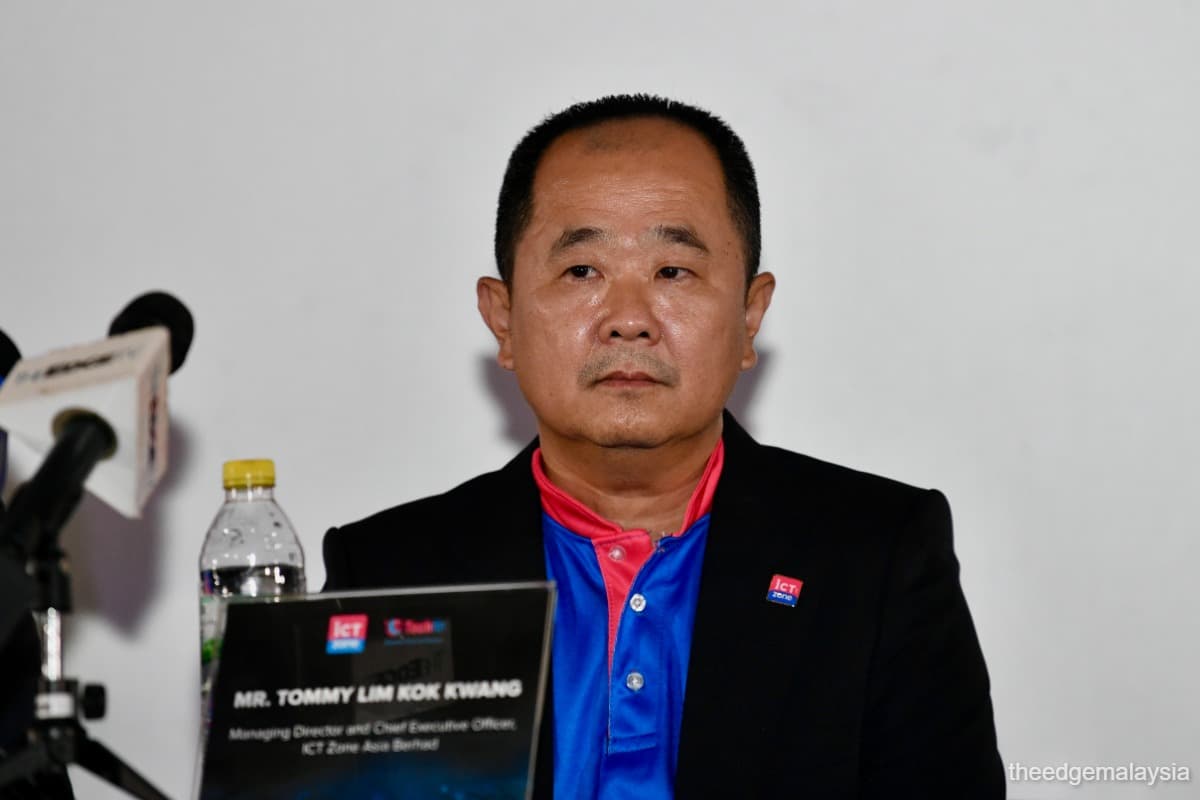
Managing director Tommy Lim told a press conference on Tuesday that the goal is to manage and deploy up to RM500 million worth of ICT assets, which will help grow the contractual order book.
The group said it plans to reinvest its operating cash flows to acquire new ICT assets and continuously refresh its lease portfolio.
As part of its circular economy strategy, ICT Zone will remarket and lease refurbished ICT assets that have finished their initial financing cycle. This approach extends the assets' lives, optimises capital efficiency, and allows the group to serve a wider range of customers, especially budget-conscious public and private sector clients, with cost-effective subscription models.
To support sales momentum, the group intends to expand its commercial team by hiring up to seven new permanent sales and marketing personnel and investing in a multi-platform marketing strategy.
About RM0.33 million from the IPO proceeds will be allocated for digital campaigns across LinkedIn, Instagram, TikTok, and Google, in addition to media, telemarketing, and event-based outreach, designed to broaden client reach across both public and private sectors.
ICT Zone is directly aligned with the ongoing shift in public sector ICT procurement — from upfront capital expenditure purchases to long-term, operating expenditure (opex)-driven subscription models — where its Device-as-a-Service offering provides a fully integrated financing, supply, and lifecycle solution.
On March 25, the group signed a memorandum of understanding with Malaysia Digital Economy Corporation under the Business Digitalisation Initiative.
This initiative aims to boost digital adoption among micro, small and medium enterprises nationwide, using the RM1.5 billion fund to provide cost-effective access to AI-driven ICT solutions and financing. The partnership is expected to create new contract opportunities and enhance market penetration, supporting the group's long-term order book goal.
ICT Zone has introduced a dividend policy aiming to pay out up to 20% of its profit after tax.
The company expects global trade policy shifts, including recent US tariff measures, to boost demand for its technology leasing and financing solutions as businesses adjust to market uncertainty.
ICT Zone is seeing growing interest in operational expenditure models as organisations adapt to changing costs and supply chain challenges.
Lim also noted that rising prices of Intel’s AI processors, expected to increase by 10%-15% by June, could encourage companies to lease instead of purchasing devices outright.
Non-executive chairman Datuk Seri Ng Thien Phing noted that economic uncertainty from ongoing trade tensions has led businesses and government agencies to focus on conserving cash.
“During a trade war, it creates a lot of uncertainty in the market and people want to reserve their cash,” Ng said, adding that this has led many stakeholders to favour operational spending over capital outlay. “When there's more uncertainty, people will go to opex,” he added.
SCS Global Advisory's corporate finance director Phua Yee Boon highlighted that ICT Zone Asia’s business model sets it apart by refurbishing and redeploying assets. This approach makes the company more resilient to market shocks and less reliant on acquiring new inventory, allowing for more cost-effective asset deployment compared to traditional leasing firms.