

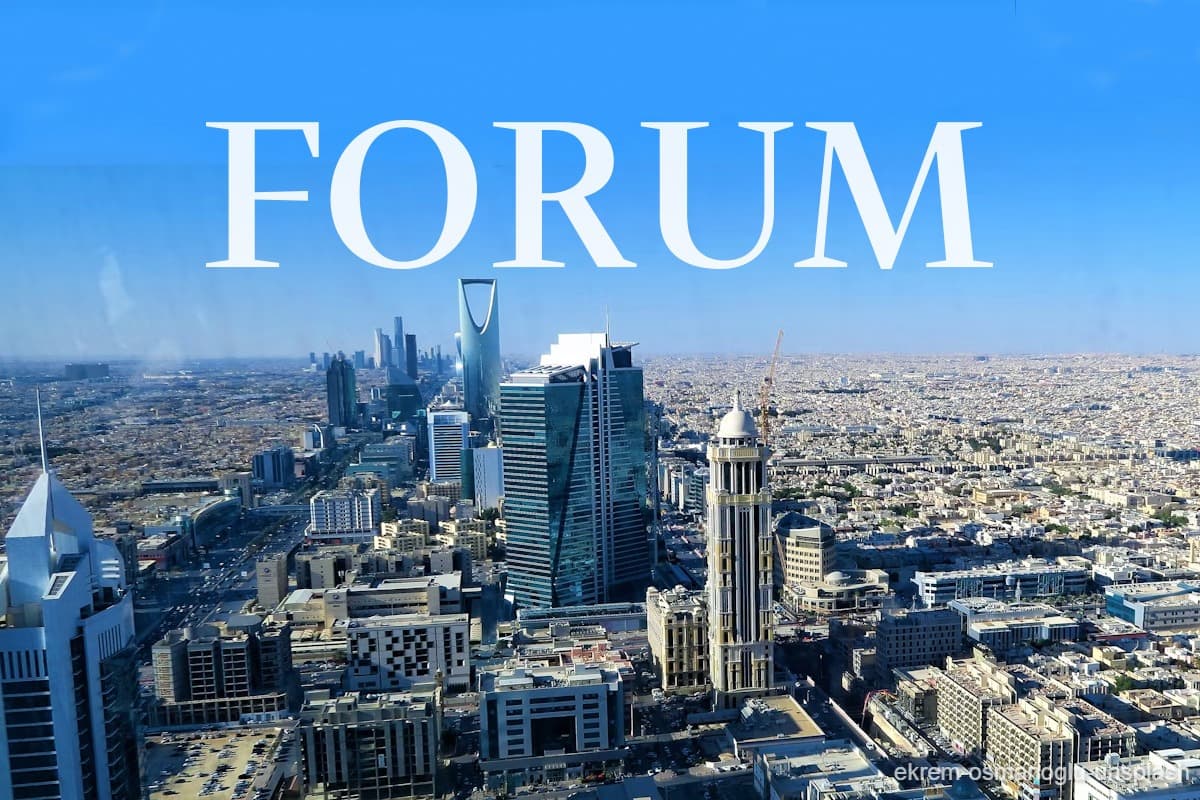
This article first appeared in Forum, The Edge Malaysia Weekly on May 12, 2025 - May 18, 2025
In Putrajaya, even a whiff of deficit spending is enough to cause anxiety. Headlines scream. Fiscal hawks circle. Politicians promise discipline. Austerity is sold as virtue, and budgets are massaged to appear balanced — even when they are not.
Meanwhile, across the desert in Riyadh, Saudi Arabia is doing something almost unthinkable by Malaysian standards: It is running a massive deficit on purpose — and flaunting it like a designer tuxedo. Worn with intent. Cut to size. Ready for battle.
For 2025, the Saudis project a budget deficit of US$27 billion (RM115 billion). Oil prices have softened. Investor interest in glitzy projects such as Neom and The Line has waned. Their Public Investment Fund is spending like a giddy Silicon Valley start-up — with little to show in terms of returns. And, yet, the kingdom’s leadership remains serenely unbothered.
Why?
Because break-even is not the goal. Reinvention is.
Not just spending — signalling
Malaysia often finds itself caught between fiscal conservatism and the need for growth. Politicians preach prudence while potholes multiply. In contrast, Saudi Arabia is treating its deficit like a battering ram — breaking down the doors of the old petrostate identity in order to build something new.
Saudi Vision 2030 is not a rebranding exercise. It is a gamble on transformation.
The Saudis are using their oil reserves and fiscal muscle not just to buy time, but to buy relevance. Like postwar America with the Marshall Plan or China with its Belt and Road Initiative, Riyadh is pursuing empire-building through investment. Except its empire is not military or territorial — it is narrative. It is influence. It is soft power through spectacle.
Its bet? That deficits, when backed by a mountain of reserves and control over a globally indispensable commodity, become a feature — not a flaw.
Neom, Musk and the art of staying in the conversation
It is easy to mock the Saudi mega projects. Neom has been called everything from a vanity city to a dystopian mirage. “The Line” sounds like a Bond villain’s lair — a 170km linear city carved through desert sands. Billions have been pledged, with scant investor uptake. Delays, overruns and confusion plague the headlines.
But that is missing the point.
These projects are not just real estate plays. They are propaganda machines. Global attention magnets. Like Elon Musk’s X rants, they are not engineered for profit, but for presence. Neom does not need to be profitable right now. It just needs to keep Saudi Arabia in the global conversation as more than just an oil well with a flag.
In that, it is working.
What debt?
Many ask: How long can this last? Quite a while, actually.
Saudi Arabia’s debt-to-GDP (gross domestic product) ratio hovers around 25% — a sliver compared with the US (120%+) or Japan (250%+). Much of its debt is domestic, denominated in riyals. Its foreign reserves remain vast, capital controls are tight and it controls production of the single most price-sensitive commodity on earth: crude oil.
The kingdom can afford to run deficits because it retains the power to recalibrate global markets with a flick of a production dial. That is leverage. And it buys time — time to rewire the economy before the oil age sunsets for good.
A psychological pivot
What is most fascinating is the mental shift taking place. For decades, Saudi Arabia’s identity was tethered to oil prices. Now, the leadership is trying to uncouple that identity from its fossil-fuel addiction.
That is not just economic reform; it is an existential change. It is the recognition that fossil fuel dominance is ending — not tomorrow, not dramatically, but inexorably. With climate pressures mounting, China pivoting to renewables, and environmental, social and governance norms tightening, the writing is on the wall.
Saudi Arabia, instead of waiting for irrelevance, is trying to script its own rebirth. And Malaysia? Here is where it hits home.
Malaysia talks often of transformation. Of moving up the value chain. Of green transition, digital leapfrogging, industrial policy. But when it comes to putting real money behind those ambitions, we flinch.
Our deficits are managed like public relations exercises. Our infrastructure projects are built for electoral cycles, not strategic arcs. Capital deployment is timid. And policymaking, too often, is reactive — not visionary.
Malaysia, like much of Southeast Asia, treats deficits as political liabilities. Saudi Arabia treats them as geopolitical tools.
That does not mean we should spend recklessly or mimic Riyadh’s playbook. But it does mean we need a new conversation — one that sees fiscal policy as a lever for transformation, not just balance sheets.
Spend like you mean it
If Malaysia is serious about leapfrogging into a green, digital, post-industrial future, then it must invest like it believes it can get there.
That means strategic deficits — not for operating expenses, but for bold bets: artificial intelligence hubs, green hydrogen, digital infrastructure, high-speed transit and frontier tech.
It means building institutions that can manage big spending with transparency — not just yelling about corruption after the money’s gone.
It means accepting short-term criticism for long-term gain. And, yes, it means spending some political capital, too.
The Saudi risk
Let us not romanticise Riyadh. There are real risks in their model: human rights concerns, environmental issues, social backlash, lack of transparency. Their mega projects could flop. Their economy could stumble. Oil could tank.
But risk alone is not disqualifying. Playing it safe guarantees mediocrity. And in an age of geopolitical flux and climate urgency, mediocrity is a fast track to irrelevance.
Saudi Arabia is betting the house. Malaysia is still counting pennies.
Which brings us to the uncomfortable question: What are we waiting for?
Abbi Kanthasamy (www.abbiphotography.com) is a Canadian entrepreneur, photographer and writer
Save by subscribing to us for your print and/or digital copy.
P/S: The Edge is also available on Apple's App Store and Android's Google Play.