

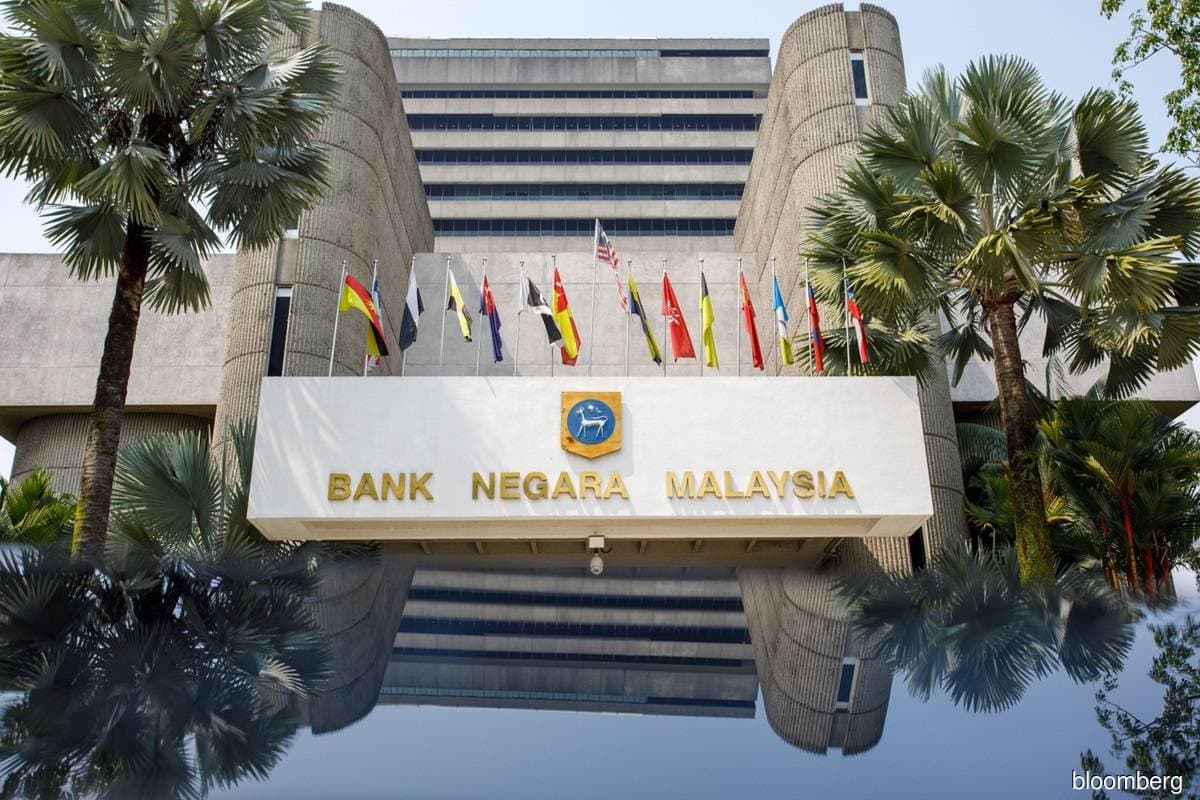
KUALA LUMPUR (May 8): After Bank Negara Malaysia (BNM) surprised the market by announcing a 100-basis-point (bp) reduction to the statutory reserve requirement (SRR) to 1%, economists said this has raised the chances of a cut in the overnight policy rate (OPR).
SRR dictates how much cash banks must hold in reserve, and the latest move is expected to inject RM19 billion in liquidity into the banking system.
While BNM stated that the SRR cut was not a signal on monetary policy, OCBC Global Markets Research highlighted that “SRR cuts have more often than not been precursors to OPR cuts or have at least accompanied cuts in the OPR”.
"In the last easing cycle, SRR was cut by 50bp in November 2019, followed by a 25bp rate cut to the OPR in January 2020. OPR and SRR were reduced further at the March 2020 meeting," OCBC said.
UOB Global Economics & Markets Research said the SRR cut was unexpected, given BNM’s previous guidance of "sufficient liquidity conditions despite the drop in excess liquidity absorbed by BNM and slower deposit growth".
“The last SRR cut was in March 2020 during the onset of the pandemic crisis, also reduced by 100bp. We believe the SRR cut will help support continued lending activities to ensure stable economic activity," it added.
MIDF Research concurred, saying that the SRR cut was a proactive measure to ensure sufficient liquidity amid heightened concerns of the effects of trade war and risks of global slowdown.
"This may encourage banks to extend more credit to the economy and support further expansion in domestic economic activities," it said.
MIDF noted that banking loan growth moderated to 5.2% year-on-year in March 2025, from 5.5% in December 2024, with an average of 5.9% in 2024.
More dovish tone
While BNM held the OPR at 3% as expected, economists said its noticeably more dovish tone signalled that rate cuts could happen as early as July if the economy slows down.
Ahead of the OPR announcement, the market was divided for the first time in a while, with 20 out of 25 economists expecting no change, while five predicted a 25-bp cut due to rising global trade tensions.
HSBC Global Research highlighted that BNM removed words like "strong", "resilient" and "robust" from its description of the economy in the monetary policy statement. It also noted that BNM dropped the phrase "the monetary policy stance remains supportive of the economy", which previously signalled a neutral stance.
“We interpret this crucial change as opening the door for future easing,” it said.
OCBC, on the other hand, said BNM was more dovish than in its March 6 meeting, opening the door for possible rate cuts, but its statement doesn’t seem to suggest they will happen soon. OCBC expects a 50-bp rate cut in the first half of 2026, but warned that the cuts could happen as early as the second half of 2025.
HSBC has pencilled in a 25-bp rate cut in July, contingent on high-frequency data over the coming months.
Meanwhile, RHB Global Economics & Market Strategy sees a possible 25-bp cut in the second half of the year, especially if Malaysia’s gross domestic product (GDP) growth falls below 4%.
“We maintain our base case forecast for the OPR to remain unchanged at 3% throughout 2025. However, we see a balance of risk for a potential 25-bp cut in 2H2025, with this risk to be substantially magnified if Malaysia’s GDP growth declines below 4%,” said RHB.
RHB has lowered its 2025 GDP growth forecast from 5% to 4.5%, with risks leaning towards 3.5%–4.0% if trade tensions rise. However, it expects domestic demand and government policy to help cushion the impact.
RHB highlighted support from the Madani Economy framework and measures like wage growth and civil service salary adjustments.
All three research houses agreed that inflation will remain manageable, with OCBC and RHB noting that inflation risks are now more balanced.