

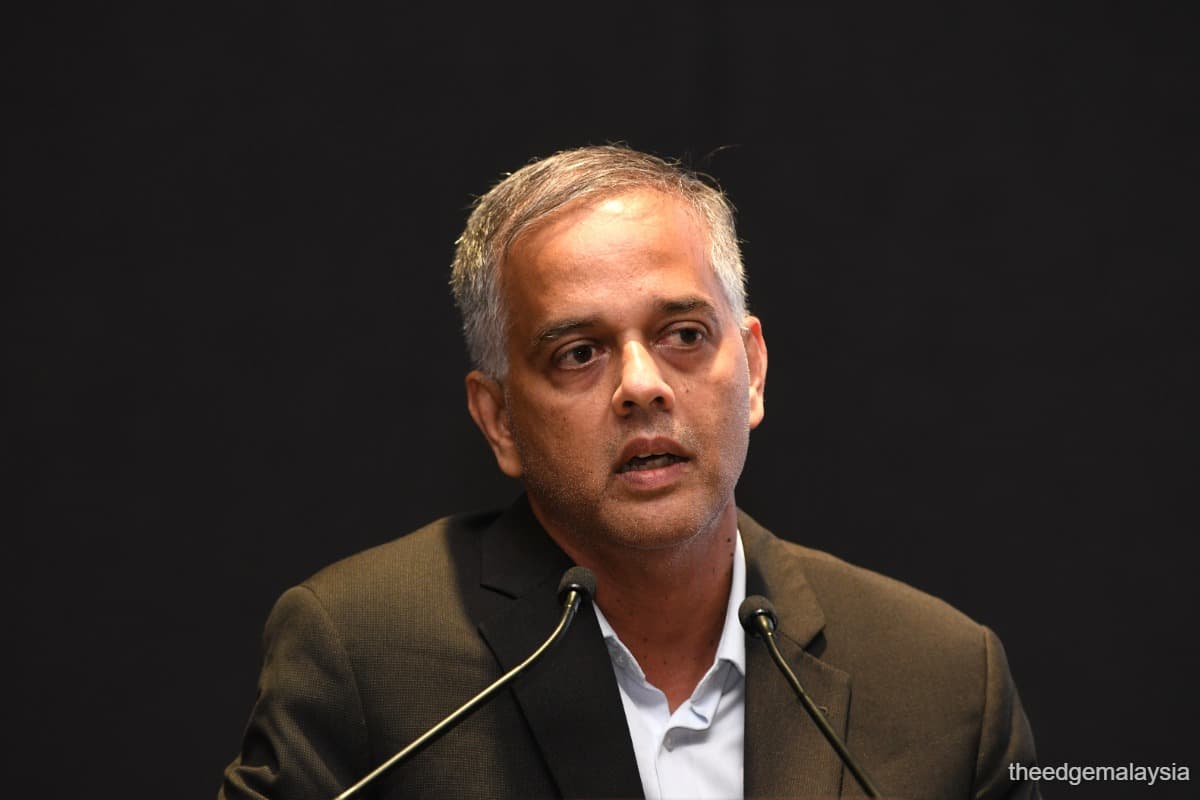
KUALA LUMPUR (May 8): Malaysia's trade talks with the US may yield positive results, but the existing 10% blanket import tariff is expected to stay, according to Ministry of Investment, Trade and Industry (Miti) official Raveendran Nair.
Raveendran, who was among the Miti entourage that visited Washington DC to set up talks, shared that US Secretary of Commerce Howard Lutnick confirmed the 10% tariff would remain for all countries, despite ongoing negotiations.
“We are looking for a positive outcome, but just to indicate, the secretary of commerce did mention that most probably that 10% [blanket tariff] will remain for the entire world,” Raveendran said at a forum organised by Hong Leong Bank Bhd (KL:HLBANK) on Thursday.
When asked by panel discussion moderator Hong Leong Bank global markets managing director Hor Kwok Wai if keeping only the blanket tariff was the best possible outcome from talks with the US, Raveendran confirmed it was.
“The rest we can negotiate on is the modification of the reciprocal tariff (additional 14%, totalling 24% in reciprocal tariff),” Raveendran said. He did not disclose any further details regarding specifics of the negotiations, citing a non-disclosure agreement inked with the US.

Small and Medium Enterprises Association (Samenta) chairman of international trade Eugene Tan said the 10% blanket tariff is a major challenge for businesses, especially manufacturers, as it matches the profit margins for many, such as in the electrical and electronics sector.
“I think for manufacturing, like E&E (electrical and electronics) for example, I think 10% is practically their margin. So, this is something that we need a bit of runway to build up — the pricing, cost reduction — as it's not something that we can absorb right away.
“We will still see an impact. It will take time for us to figure out how to resolve that additional margin,” Tan warned.
Meanwhile, Raveendran also shared that the US is not open to countries approaching the trade negotiating table as a bloc.
He stated that the US prefers bilateral negotiations over countries approaching as a bloc, warning that negotiating as a group would be seen as "ganging up" on the US.
“Furthermore, we must understand that even though Asean is a bloc, each country has its own interests, different products, and tariff rates. So, they have to negotiate bilaterally,” he added.
The reciprocal tariff, originally set for April 9, is now delayed until July 9. Several countries, including Malaysia, are pushing for its removal. Malaysia began official talks with the US on Tuesday (May 6), led by Miti deputy secretary general Mastura Ahmad Mustafa.