

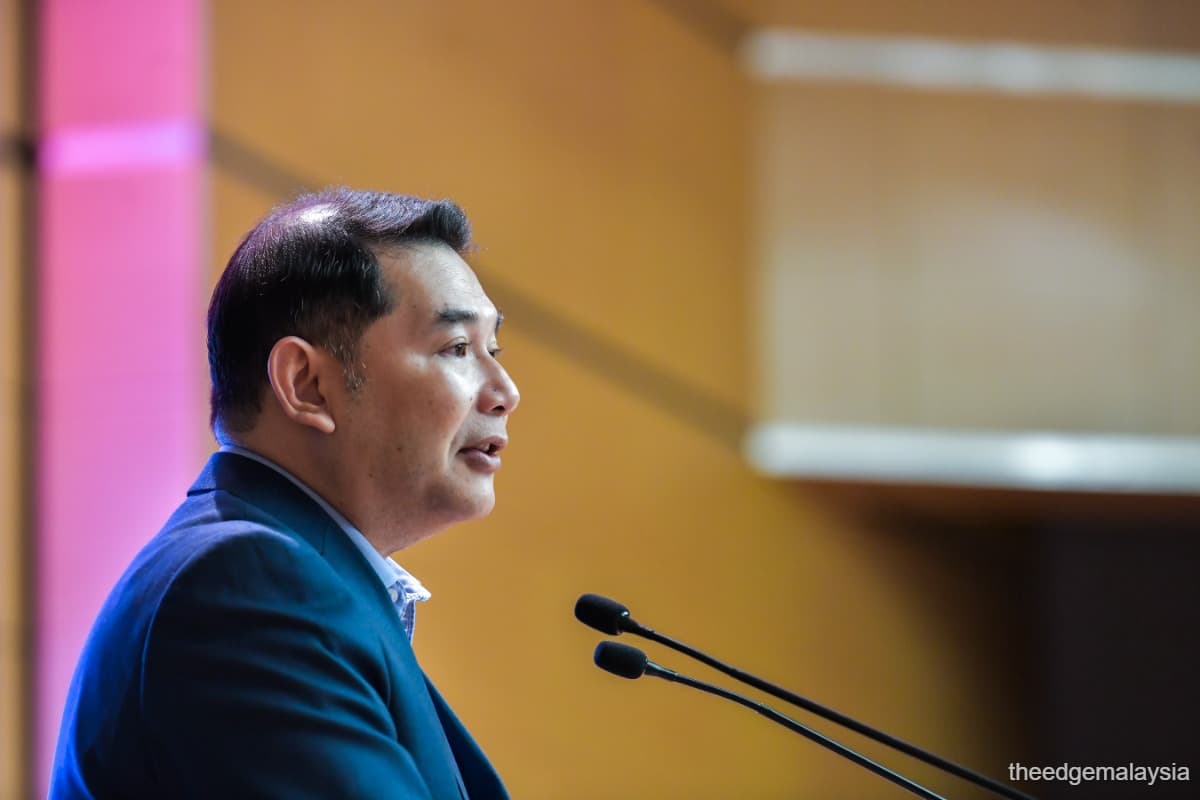
KUALA LUMPUR (May 7): PKR deputy president Datuk Seri Mohd Rafizi Ramli on Wednesday confirmed that he will defend his position in the upcoming party central leadership election.
In a statement, Rafizi expressed his willingness to embrace the contest for the deputy presidency, emphasising his commitment to using the election platform alongside other candidates to strengthen the party.
If re-elected, he will continue to serve as PKR deputy president and fulfil his duties as the economy minister.
Otherwise, Rafizi said, he is "ready to return to grassroots leadership" and campaign actively on the ground.
Rafizi’s comments come as the race for the deputy presidency intensifies, with growing support for Nurul Izzah Anwar, the eldest daughter of PKR President and Prime Minister Datuk Seri Anwar Ibrahim, as well as Home Minister Datuk Seri Saifuddin Nasution.
The PKR party election nominations are set to take place from 12pm on May 8 to 11.59pm on May 9, with the national congress scheduled for May 24 in Johor Bahru.
Rafizi discussed the 2025 PKR elections, which are now in the final stage after division-level voting ended.
The party held its elections from April 11 to 20 using an e-voting system made up of three parts: voter verification (e-KYC), a voting app, and a blockchain backend. Voting took place across all 14 states in Malaysia.
He said it's the first election since PKR returned to power in 2022, with strong competition and unusual outcomes — like only the division chief winning while rivals took other posts. Over 190 complaints have been filed.
To help maintain party unity, Rafizi took leave from April 29 to May 5 to meet with all sides and address the issues.
He said he decided to separate party work from his ministerial duties and took leave, granted by the prime minister, to help ease tensions at the grassroots level.
During his leave, Rafizi held meetings and raised election concerns with the Central Leadership Council (MPP).
On April 29, the MPP agreed to run an independent audit to ensure the digital voting system was fair. The audit report, shared on May 4, supported confirming the branch-level results so the party could move forward with central elections.
Candidates who filed complaints were allowed to appoint technical observers to monitor the audit.
To ensure transparency, Rafizi shared both reports to help explain the issues raised. He urged all party members to accept the findings and work together to strengthen the party.
The independent audit performed by China-based YiNuo Technology concluded that the e-voting system worked well in securely and transparently recording votes, showing strong integrity despite some minor issues.
It recommended improvements for the user interface, message clarity, system consistency, time zone handling, and candidate display order.
The audit followed official standards from the Standardisation Administration of China.
Since the same voting system will be used for the central leadership election, Rafizi urged the Central Election Committee to quickly fix the problems found in the audit reports.