

This article first appeared in Forum, The Edge Malaysia Weekly on May 5, 2025 - May 11, 2025
Most forecasters are still expecting the global economy to slow from last year but still avoid an outright fall in output. The International Monetary Fund (IMF), for instance, is projecting world output to decelerate from 3.3% last year to 2.8% this year and then to pick up speed a little to 3% next year. Like other forecasters, the IMF has cautioned that there is a wide margin of error around such projections. That is understandable since these estimates are best guesses made at a time of unprecedented uncertainty.
However, our assessment is that the hit to the global economy is likely to be more severe than the consensus view reflected in the IMF’s forecasts. We foresee the global economy being damaged soon by a high level of trade distortions, aggravated by a long period of great uncertainty. In addition, we believe that the consensus view plays down the harm that will come out of the trade interacting with a deteriorating US fiscal position, gyrations in the US dollar and unpredictable geopolitical dislocations. Fortunately, there will be some helpful factors such as government stimulus efforts, falling energy prices and continued foreign investment, and these will at least partially offset the headwinds.
Uncertainty will take a toll
Much will hinge on how quickly the US can complete trade negotiations with its main trading partners. The Trump administration wants to swiftly conclude deals in coming weeks with these partners but it simply does not have the staff strength to work through the deep complexities involved in trade issues and settle on a final and complete agreement. The best that the Trump team can do is to agree on broad and high-level agreements with close allies such as Japan and South Korea, with crucial details left to be sorted out later. But even this is proving to be difficult. The Japanese negotiating team was reported to have left Washington frustrated by the US administration’s inability to answer basic questions.
Moreover, a few broad agreements with countries such as Japan will not be enough. The main clash in these trade wars is between the US and China. There is very little likelihood of China’s President Xi Jinping making the first move to reach out to President Donald Trump as the latter demands. The Chinese side has explicitly denied Trump’s claims that they have been talking trade with the American side. What is more, they have also said bluntly that there is no prospect of such talks until the current US administration fulfils certain conditions, including showing China respect and doing away with the extraordinarily high tariffs imposed on China.
The US and China are engaged in a complex dance with each other. Each side believes it holds stronger cards than the other and that the other side will blink first. China has seen how Trump unilaterally eased some of his measures as soon as the bond market came under pressure. Beijing calculates that there will be more economic and financial pain in the US in the coming weeks and that the Americans’ low threshold for pain will bring about more reversals. On the other hand, Trump believes that China depends so much on the US market that the tariff-induced slowdown in the Chinese economy will soon force Xi to come to the negotiating table on terms close to what Trump demands. Since it will take some time for the economic pain to be evident, there will be a prolonged standoff between the US and China.
When will the pain become evident?
Right now, the economies of both China and the US are coasting along, with China seeing signs of a recovery from the struggles of the past few years while the US economy seems to be slowing to a more normal pace after a strong 2024. Although confidence surveys in both countries indicate that consumers and businesses are becoming quite worried about the future, there is not yet evidence that they have cut back on spending in any dramatic way.
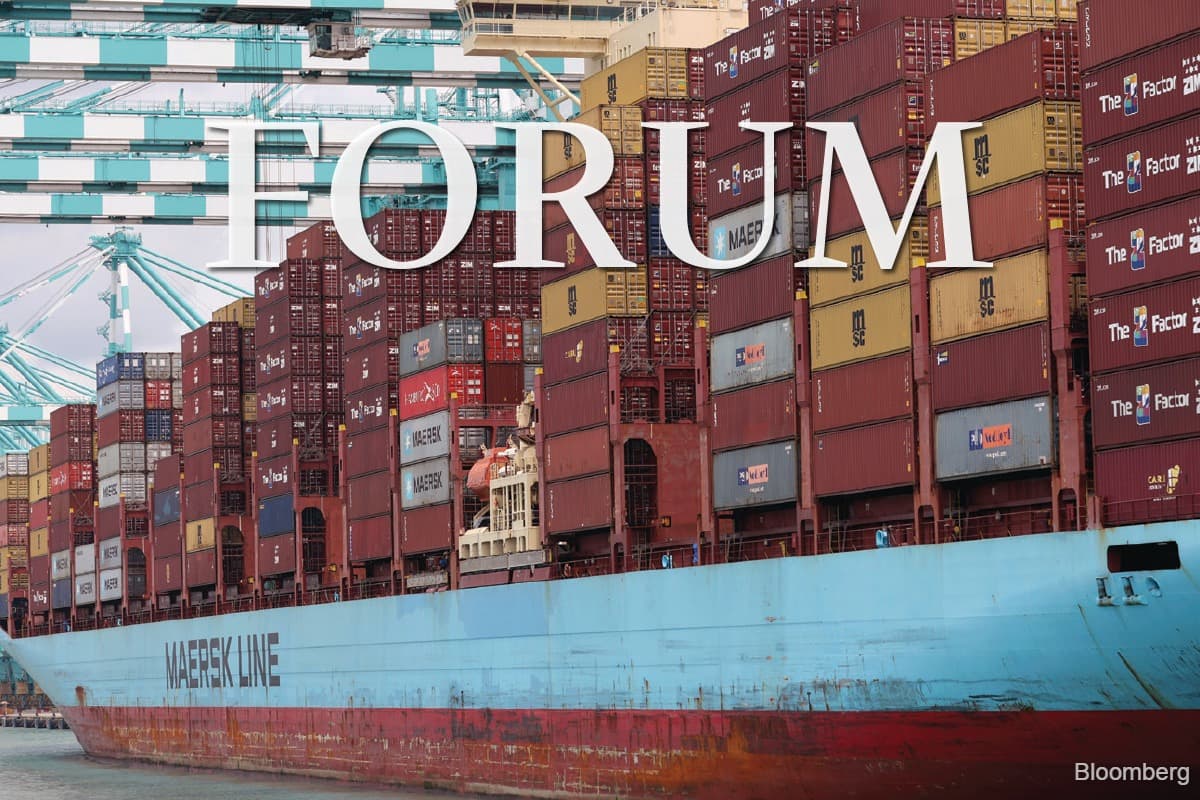
But warning signs are emerging for both countries. Data on shipping show a precipitous drop in containers heading from China to the US, suggesting either that US demand has fallen off a cliff or that Chinese exporters, being unable to make a profit from shipping stuff out to American customers, are cutting back. Logistics firms have been told by their customers that the decline in shipments will worsen by early May. There are also many anecdotes in both the US and China of companies cancelling orders and of reducing work hours for their staff. Some large e-commerce firms have raised prices by 50% or more for US customers.
In short, by early June, we will see shortages of goods in the US with prices rising sharply there. Firms engaged in trade and logistics will have to lay off their workers there.
But the impact in China could be much worse. If shipments to the US fall and there are no other markets for these goods, then Chinese exporters will have to cut back on production. Workers will be laid off. Since many such companies and their suppliers have borrowed money to sustain their operations, there will also be financial stresses, which could compound the slowdown. China’s leaders, however, are unfazed by this risk because they have a game plan to deal with this. April 25’s Politburo meeting and statements issued by key government agencies have hinted at the measures they will implement to alleviate any economic damage. This will involve help for companies, especially financial support to prevent large-scale layoffs of workers and other actions to ease their debt burdens.
Moreover, nationalist sentiment has been aroused in China by Trump’s hostile measures targeting the country. This has given the Chinese leaders confidence that they can manage down the hit to ordinary people’s morale from an economic downturn. It is also probably true that the Chinese people’s tolerance for pain is much greater than for Americans. Since China will not blink first, what will probably happen is that a face-saving way will be found for the US and China to talk to each other eventually.
But before that happens, there will be an extended period of uncertainty in the global economy during which consumers and businesses will cut back on spending, causing the world economy to slow even before the full damage of the trade war is felt.
Watch out for aggravating factors
It is not just the trade war that will hurt the global economy. We also see a higher likelihood of further challenges:
• First, the US Congress is currently working on finalising the budget for the coming year. The idea is to extend the provisions of the 2017 Tax Cuts and Jobs Act, which will expire at the end of this year. Independent analysts estimate that the final budget bill would add another US$4.6 trillion (RM19.8 trillion) to the US public debt over a decade.There is simply no political will to cut spending by enough to fully fund the likely tax revisions. With bond markets already nervous about the huge bond issuance needed for the existing trajectory of US government debt, such a large additional increase in debt can only intensify investors’ concerns and lead to higher bond yields in the US that would hurt its economy just as it is already slowing as a result of the trade war.
• Second, the current US administration’s various moves are seen as undermining the wellsprings of America’s exceptional status which underpins the role of the US dollar as the world’s global currency. Its immigration, educational and R&D spending policies are scaring away the foreign and indigenous talent that has been crucial to America’s innovation and entrepreneurial energy. Loose talk by senior officials about forcing holders of US securities to pay additional taxes on their holdings creates a cloud of uncertainty over how much faith global investors can have in the US dollar.
• Third, the administration’s hostile approach to long-standing allies is weakening the strategic alliances that made the US immensely powerful. It will not be long before America’s rivals exploit the growing lack of confidence in America’s security commitments to key allies in Asia and Europe. There is a higher chance of troubled geopolitical areas erupting into crises as the US, China and Europe are too preoccupied with the trade wars to intervene and help stabilise those hot spots. A more unstable world will feed more uncertainty for businesses around the world.
What can help improve this gloomy picture?
There are several sources of hope in our view.
The first is that policy actions will help contain some of the damage. As explained above, China has a clear strategy that it has been preparing for many years. This may not be enough to achieve its 5% growth target but it will suffice to generate at least 3% to 4% growth. In Europe and in the US, interest rates are likely to be cut while fiscal spending is set to increase.
Second, oil prices have fallen since the start of the year as oil producers increase production even as the market fears that a global slowdown will reduce demand for that additional oil. Lower energy prices will provide decent support to economies struggling with the trade war’s impact.
Third, we still see scope for supply chains to be reconfigured. Most global companies will conclude from recent events that they have to diversify away from China. Whatever the final outcome of the eventual talks that China and the US will have to settle their differences, it is almost certain that tariffs and other restrictions on China will be far greater than those on other attractive destinations for foreign investment such as Mexico, Vietnam, Thailand, Malaysia and Turkey. Countries that offer an attractive business environment, high trade connectivity through free trade agreements and good infrastructure will benefit. It will not be all doom and gloom for countries that pursue sensible policies.
The bottom line
Our conclusions are as follows:
First, global economic activity will be hurt badly from the middle of the year for at least a few months and will only stabilise once there is some kind of compromise between the US and China. It is quite possible that we get one or two quarters where economic activity stalls across the world.
Second, even if the trade wars are eventually better managed, longer-term economic prospects for the world will be compromised. When the dust settles, protectionism will be much more evident, leading to greater inefficiencies, higher costs and fewer opportunities for developing economies to grow rich through an export-led strategy.
Third, even if trade uncertainty is reduced over time, we must go beyond just the trade war to fully appreciate the drag on the global economy. America’s fiscal trajectory may not be unsustainable yet but it is concerning enough to hurt confidence in the US dollar and cause global investors to demand a higher yield to compensate for the greater risks. There could be more financial stresses to come.
Fourth, for countries in Southeast Asia, there are some silver linings. As supply chains are reconfigured away from China, there will be more foreign investment in manufacturing in this region. But not all countries will benefit — it will be those that nurture an ecosystem that is friendly to investors that will be the bigger winners.
In short, get ready for a rough ride.
Manu Bhaskaran is CEO of Centennial Asia Advisors
Save by subscribing to us for your print and/or digital copy.
P/S: The Edge is also available on Apple's App Store and Android's Google Play.