

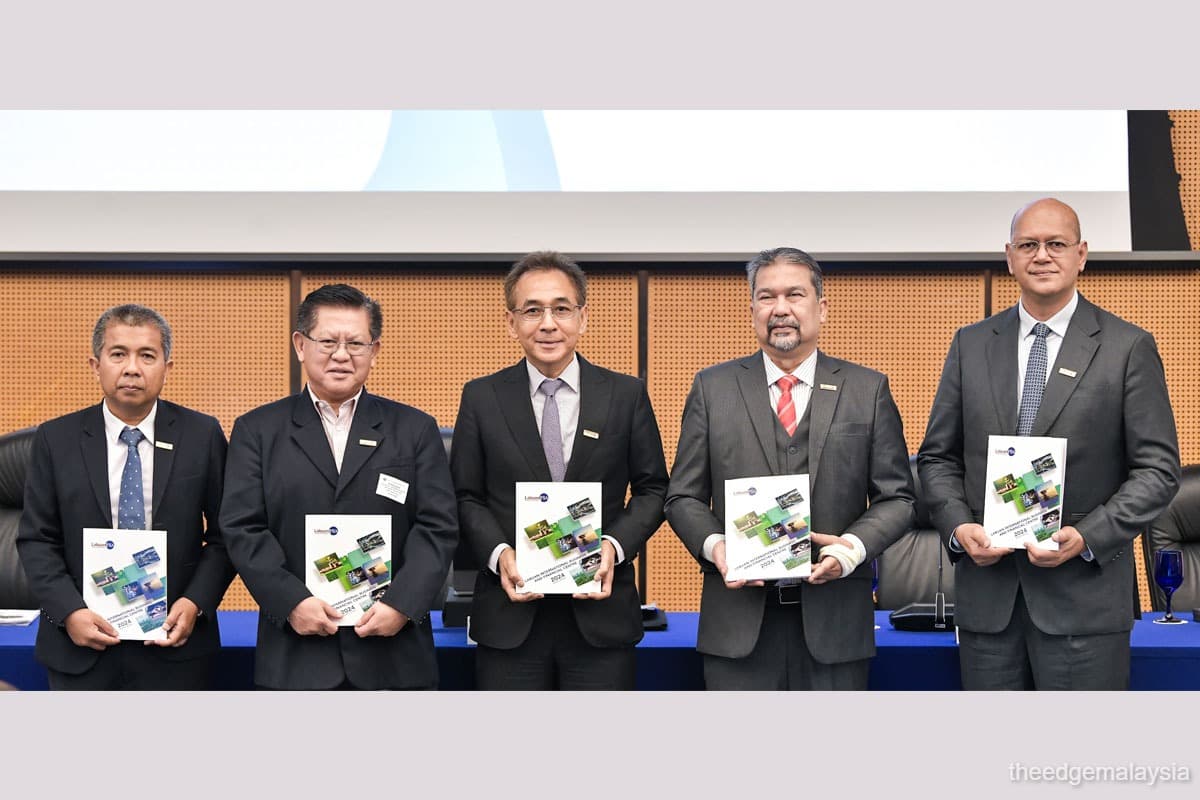
KUALA LUMPUR (April 30): The Labuan International Business and Financial Centre (Labuan IBFC) could see growth in new company incorporations in 2025 moderate to its lowest in four years, based on first quarter performance published by the Labuan Financial Services Authority (Labuan FSA).
In 1Q2025, 168 new companies were incorporated, accounting for 25.7% of the full-year target, Labuan FSA director general Nik Mohamed Din Nik Musa said.
This means Labuan IBFC is projecting a year-on-year increase of 4% to 654 entities incorporated this year, slower than the growth recorded in the three years 2022 (16%), 2023 (8%) and 2024 (9%).
“We have a trust company, we have the players,” Nik Din said at the launch of the Labuan IBFC Market Report 2024 on Wednesday. “It’s about how we execute to achieve that target.”
The expected slowdown comes on the heels of growing uncertainties towards global economic outlook, amid tariffs concerns in the US and China, which weighed on investment sentiment and dragged commodities like oil prices.
Labuan IBFC has enjoyed the post-pandemic boom with strong growth in core sectors in recent years, including in 2024. Total revenue jumped 69.3% to US$1.6 billion, lifting net profit to US$654.6 million, up 152.3% from US$259.5 million last year.
Labuan IBFC — governed by Labuan FSA under the purview of the Ministry of Finance — offers a wide array of structures supporting banking, insurance, wealth management, capital markets, leasing, money broking, and commodity trading.
Robust performance across core sectors
In 2024, the financial centre saw significant gains across several key segments.
The captive insurance sector recorded an 8.5% top line growth, reaching a five-year volume high of US$677.4 million, driven by a 16% increase in newly licensed captives and a 24% rise in new cells, largely attributed to demand for workmen’s compensation and professional indemnity coverage.
A captive insurance company is a wholly owned subsidiary insurer formed to provide risk mitigation services for its parent company, or related entities
Meanwhile, the Islamic finance vertical saw a 21-fold increase in the market value of shariah-compliant security tokens (RAMZ) to US$1.05 billion.
This was underpinned by growing adoption of artificial intelligence (AI) and blockchain, and heightened interest in digital fundraising instruments, it said.
Listings of RAMZs were primarily driven by five issuers, including the International Islamic Liquidity Management Corp for its short-term sukuk; tokenisation of shares belonging to a tech company backed by intellectual property of electric vehicle battery, as well as tokenisation backed by Chinese ceramic, gold reserves, and investment-grade gemstones.
In the leasing sector, oil-and-gas asset leases doubled in size to US$815.9 million. Total new assets leased amounted to US$3.14 billion, with aviation activity making up over 60% of total leased assets.
The fund management segment saw profits more than triple, bolstered by stronger fee-based income, while revenue from securities licensees rose nearly threefold to US$9.6 million.
Wealth management gained further traction with a 24% increase in the number of foundations to 237, reflecting stronger demand from high-net-worth individuals for estate planning and asset protection.
Trust and corporate services also posted triple-digit growth in newly registered Labuan trust companies, with six new entrants. Sector revenue grew nearly 30% to US$40.8 million, while profits climbed 86%.