

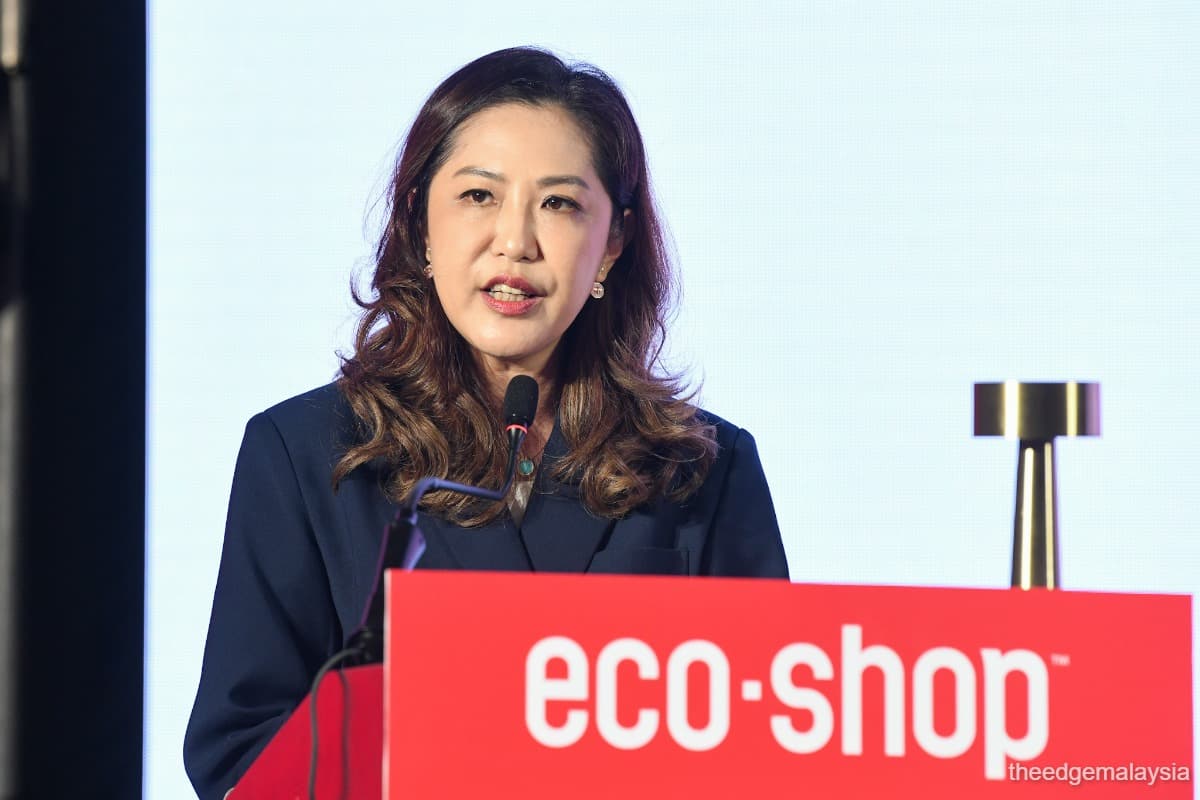
PETALING JAYA (April 29): Eco-Shop Marketing Bhd said on Tuesday there is no urgent need to raise prices at its chain of discount stores after the increase earlier this month.
Current economic uncertainties are driving demand for its products, said chief executive officer Jessica Ng. The company itself, meanwhile, will weather any macro headwinds with ultra-low product prices and offerings of essential goods, she noted.
“Customers are now more budget-conscious, and Eco-Shop’s value proposition fits right into that,” she said. “During back-to-school seasons, we see spikes in demand as parents stock up on affordable items.”
Eco-Shop, en route to listing on the Main Market, raised its products’ prices beginning April 14 to RM2.60 from RM2.40 for Peninsular Malaysia and to RM2.80 from RM2.60 for East Malaysia.
Eco-Shop operates 358 stores nationwide, selling over 10,000 third-party and house-brand products ranging from toothpaste to pet food. Most of its products are priced at RM2.60 while the rest are below RM20.
The increase was necessary after the government lifted the national minimum wage to RM1,700 per month, and “we will try our very best [to maintain the low-price]”, said Ng.
Eco-Shop intends to open up to 70 new stores annually over the next five years, focusing particularly on underpenetrated areas such as the Klang Valley and East Malaysia. The aim is for each new store to break even within 18 months, Ng said.
Earlier on Tuesday, Eco-Shop launched its initial public offering that could raise more than RM1 billion for the company and its shareholders.
House brands
Further, having a range of house brands that command a higher margin allows the company to be aggressive with its product prices, said Ng. House brands account for 78% of Eco-Shop’s distinct items and their variations and contribute more than half of total sales.
The company will improve in-store display in the short term, revamp product packaging and branding in the medium term, and launch new product innovations over the next 18 months, she said.
Apart from working directly with manufacturers to reduce costs, "we also buy in bulk, repackage into smaller quantities, and even engage housewives to do the packing from home, which also supports local communities”, she added.