

This article first appeared in The Edge Malaysia Weekly on April 28, 2025 - May 4, 2025
BEING a small lender, Alliance Bank Malaysia Bhd (KL:ABMB) is often speculated to want to eventually go down the merger and acquisition (M&A) route to grow and compete better with rivals.
The bank has, however, proven that it grows perfectly well on its own, size notwithstanding.
“I’ve always said that we don’t need M&A. And now, we’ve shown that we don’t. We’ve literally grown 2½ times the industry for the last two years. Our revenue is up in the double digits. I’d say it would be hard for you to find a Malaysia-focused bank that has done that as well,” group CEO Kellee Kam tells The Edge in an interview.
Be that as it may, some of its shareholders may think differently. There continues to be market talk about Singapore lender DBS Group Holdings Ltd being keen on taking up Vertical Theme Sdn Bhd’s (VT) 29.06% stake in Alliance Bank.
According to a Bloomberg report on Jan 16, VT was planning to seek approval from Bank Negara Malaysia to start talks about selling its stake in Alliance Bank. The newswire, citing people familiar with the development, said VT was considering selling the roughly 29% stake to DBS. A pertinent question, though, is whether Bank Negara will allow it to do so.
VT, the bank’s single largest shareholder, and DBS are both backed by Singapore state investor Temasek Holdings Pte Ltd.
Kam declines to comment on the matter, saying he would not know as it was a shareholders’ matter.
On the bank’s part, it will continue to focus on building value, he says. “Building value is independent of whether there is an M&A or not. In fact, the better value you get, the better it is for us. We’re already 50% up in terms of market capitalisation from where we used to be, which means that if we ever did want to do any M&A, we are 50% more valuable than before. And what’s driving that is the fundamental growth in our business. So, the fundamental logic of growing the business becomes, still, our prime motivation,” he explains.
In the interview, Kam, who is 52 this year, talks about a range of issues, from the US’ reciprocal tariffs to the rights issue and the bank’s upcoming move to its new corporate headquarters in Jalan Ampang, Kuala Lumpur.
Below are extracts from the interview.
The Edge: You mentioned that you were looking forward to a pretty decent FY2026, and then the tariff issue came about in March. What’s the thinking now?
Kellee Kam: It's still fluid, so it's still early days and you saw how quickly things evolved. I was kidding with the team during the first week that I would go to bed with one view and wake up the next day and find out that everything has changed. It went from an extreme tariff level, down to exemptions for 90 days, down to a little bit of mix-and-match throughout the portfolio.
So, it is something that is evolving. I think markets are trying to digest what that actually means. The Malaysian market, apart from the first week, seemed to have settled down a bit. Malaysia has a fair amount of both monetary and fiscal levers to be able to manage it, I believe. From a banking perspective, our view is that it is still a conducive market for banking growth.
As it stands now, are you expecting the OPR (overnight policy rate) to be cut at all this year?
I think the market is beginning to see the possibility of [a cut by Bank Negara]. Our view for now is that the OPR will stay at 3% for the year.
I've seen some analysts say, okay, if rates come down, Alliance Bank is going to be the hardest hit. [The bank has a relatively high proportion of variable-rate loans compared with most lenders.] But you know, we're not going to be static. If rates are starting to come down, we will rebalance our liquidity, we will rebalance our maturity profiles to compensate for it.
You’re at the midway point of the Acceler8 2027 strategy and have grown loans strongly. Can you keep up those kind of numbers given the current environment with tariff and trade uncertainties, or are we going to start seeing some tapering off now in terms of growth?
I think in the near term, we can. Being a smaller bank and going into different [regions apart from the central region], that brings our loan growth up. So, if you were not large in Penang in the past, as you start to grow, those are all incremental stuff. If we weren't that active in Sarawak, all incremental stuff pushes it. Likewise, in Johor and Sabah. So, I think, for the near term, there are opportunities for us to tap in that same logic. That means growth in that 10-ish per cent mark and still maintaining margin and asset quality, which then leads us to why we wanted to do a rights issue.
When do you expect to complete the rights issue?
So, our EGM (extraordinary general meeting) is scheduled for the end of May. Our current plan is to try to complete the whole process by July.
You know, the rights shares are also tradeable. So, how it works is that you are provisionally allocated your allocation, and if you decide not to accept it, you can sell that off. So, as a shareholder, you can get some money back as well. That's why, when we thought through all the options, this kind of provides our shareholders a good balance, meaning, if they have money, they would take [the rights shares]; if they don't have money, they sell it and they still get something back for it.
We've had some discussions with some of our stakeholders. Clearly, we did ask our largest shareholder [Vertical Theme] for a letter of undertaking to support the rights issue, which they've given us. And from the discussions with all the analysts and fund managers, I think they can understand why we need to do it.
The press, including us, has been writing about Vertical Theme’s interest in selling its stake to DBS. What's happening on that front?
Actually, if anything, this would be above us, at the shareholder level. We've not been consulted, so we don't really know.
I think we've shown through our performance that it's actually okay for us to continue on a standalone basis and keep driving our strategy the way it's going. So, for us internally, M&A is not something we consider.
So, no change in the board’s thinking on M&A?
No. Like I said, actually, we're very happy and the board is very happy with the trajectory, with the strategy that’s being executed, and with the outcome of where we are.
With everything that’s happening, the macroeconomic uncertainties and what not, do you see a need to change any of your Acceler8 targets?
I think it's too early to do that. Things are fast evolving. And if we do, we will advise the market. But right now, we don't believe there is a need yet.
For FY2026, for now, what kind of return on equity target are you setting for yourself, given that you know you already have the rights issue in?
It’s tough to talk about it now, because I’m just about to go out next month with exactly those details. But we can say that we are confident in being able to continue our trajectory across the metrics.
What can you guide on dividends going forward? You've been doing a 50% payout in the last three years since FY2022.
We've guided for 40% to 50%. I think that's the guidance we'll maintain. Official policy is up to 60%.
You're at the halfway mark of Acceler8 and showing good numbers. Is there anything that’s not going as well as you had hoped for?
Yes, of course. That's why the loss of hair (laughs). I would love to say everything is going smoothly but it's not just a change in strategy. So when we spoke about Acceler8, it was really about changing it from foundation up. So we even looked at our core values. We spoke about redesigning the Alliance DNA. With banks, people are the prime movers of everything. How you grow, how you originate, how you underwrite, how you treat people. So, we developed everything from the ground up, from our core values to our customer promise, to what we expect of people, to even how we do our annual appraisals. We talk about performance-driven culture, all these are nice buzzwords, but execution, as I always tell you, is the key to that. So behind that, obviously, we had to mobilise the entire organisation to literally change the shape, the action, and it does take a fair bit of work.
The second thing is, clearly, the amount of increase in volume has also taken its toll. A slight underestimation in the amount of load that we push through the organisation. So, I think the acceleration of our investments into technology and scalability and people, we should have stepped up a little bit earlier. So, what the plan originally entailed was that we would start that journey and then start investing and then it will continue. But what then happened is that there were some hiccups because when the volumes came in, people were literally working 12 to 13 hours a day across the weekends, which is not healthy, and one shouldn't do that. So we've corrected that, but we should have done that a little bit earlier.
So the digital investments didn't quite go as fast as you would have liked.
Yes.
You’ll be moving to your new headquarters soon in Jalan Ampang?
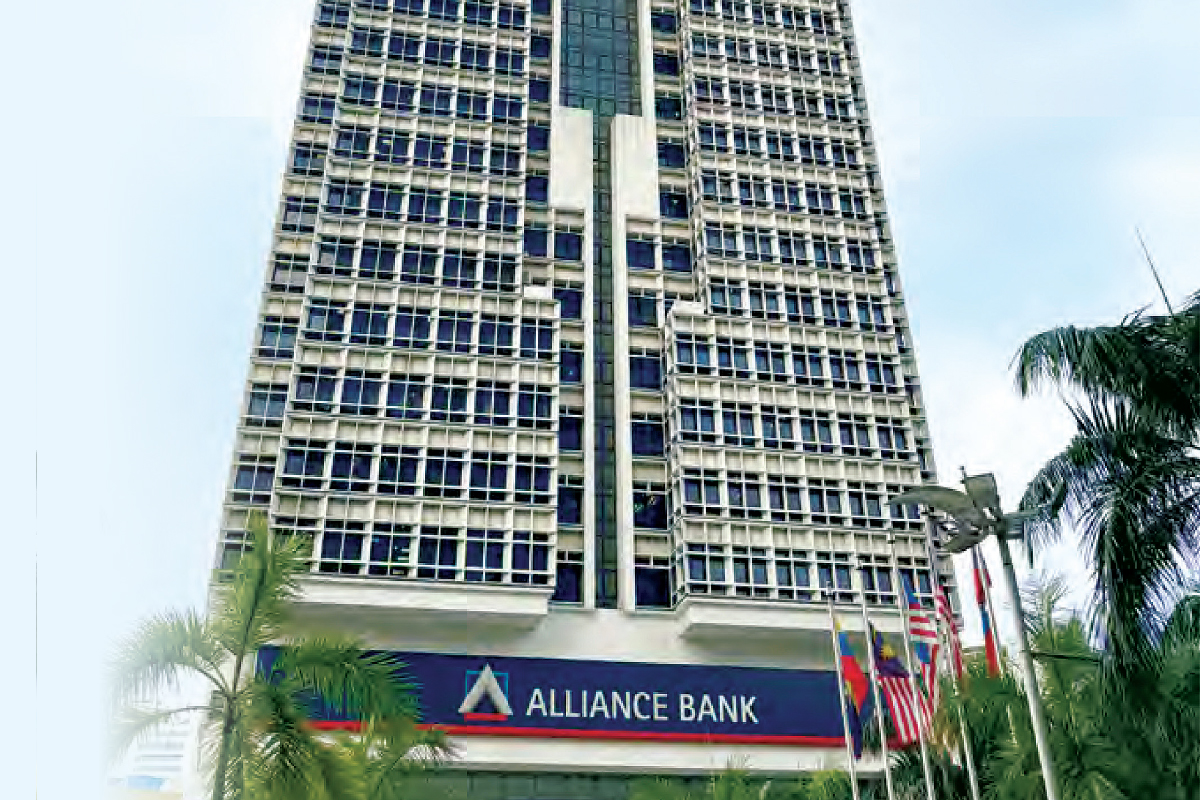
We’re on track with our plan, we will start moving in July [and would have fully moved by end of August]. We’re very happy about it. It’s kind of also a physical manifestation of the changes that we spoke about. We've been here [at Menara Multi-Purpose] for about 30 years now. Rented all the way through. So the new building is really right in the heart of the city. It's a GBI gold building.
It’s completed already? And you’ve got your certificate of completion and compliance?
All done. It's 29 storeys — with a rooftop, so 30 storeys.
Save by subscribing to us for your print and/or digital copy.
P/S: The Edge is also available on Apple's App Store and Android's Google Play.