

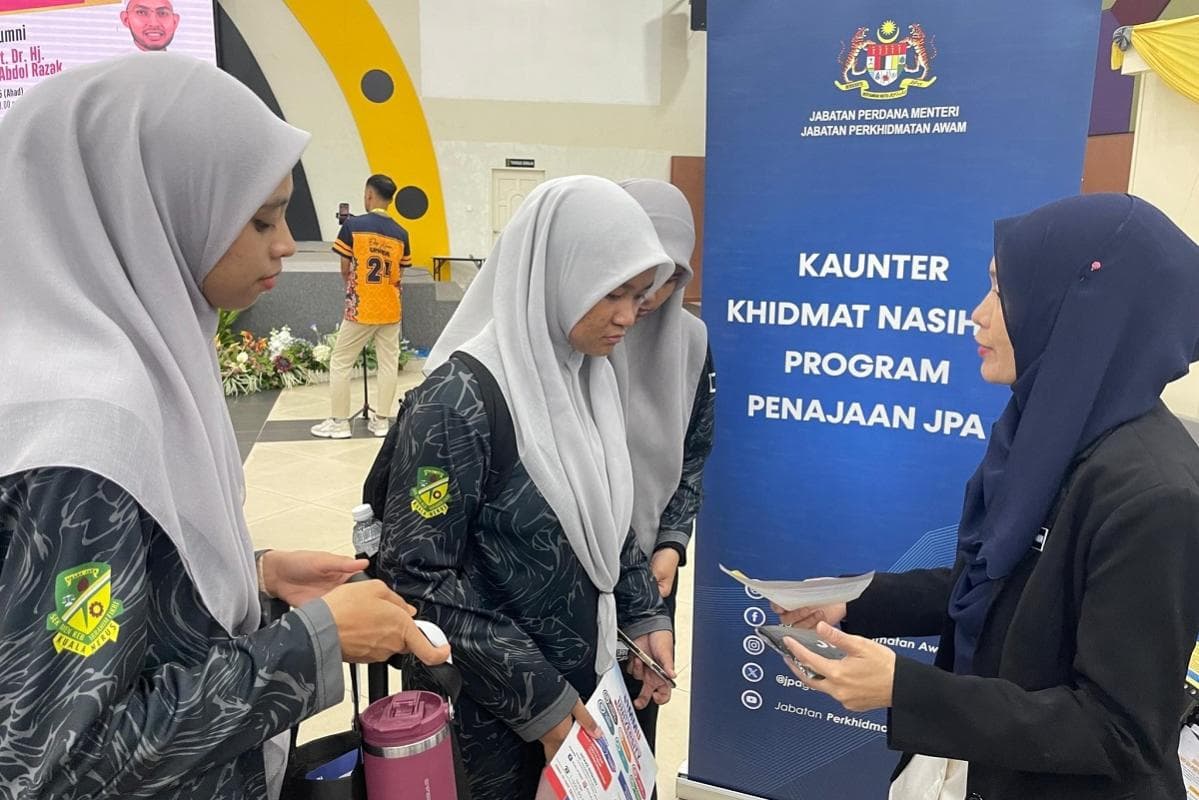
KUALA LUMPUR (April 28): The Public Services Department (JPA) will introduce a new academic merit-based sponsorship model to replace the current job placement merit system for pre-service training (LSP) programmes, effective June 1, 2025.
According to a statement released by JPA, under the new sponsorship model, dubbed PBU Akademik, JPA-sponsored students — excluding those in medicine, dentistry and pharmacy — will benefit from reduced loan repayment rates based on their final cumulative grade point average (CGPA).
Students with a CGPA of 3.75 to 4.00 will repay only 5% of their loans, while those with a CGPA between 3.50 and 3.74 will pay 10%. Repayment rates increase to 15% for a CGPA between 3.00 and 3.49, and 20% for those with a CGPA above 3.00 who take longer to complete their studies. Students who score below 3.00 or fail will be required to repay the full loan amount.
Additionally, students who secure employment in the public sector aligned with their qualifications will be fully exempt from repaying the remaining loan balance.
Students pursuing medicine, dentistry and pharmacy, meanwhile, will receive full loan exemption if they successfully complete their studies and fulfil their government service contract. Failure to meet these conditions will result in full loan repayment.
The new model will apply to all new JPA-sponsored students starting June 1, 2025, except for scholarship recipients.
Existing students under the current scheme will have the option to switch to the new model beginning January 1, 2026. Students currently repaying loans under the old scheme are instructed to pause payments starting June 1, 2025, until the option to switch is available.
The existing scheme, in place since 2016, required students to repay their loans based on their post-graduation employment.
If a student joined the public service, the loan would be converted into a full scholarship with no repayment required. Students working with a government-linked company (GLC) were required to repay 25% of the loan, while those joining a private company in Malaysia had to repay 50%. If neither of these conditions was met, students were required to repay the full loan amount.
In a statement on Monday, JPA explained that the new model aims to strengthen human capital development by rewarding academic and character excellence among Malaysians.
JPA hopes this improved model will encourage academic excellence while supporting the country’s long-term human capital needs.