

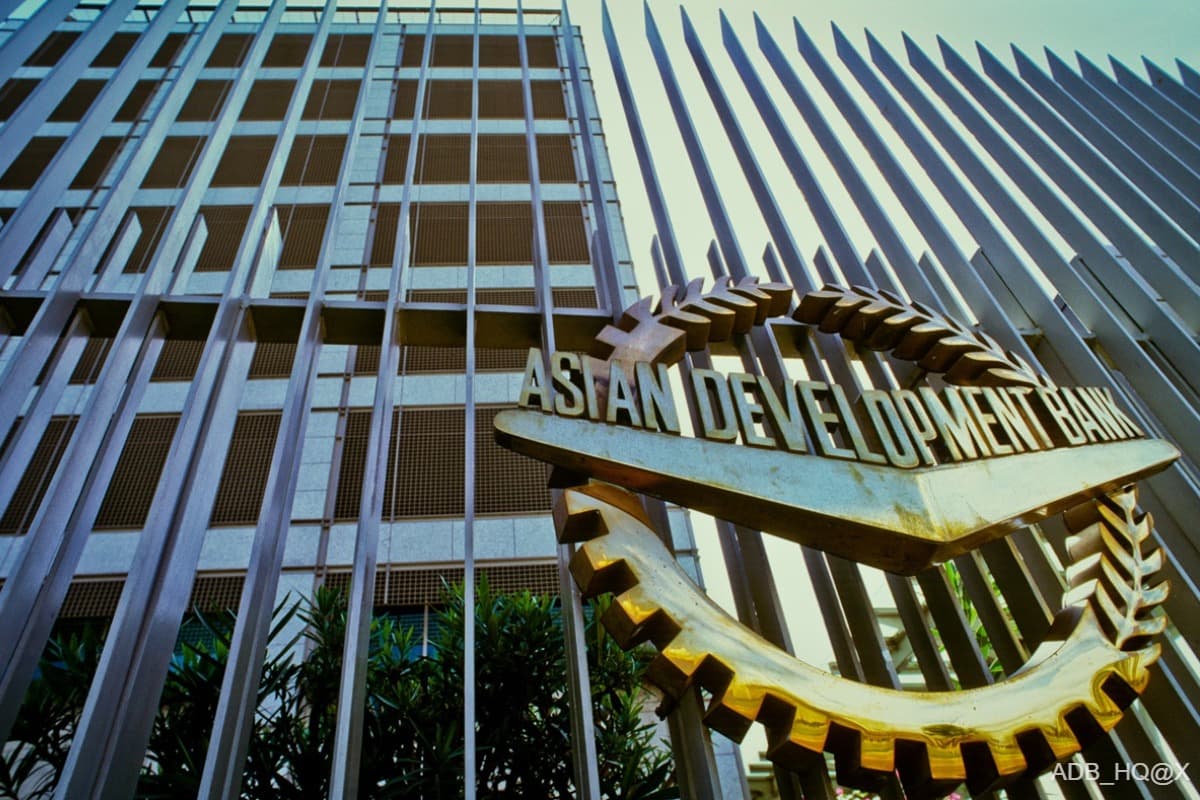
KUALA LUMPUR (April 24): The Asian Development Bank (ADB) disbursed US$4.9 billion (RM21.5 billion) to Southeast Asia in 2024, with Malaysia getting the smallest slice of the allocation, its latest annual report showed.
Among Southeast Asian nations, Indonesia received the most at US$3.28 billion, followed by Thailand (US$1.54 billion), and Vietnam (US$1.03 billion). Malaysia received the smallest allocation, at just US$1.7 million.
For the second consecutive year, Southeast Asia was the second-largest recipient of the multilateral institution’s assistance — accounting for 25% of total commitments — after South Asia, which received US$8.94 billion or 37% in 2024.
Malaysia, a founding member of the bank since 1966, received a commitment of US$0.6 million under ADB’s trade and supply chain finance programme and US$0.9 million from the bank’s co-financing programme. To-date, Malaysia received US$36 million in assistance.


The bank said it continued to support climate action through a mix of policy-based loans and knowledge-sharing services, aimed at building climate resilience, strengthening food security, improving marine environment management, and promoting sustainable infrastructure in sectors such as energy, transport, and sanitation.
“Looking ahead, the region faces many complex challenges that demand bold ideas and decisive action,” the institution’s president Masato Kanda wrote in the report. “We must see these as opportunities to improve, and we must unleash the potential of creative solutions and harness the dynamism of the private sector”.
A total of US$24.3 billion were committed in 2024 from its own resources, alongside US$14.9 billion in co-financing from partners, disbursed through loans, grants, equity investments, guarantees, and technical assistance.
The lender, also known as ADB, approved 151 new projects and financing facilities in 2024, in a region still grappling with infrastructure gaps, weak policy frameworks, and public debt pressures.
“We are financing more affordable and efficient energy and transport systems, supporting a vibrant private sector that creates better-quality jobs, and strengthening basic services in education, health, and social protection,” said Kanda.
ADB to unlock an additional US$100 billion in lending
ADB’s 2024 Annual Report also highlighted an update to its Strategy 2030, the bank’s corporate roadmap first introduced in 2018, involving “an ambitious new roadmap to enhance its support for a more prosperous, inclusive, resilient, and sustainable Asia and the Pacific”.
The update includes institutional reforms that will allow ADB to unlock an additional US$100 billion in lending capacity over the next decade. The bank also aims to step up collaboration with other multilateral development institutions, to better support its members and collectively tackle urgent regional challenges.
“The roadmap sharpens ADB’s focus on the region’s most-pressing development priorities: climate action, private sector development, regional cooperation and public goods, digital transformation, and resilience and empowerment,” the ADB said.
Established in 1966, the ADB is owned by 69 member countries, of which 20 are non-regional members, such as the US, Türkiye, and several European countries.