

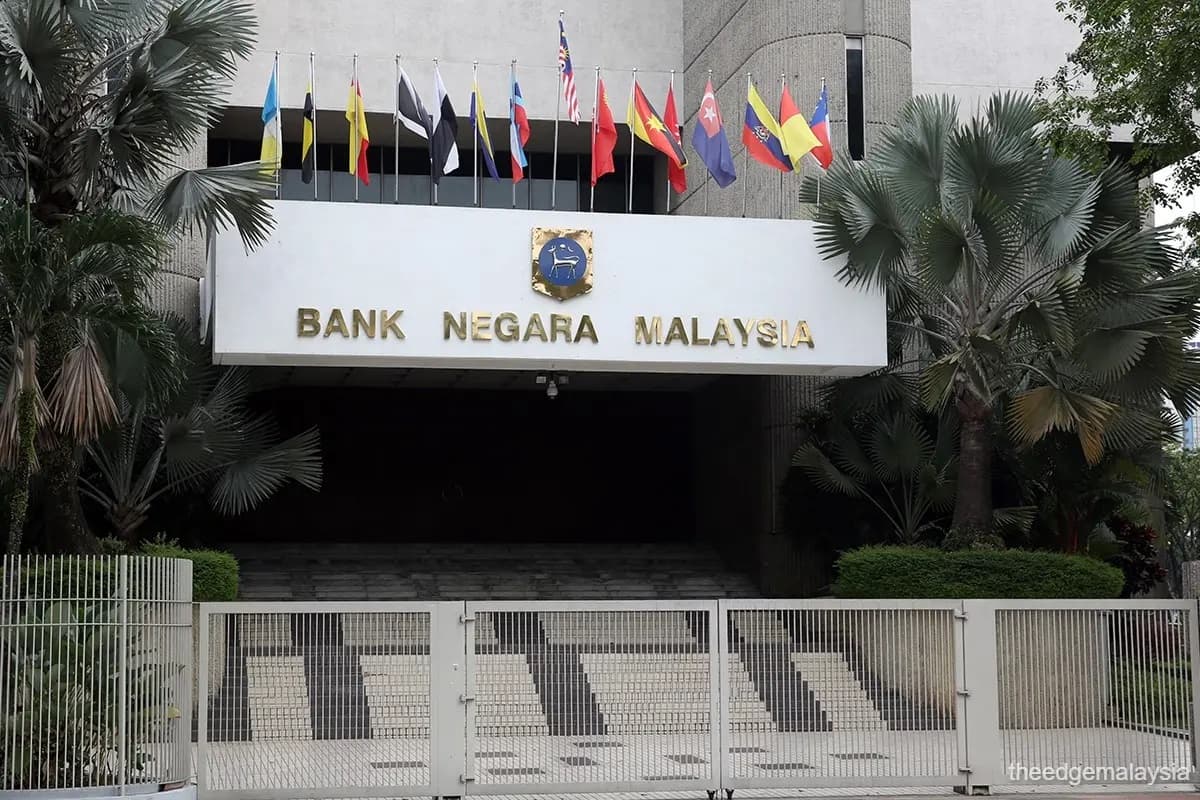
KUALA LUMPUR (April 23): With the latest inflation coming at a four-year low, Bank Negara Malaysia (BNM) will have room to cut interest rates to prop up economic growth under threat from international trade tensions.
While economists are considering the prospects of a lower overnight policy rate (OPR), markets have already priced in potential reductions of 25 to 75 basis points in the remaining months of the year, according to United Overseas Bank.
For now, BNM is expected to remain “patient” and keep the policy rate steady, the bank said, as Malaysian officials head to the US for trade negotiations.
BNM has kept the benchmark rate unchanged since it was raised in May 2023 thanks to resilient economic growth and manageable inflation. However, external risks are intensifying as US tariffs threaten to upend global trade.
Malaysia’s economic growth may have moderated to 4.4% in the first quarter of 2025, flash estimates showed. The next monetary policy review is slated for May 8.
Official data out earlier on Wednesday showed inflation decelerating to its slowest since February 2021 as price gains at restaurants and of other non-food items eased. The consumer price index rose 1.4% in March when compared to the same month in 2024.
For CIMB Research, the data suggests that demand-driven price pressures will stay subdued as inflation excluding fuels moderates while services inflation remains below its 12-month average.
“Several indicators — particularly those related to the labour market, including wage growth in the manufacturing and services sectors as well as hiring activity — continue to reflect a modest trend,” the house said.
BNM will likely take its time to assess more data and stand pat at the May 8 meeting, CIMB Research said, and predicted that the central bank would reduce the OPR by 25 basis points at the scheduled July 9 review that also marks the end of the US’ 90-day tariff pause.
Further, headline inflation could potentially fall below the official projected range of 2.0%-3.5% without pressure from subsidy retargeting measures given the potential slowdown in economic activity and softer commodity prices in the months ahead, RHB Research flagged.
Unless GDP growth falls sharply and drags on domestic demand and the labour market, BNM still has broader economic tools beyond interest rates to mitigate the impact of US tariffs, the house added.