

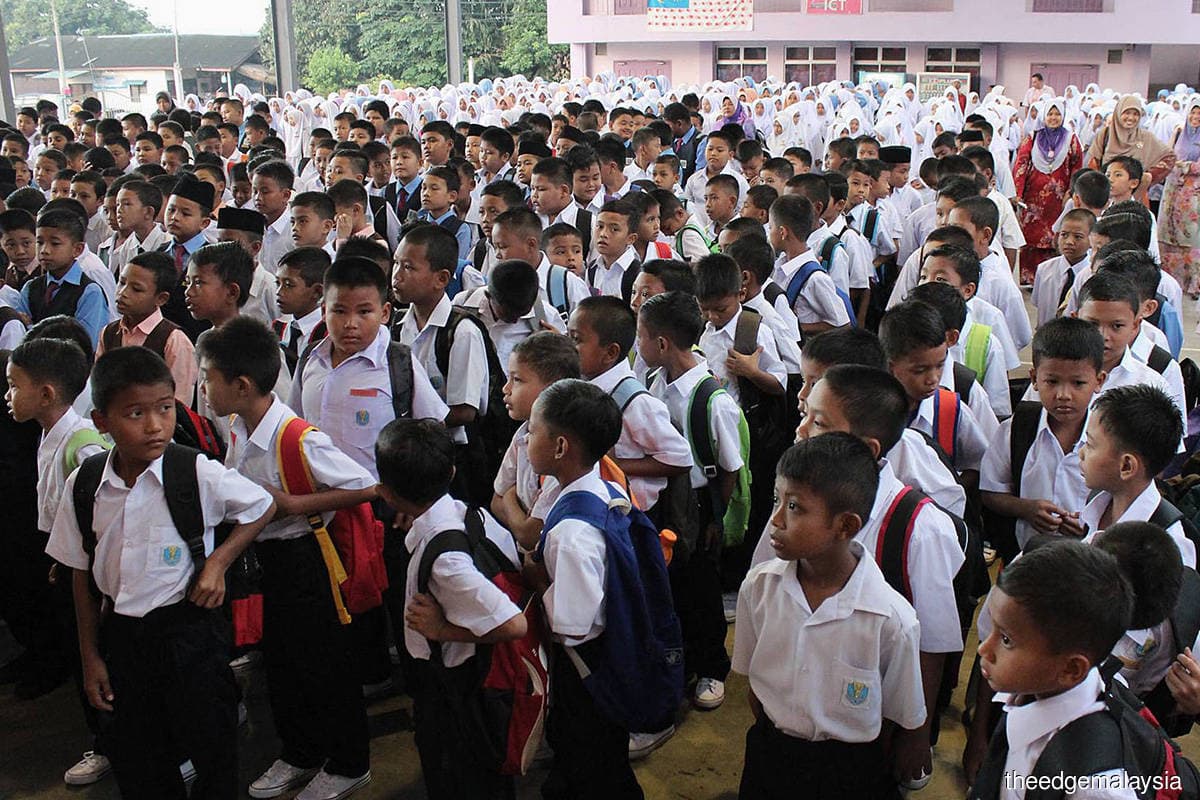
KUALA LUMPUR (April 23): Malaysia lost billions in potential income — between 4.00% and 9.49% of its gross domestic product (GDP) in 2025 — by excluding non-citizen children born in the country from formal education, according to a joint policy paper by the Social Wellbeing Research Centre (SWRC) and Unicef Malaysia.
The report, titled Wasted Potential: The Economic Case for Educating Non-Citizen Children Born in Malaysia in an Ageing Nation, argues that integrating these children into public education is not only a moral imperative but also a critical economic strategy amid Malaysia’s rapidly ageing population.
The study defines non-citizen children as children born in Malaysia without Malaysian citizenship due to jus sanguinis nationality laws (citizenship by descent only); refugee children registered with the UN refugee agency (UNHCR); stateless children; and children of undocumented or migrant workers.
Despite being born and raised in Malaysia, many of these children are legally excluded from public education due to their status.

According to the Ministry of Education, only 10,076 non-citizen children were enrolled in public schools in 2023. Among the 40,486 refugee children registered with the UNHCR, only 13,027 were enrolled in learning centres — reflecting a gross enrolment rate of just 32.2%. Both data sets reveal a sharp drop in participation from primary to secondary levels.
“These low numbers show non-citizen children are being systematically excluded from meaningful educational opportunities,” the authors wrote.
The paper estimates the discounted present value of lost earnings for the 2016 cohort of 290,437 non-citizen children born in Malaysia to be equivalent to 4.00–9.49% of GDP by 2025.
“Excluding them from education reduces lifetime earnings, limits productivity and shrinks Malaysia’s tax base,” the report notes. “Over time, this diminishes innovation, weakens economic resilience and undermines the transition to a high-income nation.”

Malaysia’s high education premium — where workers with degrees earn 2.63 times more than those with only a high school diploma — underscores the structural imbalance in its labour market. About 65% of the workforce have only upper secondary education or less.
Meanwhile, non-citizens made up 12.4% of the total labour force in 2023 (about 1.44 million workers), of which 93% held only secondary-level qualifications or less, compared to 47% among citizens. This contributes to a large pool of low-skilled, low-wage workers.
Malaysia’s economy faces challenges from an ageing population, low wages and unequal job opportunities. Many groups — especially women, undocumented and stateless individuals — are left out or underpaid because they lack access to education and job training.
Women earned 7.88% less than men in 2023. The average monthly salary was RM3,441 but half the workers earned less than RM2,602. In some states like Kelantan, median wages were as low as RM1,750. Low-skilled workers earned RM1,599 on average while high-skilled ones earned RM4,565.

These gaps hurt the economy, especially with fewer young workers in the future. To grow, Malaysia needs everyone in the workforce to be skilled and productive.
Investing in education and skills helps people earn more and boosts the economy. Making education more inclusive is not just fair — it’s necessary for Malaysia to reach high-income status.
By 2050, Malaysia will have more elderly people than children, increasing financial pressure on the workforce.
The working-age population which was 15 per senior citizen in 2000 will drop to just five by 2040, threatening pension systems, healthcare and economic growth.
Authors Amjad Rabi, Prof Norma Mansor, Azlina Kamal and Altaf Deviyati Ismail call for urgent reforms to ensure equal education access for all children, regardless of legal status.
They warn that excluding non-citizen children is not just a rights issue but an economic burden as Malaysia cannot afford to waste human potential.