

This article first appeared in City & Country, The Edge Malaysia Weekly on April 21, 2025 - April 27, 2025
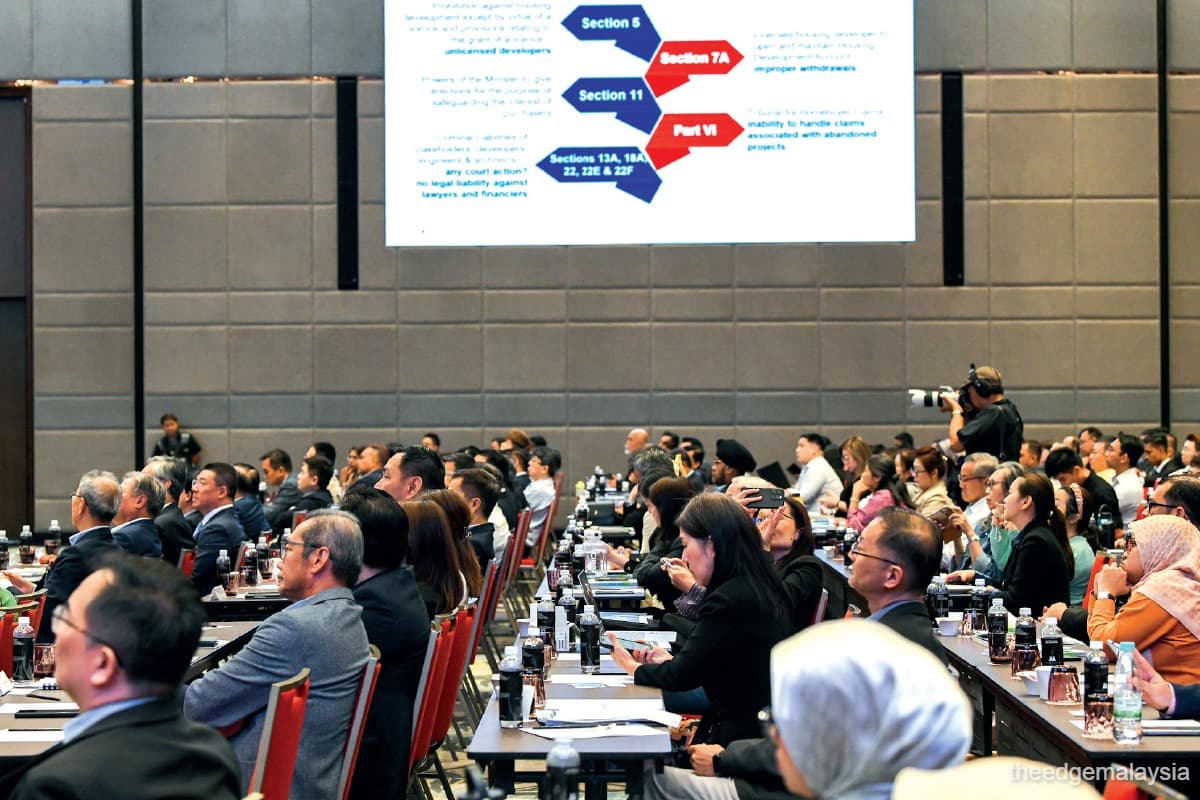
More than 280 regional industry stakeholders attended the Real Estate and Housing Developers’ Association (Rehda) Institute’s International Strata Symposium at M World Hotel Petaling Jaya (formerly known as Avanté Hotel) on April 8 and 9. The event was aimed at fostering growth and collaboration among government, strata and property management stakeholders, with insights on laws and global best practices.
In his welcome address, Rehda Institute chairman Datuk Jeffrey Ng Tiong Lip said strata developments are a vital component of urban living and that of the 925,000 properties in Kuala Lumpur, 85% (around 784,355 properties) are part of stratified development schemes.
“The Commissioner of Buildings Kuala Lumpur (COBKL) oversees these developments and received an average of 7,000 to 8,000 complaints annually between 2017 and April 2024, underscoring the need for effective strata management and laws, a key focus of this symposium,” said Ng.
“By engaging global best practices, we have the opportunity to gain fresh perspectives and innovative solutions to improve strata management, legislation and community governance, ultimately benefiting homeowners, policymakers and industry stakeholders.”
The symposium also saw the launch of Rehda Institute’s “Abandoned Housing — Challenges, Insights and Solutions” research report by Minister of Housing and Local Government Nga Kor Ming.
The report was developed in collaboration with Universiti Malaya. It represents a crucial step in understanding the root causes behind project abandonment. The report draws on extensive research and consultation with a broad range of stakeholders, including government bodies, liquidators, developers, bankers, lawyers and architects. It was further refined through a dedicated workshop held in October 2024.

The importance of good property management
During a panel discussion on the first day of the symposium, PropertyGuru Group (Singapore) head of real estate intelligence, data and software solutions Lee Nai Jia pointed out that well-managed strata property listings could fetch premiums of up to 20% to 30% compared with those that are not well-managed.
“[The value] of some of the properties that are maintained well can appreciate over time. For others in which the management does not take a proactive approach, the building deteriorates fast and so does the value. Some [older] buildings can be maintained on par with the newer projects,” said Nai Jia.
However, he also acknowledged that a well-managed property could be hard to discern, merely from photos provided on the online listings. Meanwhile, Henry Butcher Malaysia (Mont Kiara) Sdn Bhd managing director Low Hon Keong observed a growing awareness over the years of the importance of property management in Malaysia, noting that it will affect property values eventually.
“For instance, developers are asking us to plan their budget, both opex (operating expenditure) and capex (capital expenditure), even way before the completion of the building. On the other hand, JMBs (joint management bodies) and MCs (management corporations) are also realising the importance of maintaining common areas in a proper manner,” Low noted.

Challenges of stratified property development
On the second day of the symposium, Chur Associates founder and managing partner Chris Tan addressed the common challenges faced by developers in the strata property development and management realm via his presentation titled “Addressing the Existing Strata Challenges for Property Development Now”.
One key challenge that Tan raised was the delay in the issuance of strata titles and vacant possession (VP). He pointed out that developers are expected to hand over both vacant possession with strata titles (VPST) within 36 months of the date of the sale and purchase agreement.
With this expectation, he added that coordination between different stakeholders is essential to meet the timeline. “Within the context of the regulatory process, it is definitely possible to get your strata title to be delivered together with your VP. It has to do with compliance — there are timelines and there are various stakeholders [you have to deal with such as] the Land Office and Jupem (Department of Survey and Mapping) for the purpose of submitting the title as well as a surveyor to measure the site for the purpose of determining the strata title.”
He pointed out that the core of strata title issuance lies in accurately defining parcel boundaries, and emphasised that this step is crucial to start the process of applying for the strata titles. He said developers should begin the application as soon as there is a clear framework to measure these boundaries, ensuring the process moves forward without unnecessary delays.
Since 2015, developers have been mandated to deliver VP of units together with the strata titles to buyers. However, many struggle to meet this timeline.

Addressing this issue in his presentation titled “Challenges and Progress in Strata Title Issuance with Vacant Possession: The Way Forward”, Danial Lee Abdullah, director of the strata and stratum titles division at the Federal Land and Mines Department, highlighted that the key reason is in the process for the application of the Certificate of Proposed Strata Plan (CPSP) — a certificate that indicates the approval of a proposed strata plan, which developers are required to obtain within three months of the superstructure’s completion.
This stage is often delayed due to several factors, including land-related issues, development complexity, inadequate or missing information and amendments made after submission, thereby making it a hurdle to meet the required timeline.
Danial added that as at October 2022, there had been only 19 development schemes that were able to successfully deliver VPST since the mandate was introduced.
Elaborating on the importance of CPSP, Jupem Selangor director Looi Kam Seng said in his presentation titled “Jupem’s Role in Strata Development: Cadastral Mapping and Surveying for Strata Development” that obtaining CPSP is critical in the success of the strata title application process.
Issued by Jupem, CPSP — which is a detailed plan outlining the subdivision of a building or land into individual units and common areas — is necessary for developers to apply for strata titles at the Land Office, ensuring that the boundaries, layout and measurements of each parcel are correctly surveyed and verified. Without the CPSP, the application for strata titles cannot proceed.

Looi further stressed that addressing land-related issues before applying for the CPSP is essential for a successful strata title application as unresolved matters are often the root cause of delays in obtaining the certificate, thereby delaying the entire strata title process.
Acts need to be updated
Meanwhile, National Housing Department director-general Datuk Jayaselan Navaratnam gave an update on ongoing and upcoming reforms of legislation pertaining to strata management in his presentation titled “The Future of Strata Governance in Malaysia: Key Reforms and Policy Directions”.
One of the Acts that the Ministry of Housing and Local Government (KPKT) is looking to propose is the Fair Property Act, similar to that of the US, which, according to Jayaselan, will have elements of subsidies and discounts. However, he did not provide further details on the proposed Act, noting that it is still in the early stages.
Another Act the ministry is currently working on is the Real Property Development Act, which will replace the Housing Development Act 118. The Act, which is in the pipeline, is intended to streamline the real estate market in Peninsular Malaysia and govern the protection of the interests of purchasers, developers and landowners, covering both residential and commercial properties.
KPKT is also looking to revamp the Strata Management Act (SMA) to meet the current needs of the strata development industry.

The proposed amendments aim to address several key issues, including overlapping jurisdiction between federal and state authorities, legislative conflicts between ownership and management matters, outdated provisions that no longer meet industry needs, poor building management and maintenance, weak coordination with other laws, and the growing volume and complexity of tribunal cases.
Disputes and legal issues in strata developments
In his session titled “Common Strata Disputes Faced by Developers and Navigating the Strata Management Tribunal”, Nor & Co founder and partner Datuk Pretam Singh discussed various legal issues and disputes related to strata properties in Malaysia.
Key issues highlighted by Pretam included defects in common property, improper imposition of conditions on JMBs, and disputes over car park ownership, share units and Airbnb usage.
He started by pointing out that there are still some cases where developers use Deed of Mutual Covenants (DMCs) instead of abiding by the SMA.
“Once the SMA came into force, we should have stopped talking about the DMC. It’s no longer relevant. Yet, we still see developers continuing to rely on the DMC. And in these DMCs, they add all kinds of terms that are completely one-sided.

“Let’s refer to the case of Wisma MPL JMB vs Malaysia Pacific Corporation. The court made it very clear that once the SMA comes into operation, any conflicting laws, contracts or deeds related to maintenance and management cease to have effect. Similar wording is found in Section 148 of the SMA, which states that the DMC loses its legal effect once the Act is in place.”
Simply put, in this case, the DMC has no more standing, Pretam said. In order to create additional by-laws during the developer’s management period, the commissioner’s approval would be needed, he added. After the first annual general meeting (AGM), the JMB can adopt additional by-laws via a special resolution.
In another case, KB Loh Sdn Bhd vs Perbadanan Pengurusan SOHO, Pretam said the developer stated in a DMC that they should be granted a 90% rebate on service charges.
“However, the court said no. Any contractual clause that tries to override or contract out of a legal provision is illegal and unenforceable, as it goes against public policy. So, developers cannot impose terms like a mandatory 90% rebate for themselves on the JMB or MC, even if all the purchasers signed off on it,” he explained.
“Also, importantly, there is no privity of contract between the developer and the JMB or MC. That means, the developer cannot bind the JMB or MC to terms that were agreed upon with the purchasers in the DMC.”

One significant issue frequently observed by Pretam is the calculation of share units and maintenance charges.
“There was this case where essentially the developer agreed to implement lower share units for their parcels using a weightage factor of one instead of four. In return, the plaintiff agreed to transfer a laundry room and 10 car park bays to the developer. The developer — in this case, the defendant — also agreed to provide an additional 10 car parks free of charge. So the idea was, ‘I’ll give you more car park bays, but don’t charge me the full service charge.’
“But can they do that? Absolutely not. That’s completely taking the law into their own hands. The court said no — developers do not have the power to reduce or alter share units that are already endorsed in the strata register and titles. In a more recent Court of Appeal case in 2025, the court laid down the legal parameters for accessory parcels. It ruled that operating a business using accessory parcels does not amount to a dealing under the Strata Titles Act,” he said.
Meanwhile, in the final session titled “Case Studies in Strata Property Law Enforcement: Lessons from Kuala Lumpur’s High-Density Developments”, COBKL legal officer Palaniappan Murugan discussed the role of COBKL in managing disputes between developers, JMBs and MCs.
Through several case studies he presented, Palaniappan emphasised that management bodies can prohibit short-term rentals and proxies cannot be elected to committees.

In the case of Innab Salil & Ors vs Verve Suites Mont Kiara (2020), Palaniappan said it involved an MC that introduced house rules to prohibit short-term rentals, such as Airbnb.
“Despite some resistance from owners, the court upheld the MC’s authority under Section 70 of the SMA 2013. The judgment confirmed that MCs are legally permitted to enact additional by-laws to restrict short-term rental activity, even when the property is held under a commercial title. This decision reinforced the MC’s right to self-regulate, provided it is done in accordance with the law.”
Another case, Gorgeous Green Sdn Bhd vs COB DBKL & Anor (2018), centred around the appointment of proxies to an MC.
“The court ruled that, in accordance with the Second Schedule of Act 757 (SMA), proxies cannot be elected as committee members or as chairman. While a proxy may attend and vote on behalf of a proprietor at [AGMs], they cannot hold elected positions. This judgment helps prevent the misuse of proxy rights and ensures that only actual proprietors can serve on the MC,” he clarified.

Learning from neighbouring countries
Presenting the Singaporean strata housing landscape, PropertyGuru Group’s Nai Jia returned on the second day to present his session titled “Property Management and Strata Issues in HDB (Housing and Development Board) Developments and How is it Resolved?”
Nai Jia spoke about the challenges and opportunities in managing Singapore’s strata properties in both public and private housing. In public housing, he explained that town councils handle maintenance, supported by government grants and programmes like the Home Improvement Programme and Neighbourhood Renewal Programme.
Despite these schemes, Nai Jia said town councils face numerous challenges, including managing the diverse needs of an ageing population and younger generations; cluttering of common areas; arrears collection from residents who fall behind on payments; and the growing expectation for biophilic and modern urban living environments.
In contrast, the private sector faces different dynamics, Nai Jia revealed. “One major concern for private housing is that poor upkeep in some developments could cause property values to fall. A study by the National University of Singapore found that HDB flats over 30 years old tend to depreciate less than equivalent private properties. Therefore, in Singapore, what is most resilient is actually the HDBs.”
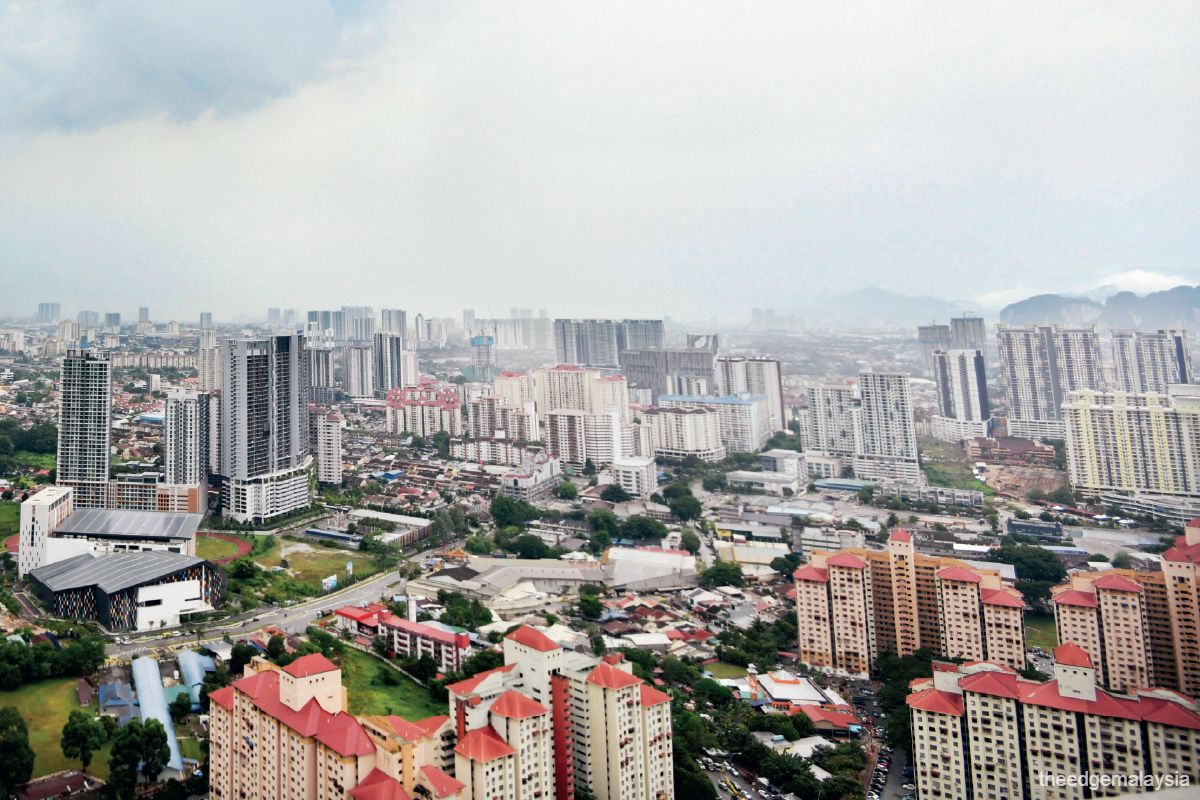
In terms of urban renewal for the public sector, Nai Jia said the government had introduced the Selective En Bloc Redevelopment Scheme (SERS). Under SERS, ageing HDB estates are redeveloped and residents are compensated and relocated, he added.
“An example of this is a unit in Ang Mo Kio, where SERS introduced the opportunity for renewal. However, urban renewal can spark dissatisfaction, especially among elderly residents with limited savings, who may struggle to afford a new home even with compensation. The revised SERS policy now addresses some of these issues by offering more support and flexibility.”
Save by subscribing to us for your print and/or digital copy.
P/S: The Edge is also available on Apple's App Store and Android's Google Play.