

This article first appeared in The Edge Malaysia Weekly on April 21, 2025 - April 27, 2025
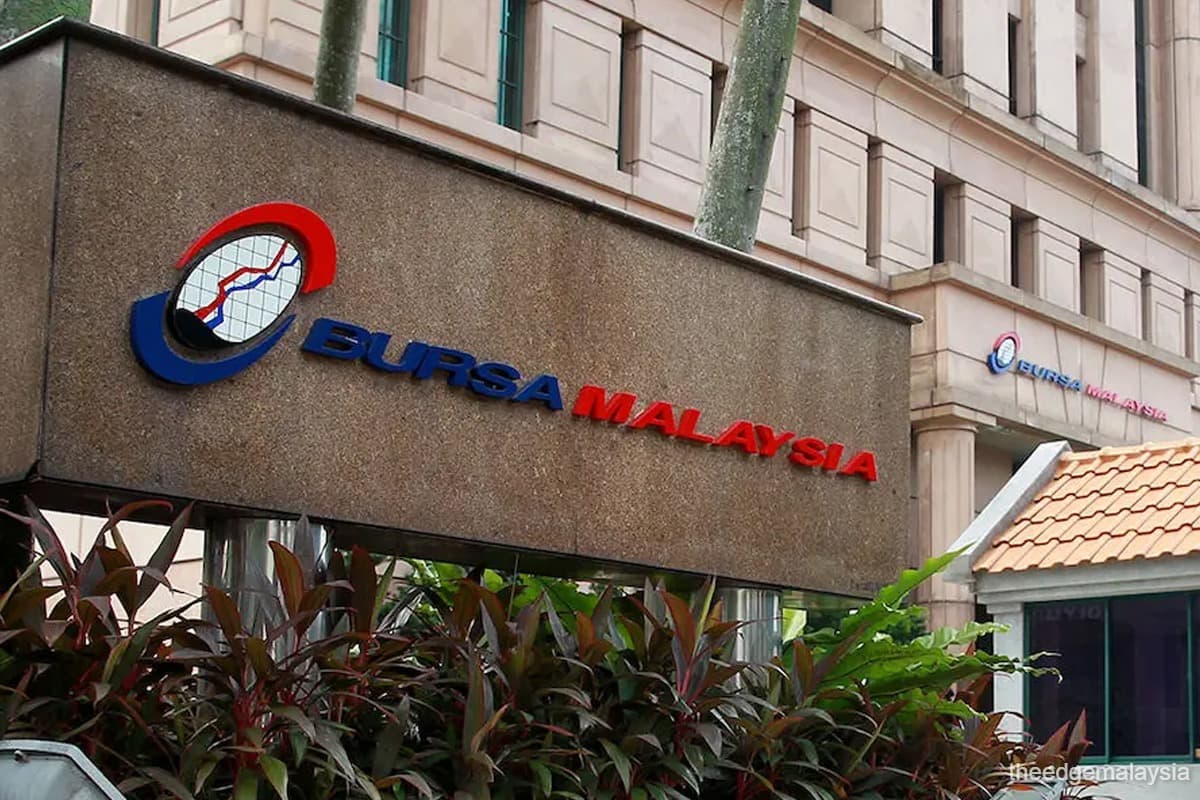
Public-listed companies (PLCs) in Malaysia are now required to use Bursa Malaysia’s Centralised Sustainability Intelligence (CSI) platform as their official sustainability reporting channel. This follows the regulator’s late-March announcement that the CSI platform is fully equipped to support disclosure requirements under the National Sustainability Reporting Framework (NSRF).
The NSRF mandates PLCs and large non-listed companies to prepare sustainability reports according to the International Sustainability Standards Board’s IFRS S1 and S2 disclosure requirements, which are currently the global standard.
The CSI platform has modules and tools for PLCs to submit the necessary quantitative and qualitative data, according to NSRF’s requirements. Prior to this, PLCs used the existing Bursa LINK system to input data.
The introduction of this platform and its tools could address companies’ challenges to meet the regulatory standards, especially for large non-listed companies who will be preparing sustainability reports for the first time under the NSRF, and the rest who have to comply with the new IFRS standards.
However, completing the report will still likely require the input from experienced sustainability professionals.
“The CSI platform represents Bursa Malaysia’s response to the industry’s call for a systematic, consistent and cost-efficient reporting solution. Initially designed as a reporting tool to address onboarding and training of companies’ supply chains, the platform has evolved to now be a marketplace construct that leverages the core principles of trust, openness and inclusivity,” says Julian Hashim, chief regulatory officer of Bursa Malaysia in an email statement to ESG.
The mandatory reporting module and Scope 1 and Scope 2 carbon calculator on the CSI are free to use.
Additional modules offering various functionalities are available on the CSI platform for a fee. These include a module by Fair Supply that helps companies calculate their Scope 3 emissions, an e-learning module developed by PwC for suppliers and small and medium enterprises (SMEs), an artificial intelligence (AI)-powered sustainability report generator created by local start-up CarbonGPT, and an AI-powered sustainability ratings analyser by SustenyX.
“The CSI marketplace also provides digitally enabled, cost-efficient and value-added solutions to PLCs and their sustainability advisers. These improvements not only drive convergence and accessibility but also serve as a robust template for furthering interoperability and market access through the Asean Interconnected Sustainability Ecosystem initiative,” says Julian, referring to Bursa’s plans to expand the CSI marketplace into the region.
The CSI, which was launched in 2024, is already being used by over 130 PLCs, mid-tier companies and SMEs in Malaysia, according to Bursa. Several of the larger PLCs that joined the CSI Early Adopter Programme (EAP) are using it to manage the emissions profile of their suppliers for their Scope 3 emissions reporting.

Targeting companies with fewer resources
Many large PLCs would already have sufficient resources and experience to prepare their sustainability reports, but with the evolving standards and increasing requirements, it can be difficult for companies to cope, especially for smaller companies and those without resources or experience. The CSI, according to Bursa, is meant to address these challenges.
The free reporting module has already categorised the required reporting data into different tabs. For instance, a company just has to input how much of a certain fuel it uses in the relevant box, and the total emissions will be automatically calculated.
There is also an emissions overview dashboard, which can include data from subsidiaries.
The IFRS S1 and S2 standards require companies to disclose information on various aspects, including sustainability and climate-related risks and opportunities. The companies must show how these disclosures connect to their financial statements and outline the strategies they have adopted to address these factors.
IFRS S2, which focuses on climate change-related issues, also requires a scenario analysis to assess how climate-related events could impact the company in the future, along with climate-related metrics and targets.
To tackle this portion of disclosures, the CSI allows companies to choose what level of reporting they want to achieve, all of which are still compliant with the NSRF.

Tackling Scope 3 emissions reporting
Scope 3 emissions reporting is notoriously challenging, as it requires companies to collect information from their suppliers, many of whom are SMEs that may not have begun their sustainability reporting journey.
Therefore, Bursa collaborated with Fair Supply, an Australia-based company, to develop a Scope 3 calculator based on a spend methodology. The tool can give estimates of emissions from suppliers based on their industry classification and primary country of operation.
This tool was also developed based on engagement with PLCs in the EAP, according to Bursa.
Companies can then use these estimates to ask their suppliers for more accurate information, and identify suppliers that generate the highest emissions. From there, the CSI platform enables companies to engage with the suppliers, invite them to answer an ESG maturity assessment, and share relevant e-learning courses with them.
The foundational courses are available at no additional fee, according to Bursa. Suppliers can also opt in to complete the intermediate and advanced courses at an affordable rate, says the regulator. The courses include modules on calculating greenhouse gas emissions, sustainability reporting, human rights and the circular economy, among other things.
AI-powered tools for reporting and improving ESG ratings
To simplify the reporting process, Bursa has introduced an AI-powered tool developed by CarbonGPT on the CSI Marketplace. This tool can generate a report within minutes based on data input into the CSI platform. Companies can customise the writing style by using their annual reports as a reference and edit the generated text as needed.
CarbonGPT is capable of using AI to perform gap analyses on reports, based on requirements drawn from the IFRS S2 checklist. It can also provide recommendations for companies to enhance their reporting.
Another tool that will be introduced is from SustenyX, which is targeted at PLCs that want recommendations to improve their ESG ratings. Currently, the tool is focused on the FTSE4Good ESG ratings, which are used to determine the inclusion of Malaysian PLCS into the FTSE4Good Bursa Malaysia Index.
Sustenyx will analyse the PLC’s ESG disclosures using its system and offer recommendations for improvement. For example, it may identify specific indicators where the company could provide more detailed disclosure. Currently, around 12 companies are using this tool, according to Bursa.
Addressing the cost of reporting
The resources that companies must allocate to prepare sustainability reports are often described as challenging. Organisations need to recruit specialised talent and teams to collect data and comply with evolving requirements, or delegate these tasks to existing employees.
Some PLCs pay a sum to engage the services of consultants to write and prepare the data for sustainability reports, while others have resources to do more of it internally. Engaging consultants comes with a cost, depending on the level of services required.
The CSI platform could enable companies to handle more of the reporting process independently. However, they will likely still require internal or external resources to meet the reporting requirements of IFRS S1 and S2, which mandate companies to assess their unique risks and opportunities and to identify strategies to address them.
Additionally, the output of the AI-generated report still has to be verified, Bursa stresses, as this tool is introduced mainly to lighten the load for sustainability officers and consultants, and not to replace their work.
Bursa aims to bundle the value-added services, at a price range of RM20,000 to RM50,000, depending on the final scope of work.
Interestingly, Alliance Bank in February announced its Sustainability Enhancement Programme, which targets PLCs on the ACE Market and newly listed PLCs. If these PLCs adopt the CSI, the bank will grant them access to the value-added tools on CSI at no additional cost, provided they meet the bank’s financing requirements.
Additionally, according to Bursa, the CSI platform will also be accessible to external auditors, which will be particularly useful when external reasonable assurance of sustainability reports becomes mandatory under the NSRF starting in 2027.
Save by subscribing to us for your print and/or digital copy.
P/S: The Edge is also available on Apple's App Store and Android's Google Play.