

This article first appeared in The Edge Malaysia Weekly on April 14, 2025 - April 20, 2025
DESPITE volatile market conditions, telecommunications infrastructure provider Reach Ten Holdings Bhd is pushing ahead with its initial public offering in May — the first Main Market IPO of a Sarawak-based company in 15 years.
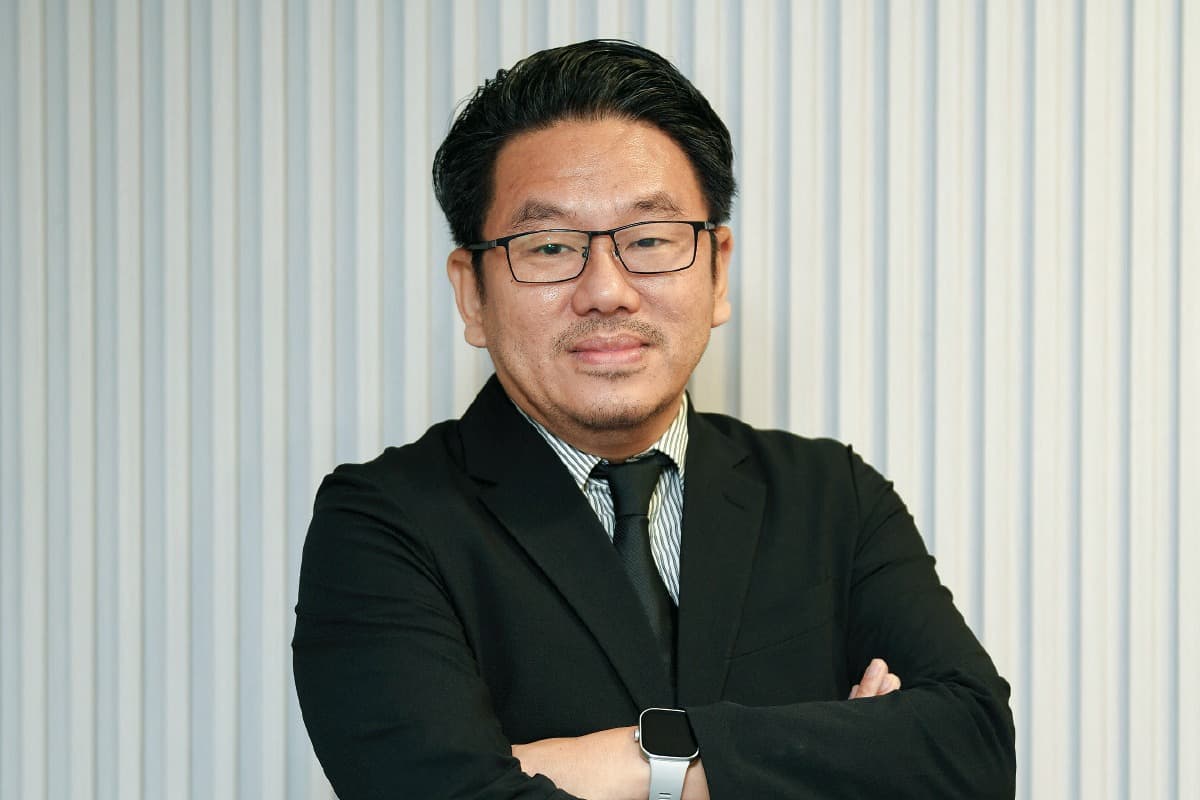
Managing director Leo Chin Yu Lay says the primary objective of the listing is to raise the company’s profile and secure funding for expansion to expedite the rollout of telecoms infrastructure in the state — a critical need in Sarawak’s underserved regions.
“Listing status opens up alternatives to raising funds, rather than relying solely on internally generated capital,” Chin tells The Edge. “If you look at our expansion plan for the next three years, we can build 500km of fibre duct infrastructure in Sibu, Miri and Bintulu using the IPO proceeds — compared with just 200km over the previous 14 years using internal funds. The magnitude of expansion is entirely different [as a listed company].”
Reach Ten’s businesses are spread across three segments: satellite-based communication, fibre-optic communication networks and telecoms infrastructure (towers). Its business model consists of two revenue streams: supply and installation fees (one-off project-based); and recurring services (broadband and managed services).
With the IPO, Reach Ten will build 100 more 4G and/or 5G towers, expand existing fibre optic networks and enhance its satellite-based communication networks by acquiring additional mobile and fixed satellite terminals as well as enhancing its facilities in its teleport.

Chin said while Reach Ten is poised to play a pivotal role in shaping Sarawak’s connectivity landscape for years to come, it is now offering investors a unique opportunity to participate in this growth story in the state, where the government has committed to invest RM397 million in 2025 alone to enhance digital connectivity in rural areas.
Overcoming financial hurdles as a private company
Reach Ten began investing in fibre optic networks as early as 2013, but faced persistent challenges in securing bank financing due to misconceptions about its business model.
“Local banks didn’t understand our operations,” Chin explains. “They assumed we were resellers for major telcos or contractors like OCK (Group Bhd [KL:OCK]). In reality, we’re a service provider, similar to Telekom Malaysia (Bhd [KL:TM]) or TIME dotCom (Bhd [KL:TIMECOM]).”
Without tangible collateral such as land or property, traditional lenders were hesitant to extend credit, says Chin. “Banks would say they liked our business but asked for physical assets as security.”
The IPO, therefore, serves a dual purpose: enhancing corporate credibility and positioning Reach Ten for larger government tenders.
“As a private company, we faced challenges competing against established players like Telekom and firms when bidding for the Universal Service Provision (USP) Fund and other large-scale connectivity projects, for example,” Chin says.
But Sarawak’s rugged terrain poses challenges for traditional telecoms infrastructure in rural areas, making satellite technology a vital solution — one where Reach Ten has established itself as a key player.
“Satellite is ideal for remote regions where fibre or towers aren’t viable,” Chin observes. “We’ve serviced areas where a single longhouse with just five residents would require a RM3 million to RM5 million tower — an economically unfeasible proposition.”
While satellite services currently contribute 80% of total revenue, Chin expects this to decline as fibre and tower projects expand after three years.
For the 10-month period ended October 2024, Reach Ten posted a net profit of RM65.4 million on RM153.1 million in revenue, already surpassing its full-year 2023 results (RM51.3 million net profit, RM182.3 million revenue). Net margins improved from 28.2% in FY2023 to 42.7% in the latest period.
Beneficiary of government initiatives to bridge digital gap
As at March 10, 2025, Reach Ten’s order book stood at RM175.61 million, the bulk being the provision of satellite-based communication networks and services. Some RM58.5 million of the order book is for various government (federal and state) initiatives across its business segments, including the Kuching Smart City Master Plan (2021-2025).
Reach Ten is one of four firms approved to construct 600 Sarawak Multimedia Authority Rural Telecommunication (SMART) towers, which is a state-led initiative to improve 4G and 5G coverage. The other three firms are Sacofa (controlled by Cahya Mata Sarawak Bhd [KL:CMSB]), RedPyne Sdn Bhd and Borneo Restu Sdn Bhd.
The SMART towers, which vary in height and design, involve intricate and lengthy construction processes, typically taking at least 18 months to become operational.
A total of 354 SMART towers have been activated across Sarawak, with the remaining on track to be operational by 4Q.
Sarawak Premier Tan Sri Abang Johari Tun Openg announced recently that the state aims to have at least 7,000 telecoms towers by 2030, from 4,447 at present, including the 600 SMART towers that have been completed and will be activated gradually this year.
“So, we are looking at more than 2,000 additional towers over the next five years,” says Chin.
In the fibre segment, Reach Ten aims to provide an alternative to incumbents like Telekom and Maxis Bhd (KL:MAXIS), and believes its entry will foster greater competition and ultimately benefit consumers and businesses.
Chin says that the state-led RM2.25 billion Saluran project will see Sarawak Multimedia Authority expand its High-Speed Broadband Rural Networks to 11 new areas this year, involving roughly 1,000km of fibre optic installation.
Meanwhile, under Malaysia’s National Digital Network (Jendela), Reach Ten has an outstanding order book of RM49.8 million as at March 10, 2025.
With the first phase of Jendela nearing completion, Reach Ten is positioning itself for Phase 2, where satellite broadband is expected to play a pivotal role in achieving 100% nationwide coverage. The initiative could involve 2,500 to 3,000 telecoms infrastructure sites nationwide.
While it is unclear how much of the infrastructure will be deployed in Sarawak, the state currently commands 60% to 70% of the satellite market share.
“The initial phase of the Jendela project awarded to Reach Ten has been completed, but renewal contracts and new satellite-based projects present fresh opportunities,” Chin says. The company has already been engaged by the Malaysian Communications and Multimedia Commission (MCMC) to survey underserved areas.
“The government recognises that satellite is often the only solution for remote communities. There are instances that telco players are encouraged [by MCMC] to start commercial services in these locations.”
The company’s public issue of 200 million new shares at an indicative price of 52 sen per share is expected to raise RM104 million.
At 52 sen per share, its market capitalisation upon listing will be about RM520 million and its trailing price-earnings ratio (PER) is 10.14 times (based on FY2023 financials).
This compares with Telekom (12.6 times PER) with a market value of RM25 billion, and TIME dotCom (23 times PER) with a market capitalisation of RM9.15 billion.
Chin says Sarawak’s state-owned investment holding company, Permodalan Aasar Sdn Bhd, has officially expressed interest in being an investor and that private placement was fully taken up.
The sale of 100 million existing shares will gross about RM52 million, which will accrue entirely to Chin, executive directors Lu Pak Lim and Wong Kiing Ting, and Eddryson Effe Kuehjin anak Bika, who is a director at three of the company’s subsidiaries. Collectively, the four individuals will own 60.26% of the company post-IPO, with Chin holding (17.66%), Eddryson (15.04%), Lu (14.66%) and Wong (12.9%).
Sarawak Deputy Premier Dr Sim Kui Hian described Reach Ten’s listing as a milestone in the state’s digital economy push.
“Reach Ten exemplifies private-public partnership in nation-building,” he said at the prospectus launch last Wednesday.
M&A Securities is the sole adviser for the IPO. “Global uncertainties are beyond our control, but this listing aligns with Sarawak’s long-term infrastructure goals,” says Danny Wong, its representative. “We’re expediting capital market fundraising because our investors are confident in the long-term value. This will allow Reach Ten to accelerate key state projects while the market eventually reflects its true worth.”
Save by subscribing to us for your print and/or digital copy.
P/S: The Edge is also available on Apple's App Store and Android's Google Play.